CM Fadnavis Backs NAFED, NCCF Direct Onion Buy from Farmers
Synopsis
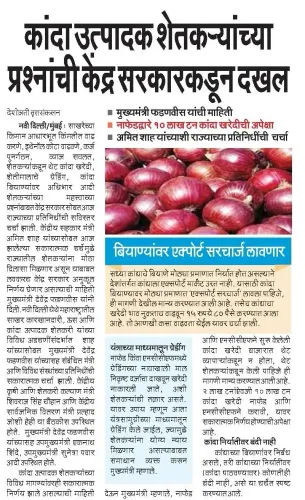
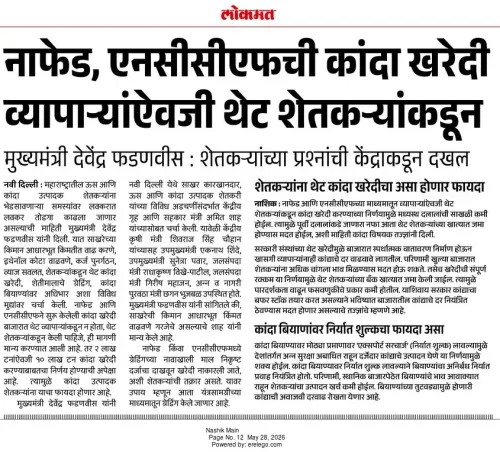
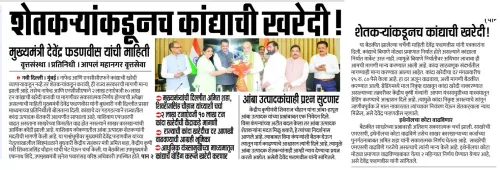
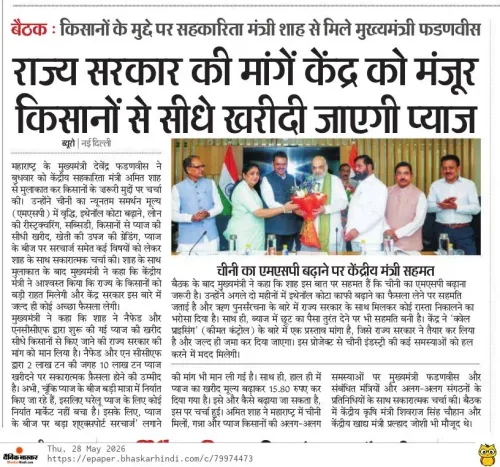
Maharashtra CM Devendra Fadnavis on 27 May 2026 announced approval for NAFED and NCCF to directly procure onions from farmers, a price-stabilisation measure targeting growers in Maharashtra's key onion belts amid seasonal market volatility.
Key Takeaways
Maharashtra Chief Minister Devendra Fadnavis announced on 27 May 2026 that approval has been granted for direct onion procurement from farmers.
NAFED and NCCF , the Union government's principal cooperative procurement agencies, will carry out the purchases directly from farmers.
The intervention is designed to stabilise farm-gate onion prices during periods of seasonal surplus in Maharashtra .
The measure is consistent with the Operation Greens framework launched in 2018 for price stabilisation of onions, tomatoes and potatoes.
Rollout details — including designated mandis, procurement volumes, and pricing — are awaited from central and state agencies.
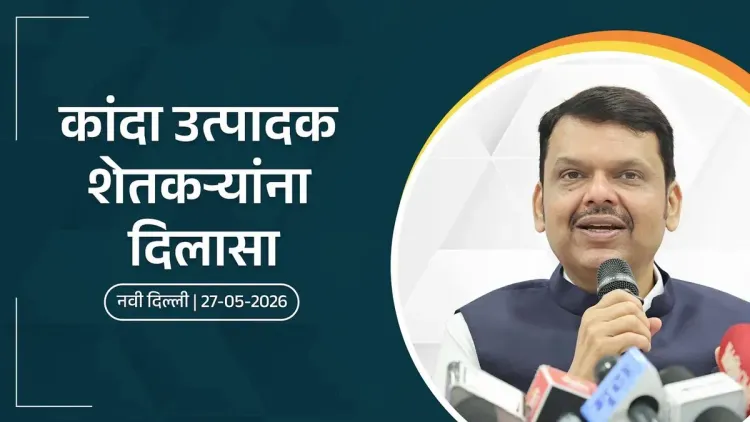
Maharashtra Chief Minister Devendra Fadnavis on Wednesday, 27 May 2026 announced that approval has been granted for NAFED and NCCF to directly procure onions from farmers, a move aimed at stabilising farm-gate prices amid seasonal market pressures. The announcement, made from New Delhi, signals coordinated central-state action on onion price volatility that periodically distresses growers across Maharashtra.
Context
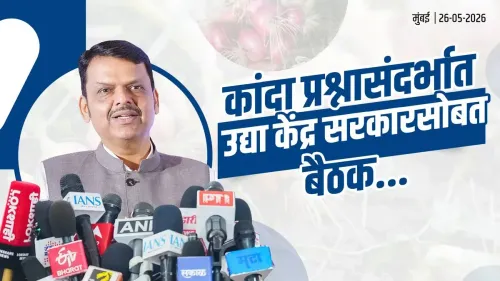
Fadnavis posted in Marathi and Hindi: 'नाफेड आणि NCCF मार्फत थेट शेतकऱ्यांकडून कांदा खरेदी करण्यास मान्यता' ('Approval granted for direct purchase of onions from farmers through NAFED and NCCF'). The announcement comes at a time when onion-growing belts in Maharashtra — particularly districts such as Nashik — are susceptible to sharp price crashes following harvest surpluses, leaving farmers unable to recover even basic input costs.
The Chief Minister's post was tagged #OnionFarmers and #Agriculture, underscoring the welfare dimension of the intervention. His presence in New Delhi on the date of the post suggests the approval was secured through discussions with central government ministries.
Policy Backdrop
NAFED — the National Agricultural Cooperative Marketing Federation of India — and NCCF (National Cooperative Consumers Federation of India) are the Union government's principal cooperative arms for farm-commodity procurement. Both agencies have historically been deployed during price-collapse episodes to purchase produce directly from farmers at or above minimum support levels, bypassing distressed mandi intermediaries.
The framework for such interventions traces back to the Operation Greens scheme launched in 2018, which targeted price stabilisation for onions, tomatoes and potatoes through coordinated procurement and supply-chain measures. Direct procurement by central cooperatives forms a standard plank of that architecture, typically activated when seasonal surpluses push wholesale prices below viable thresholds.
Stakeholders and Impact
Onion farmers in Maharashtra stand to benefit most immediately, as direct NAFED and NCCF procurement removes the dependence on spot mandi prices that can collapse during flush-harvest periods. By offering an assured off-take channel, the intervention is designed to put a floor under farm-gate realisations.
Consumers and traders also have a stake: government procurement can moderate extreme price swings in both directions, reducing the boom-bust cycle that has historically made onions a politically sensitive commodity in India. Maharashtra, as the country's largest onion-producing state, is the primary theatre for such operations, and their success here tends to set the tone for national price trends.
What's Next
Attention will now turn to the operational rollout — specifically, which mandis are designated for procurement, the volumes targeted, and the price at which NAFED and NCCF will buy. State government coordination will be essential for logistics, storage, and farmer registration at procurement centres.
Broader policy levers — including cold-storage capacity expansion, export-window decisions, and any supplementary state-level price support — will determine the durability of the intervention's impact on farmer incomes heading into the next marketing season.
Point of View
But its political timing is equally significant: CM Fadnavis personally flagging the decision from New Delhi signals that the BJP-led state government is keen to be seen as responsive to the agrarian distress that has historically cost it votes in Maharashtra's onion heartland. The intervention fits within a longer arc of central cooperative machinery being activated as a first-response tool whenever onion prices threaten to become a flashpoint. Whether the measure translates into meaningful income relief for farmers will depend on procurement scale and speed — factors that have undermined similar past efforts. The announcement also keeps pressure on the Union agriculture and consumer affairs ministries to follow through on the operational details swiftly.
NationPress
11 Oct 2026
Frequently Asked Questions
What did CM Devendra Fadnavis announce about onion farmers?
CM Devendra Fadnavis announced on 27 May 2026 that approval has been granted for NAFED and NCCF to directly purchase onions from farmers, aiming to stabilise farm-gate prices in Maharashtra.
What is NAFED and how does it help onion farmers?
NAFED, the National Agricultural Cooperative Marketing Federation of India, is a central government cooperative agency that procures agricultural produce directly from farmers to prevent price crashes. During surplus seasons, NAFED buying provides farmers an assured off-take channel independent of volatile mandi prices.
What is Operation Greens and is it related to this announcement?
Operation Greens is a scheme launched in 2018 to stabilise prices of onions, tomatoes and potatoes through coordinated procurement and supply-chain interventions. The NAFED and NCCF direct procurement model announced by Fadnavis is consistent with the framework established under that scheme.
Why do onion prices fall so sharply in Maharashtra?
Maharashtra is India's largest onion-producing state, and seasonal surpluses — particularly after strong harvests — can flood wholesale markets and push prices well below farmers' cost of production. This boom-bust cycle makes direct government procurement interventions a recurring policy tool.
What happens after NAFED and NCCF procure onions from farmers?
Procured onions are typically stored in government-managed facilities and released into the market in a calibrated manner to moderate price spikes for consumers. The agencies may also use the stock for distribution through cooperative retail channels.