Delhi HC issues notices in deepfake case against CJP leaders over morphed images
Synopsis
A woman's petition to the Delhi High Court has exposed one of the starkest documented cases of AI deepfakes being deployed as a political weapon in India — allegedly morphing her image with the Prime Minister's and spreading it on social media and pornographic sites. The court has moved swiftly, issuing notices and ordering Meta to pull the content within 24 hours, setting up a landmark test for how Indian law handles AI-driven political abuse.
Key Takeaways
The Delhi High Court has issued notices to CJP leaders Saurav Das, Abhijit Dipke, Ashutosh Ranka, and Ratna Singh over an alleged deepfake petition.
The woman alleges AI-morphed images of her alongside PM Narendra Modi were circulated on social media and distributed on pornographic websites.
The court directed Meta Platforms to remove the objectionable content within 24 hours and ordered police protection for the petitioner.
The alleged incident is linked to the CJP's 36-day NEET protest at Jantar Mantar in July 2026 , which ended with the resignation of Education Minister Dharmendra Pradhan .
In a comparable earlier case, the Patna High Court ordered removal of an AI-generated video featuring PM Modi shared by Bihar Congress on 10 September 2025 .
India currently lacks a dedicated law criminalising political deepfakes, leaving courts as the primary check.
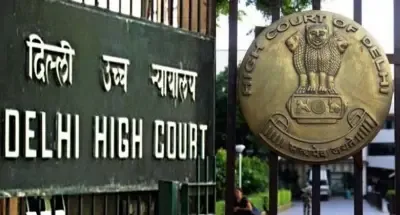
The Delhi High Court has taken cognisance of a petition filed by a woman accusing leaders of the Cockroach Janta Party (CJP) of circulating AI-generated deepfake images of her alongside Prime Minister Narendra Modi, allegedly on social media platforms, following which she claims to have received threats. The court has issued notices to the named CJP leaders and directed Meta Platforms to remove the objectionable content within 24 hours, while also ordering police protection for the petitioner.
What the Petition Alleges
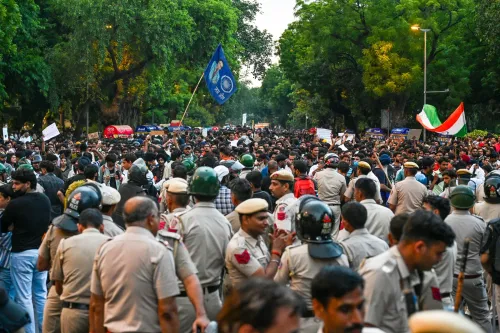
In her petition, the woman has named CJP leaders Saurav Das, Abhijit Dipke, Ashutosh Ranka, and Ratna Singh as accused. She alleges that the four, along with accomplices, 'unauthorisedly obtained' her photograph during a CJP protest at Jantar Mantar in New Delhi and used AI tools to morph it into what she describes as a 'highly vulgar, compromising image' alongside the Prime Minister.
The petition further alleges that the morphed images were not only made viral across social media but were also displayed on physical banners during the demonstration. According to the plea, 'the perpetrators printed physical banners of this morphed picture, paraded them in massive crowds, raised sexually suggestive and derogatory slogans, and maliciously uploaded videos onto Instagram and other social media platforms.' In what the petitioner describes as the most disturbing element, she has alleged that 'non-consensual explicit photos' were also uploaded and distributed on pornographic websites.
Context: The July Jantar Mantar Agitation
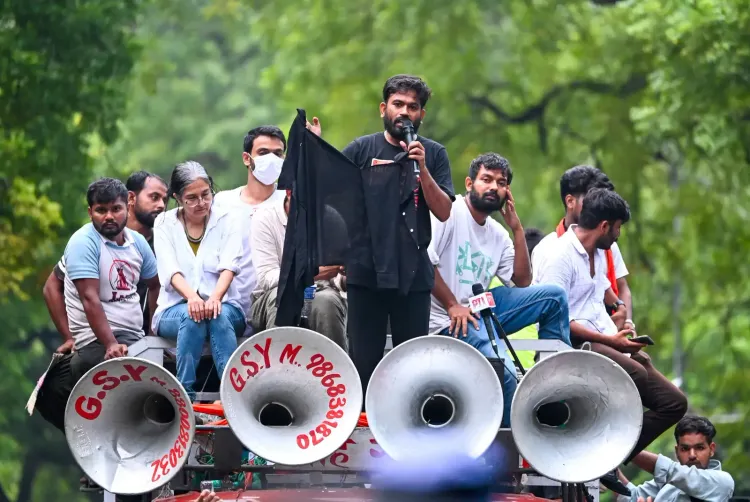
The woman alleges the incident stemmed from the July 2026 CJP protest at Jantar Mantar, which was led by Dipke and co-convener Das, with activist Sonam Wangchuk playing a prominent role. The CJP had spearheaded a 36-day agitation protesting alleged irregularities in the 2026 NEET examination. The protest concluded with the resignation of Union Education Minister Dharmendra Pradhan. The CJP is widely described as an offshoot of Arvind Kejriwal's Aam Aadmi Party (AAP), positioning itself as a youth-led pressure group with a stated agenda of challenging and removing the ruling party.
The named CJP leaders are yet to formally respond to the court notices; their version of events will emerge once they file their replies.
A Precedent From Bihar
This is not an isolated incident of AI being weaponised for political point-scoring. On 10 September 2025, the Bihar Congress unit shared an AI-generated video on X (formerly Twitter) featuring PM Modi and his late mother. Following a legal challenge, the Patna High Court directed that the video be removed from social media platforms. The pattern suggests that the misuse of generative AI in political campaigns is becoming increasingly systematic rather than incidental.
Broader Implications for AI and Political Conduct
The case raises urgent questions about the regulatory gap around AI-generated content in political discourse. India currently lacks a dedicated law specifically criminalising deepfake content used for political defamation or non-consensual intimate imagery, leaving courts to address individual cases through existing provisions. Critics argue that as social media amplifies reach and AI tools lower the barrier to content manipulation, the window for meaningful legal intervention after such content goes viral is dangerously narrow. The Delhi High Court's directive to Meta to act within 24 hours signals judicial impatience with platform-speed responses to harm. How the court proceeds — and whether it lays down broader guidelines — could shape the legal framework around political deepfakes in India.
Point of View
But it addresses the symptom rather than the cause: India has no statute that specifically criminalises the creation or political deployment of deepfakes. Two courts in two years — Patna in 2025, Delhi in 2026 — have issued platform-removal orders, yet the same tools and tactics keep recurring. The political class has so far shown little appetite for self-regulation or legislative action, partly because deepfakes can serve any side of the aisle. Until Parliament acts, courts will remain the only firewall — and a reactive one at that. The 24-hour Meta takedown order is a useful pressure point on platforms, but in an environment where content spreads within minutes, the harm window is almost always already open by the time a court order arrives.
NationPress
27 Sept 2026
Frequently Asked Questions
What is the deepfake case before the Delhi High Court?
A woman has petitioned the Delhi High Court alleging that CJP leaders circulated AI-morphed images of her alongside PM Narendra Modi on social media and pornographic websites, causing her to receive threats. The court has issued notices to four named CJP leaders and ordered Meta to remove the content within 24 hours.
Who are the CJP leaders named in the petition?
The petition names Saurav Das, Abhijit Dipke, Ashutosh Ranka, and Ratna Singh as accused. They have been served court notices and are yet to formally respond; their version of events will emerge once replies are filed.
What is the CJP and how is it connected to this case?
The Cockroach Janta Party (CJP) is described as a youth-led pressure group said to be an offshoot of Arvind Kejriwal's Aam Aadmi Party (AAP). The group led a 36-day NEET protest at Jantar Mantar in July 2026, during which the alleged incident is said to have occurred.
Has AI-generated content been misused politically in India before?
Yes. On 10 September 2025, the Bihar Congress unit shared an AI-generated video featuring PM Modi and his late mother on X; the Patna High Court subsequently ordered its removal. The Delhi case represents a further escalation, involving non-consensual intimate imagery.
What legal protection exists against political deepfakes in India?
India currently has no dedicated law specifically criminalising the creation or political use of deepfakes. Victims must rely on existing provisions such as the IT Act and IPC, and seek judicial intervention case by case — a gap that legal experts and digital rights advocates have flagged as urgent.