Financial inclusion at core of central banking, says CEA Anantha Nageswaran at RBI Samvad 2026

Synopsis
At RBI Samvad 2026, India's Chief Economic Adviser flipped the script on development economics — arguing that financial inclusion drives income growth, not the other way around. With central bank governors from four continents and an AI governance debate on the same stage, the seminar signals how broadly the central banking mandate is being redrawn.
Key Takeaways
Anantha Nageswaran said financial inclusion lies at the core of central banking , not at its periphery, at RBI Samvad 2026 on 19 October 2026 .
He argued financial inclusion can lead to rising incomes , inverting the traditional view that income must come first.
Central bank governors from Zimbabwe , Guyana , and Paraguay , plus experts from the OECD and World Bank , participated in the financial inclusion panel.
NITI Aayog member Abhay Karandikar highlighted India's AI progress; a separate panel addressed AI governance, trust, and financial stability.
The seminar was inaugurated by RBI Governor Sanjay Malhotra , with Finance Minister Nirmala Sitharaman delivering the keynote address.
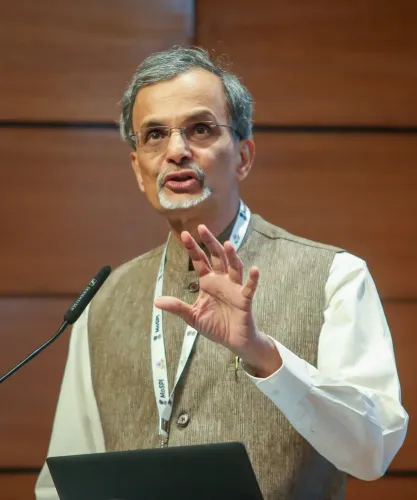
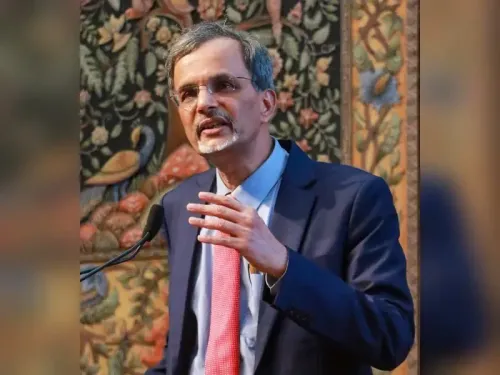
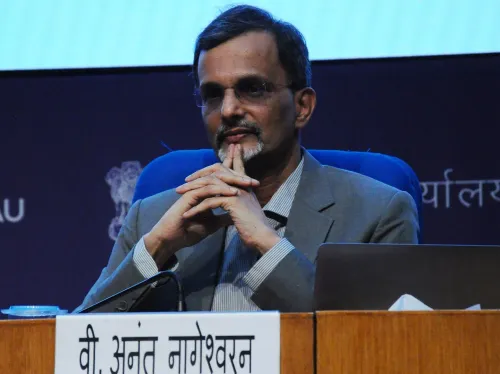
Chief Economic Adviser V. Anantha Nageswaran on Monday, 19 October 2026 declared that financial inclusion is not a peripheral objective but lies at the very core of central banking, delivering his remarks at the RBI Samvad 2026 international seminar in New Delhi. Drawing on India's own development experience, he argued that access to finance need not wait for income growth — rather, financial inclusion itself can catalyse rising incomes and expand economic opportunities.
Key Arguments from the CEA
Nageswaran's framing inverts the conventional development orthodoxy, which often treats financial access as a downstream reward for income growth. His contention is that the causal arrow runs the other way: broaden financial access first, and prosperity follows. This perspective aligns with India's decade-long push through instruments such as the Jan Dhan Yojana, direct benefit transfers, and the Unified Payments Interface (UPI), which together have brought hundreds of millions of previously unbanked citizens into the formal financial system.
Global Panel on Advancing Financial Inclusion
A dedicated panel discussion on the theme 'Advancing Financial Inclusion: Emerging Mandates and Way Forward' brought together central bank governors from Zimbabwe and Guyana, a board member from the Central Bank of Paraguay, and experts from the OECD and the World Bank. Context-setting was provided by Gerald Nyaoma, Deputy Governor of the Central Bank of Kenya.
Panellists stressed the importance of consumer protection, digital financial tools, and targeted support for vulnerable segments of society. The consensus message was clear: financial inclusion must evolve beyond mere account access toward effective usage, meaningful participation, and ultimately, greater financial well-being and economic resilience.
AI in Finance: Governance Under the Spotlight
NITI Aayog member Abhay Karandikar highlighted India's accelerating progress in Artificial Intelligence and its transformative potential for financial services. A subsequent panel on 'Governing Autonomous Systems: Trust, Accountability and Stability' examined the evolving role of AI in finance, underscoring the need for robust data privacy frameworks, common benchmarks, and strong governance mechanisms to ensure transparency, accountability, and financial stability.
About RBI Samvad 2026
The two-day RBI Samvad 2026 seminar was inaugurated with RBI Governor Sanjay Malhotra delivering the welcome address, while Union Finance and Corporate Affairs Minister Nirmala Sitharaman gave the keynote address. The event brings together central bank governors, senior policymakers, representatives from international organisations, and subject-matter experts from across the world to deliberate on emerging challenges and opportunities facing the global financial system. The convergence of financial inclusion and AI governance on a single platform signals the twin priorities now shaping central banking mandates globally.
Point of View
But the harder question is whether the quality of inclusion matches the quantity: account ownership is not the same as active financial participation. The pairing of a financial inclusion debate with an AI governance panel at the same seminar is telling — regulators globally are realising that the next frontier of inclusion will be shaped by algorithms, and the rules of that frontier are still being written. RBI Samvad is increasingly less a ceremonial gathering and more a norm-setting exercise for emerging-market central banks.
NationPress
19 Oct 2026
Frequently Asked Questions
What did CEA V. Anantha Nageswaran say at RBI Samvad 2026?
CEA V. Anantha Nageswaran said financial inclusion is not a peripheral objective but lies at the core of central banking. Speaking at RBI Samvad 2026 in New Delhi on 19 October 2026, he argued that financial inclusion can itself drive income growth and economic opportunity, rather than being contingent on income growth first.
What is RBI Samvad 2026?
RBI Samvad 2026 is a two-day international seminar hosted by the Reserve Bank of India in New Delhi, bringing together central bank governors, senior policymakers, and experts from international organisations to discuss challenges and opportunities in the global financial system. The 2026 edition was inaugurated by RBI Governor Sanjay Malhotra, with Finance Minister Nirmala Sitharaman delivering the keynote.
Which countries participated in the financial inclusion panel at RBI Samvad 2026?
The financial inclusion panel featured central bank governors from Zimbabwe and Guyana, a board member from the Central Bank of Paraguay, experts from the OECD and the World Bank, and context-setting by Gerald Nyaoma, Deputy Governor of the Central Bank of Kenya.
What was discussed about AI at RBI Samvad 2026?
NITI Aayog member Abhay Karandikar highlighted India's progress in Artificial Intelligence and its transformative potential for finance. A separate panel on 'Governing Autonomous Systems: Trust, Accountability and Stability' stressed the need for data privacy frameworks, common benchmarks, and governance mechanisms to ensure transparency and financial stability in AI-driven systems.
Why does financial inclusion matter for central banks?
Financial inclusion matters because it broadens the reach of monetary policy, strengthens household economic resilience, and can catalyse income growth — particularly in emerging economies. At RBI Samvad 2026, global experts emphasised that inclusion must move beyond account access to effective financial usage, participation, and ultimately well-being.