FM Sitharaman marks 12 years of BJP governance, cites Atmanirbhar Bharat
Synopsis
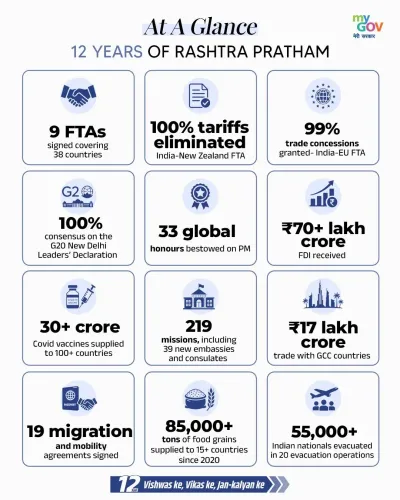
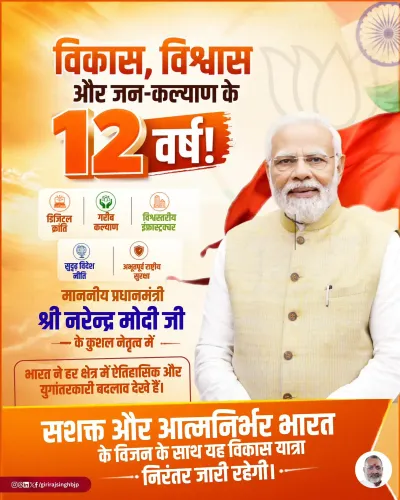
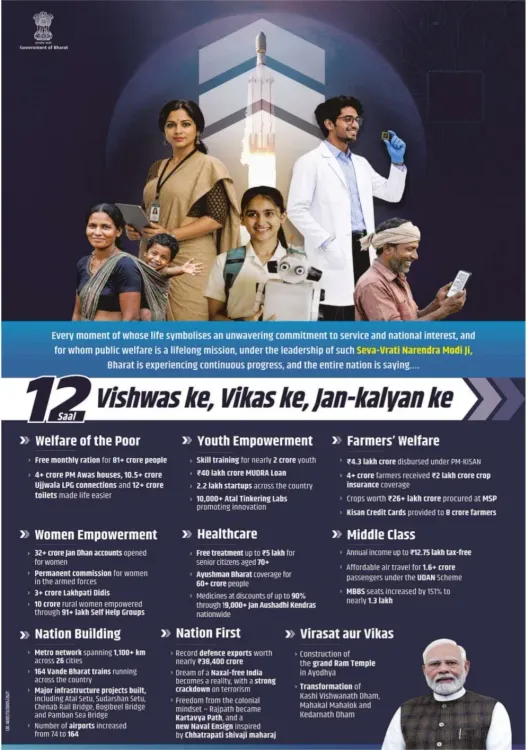
Union Finance Minister Nirmala Sitharaman marked twelve years of BJP rule on 9 June 2026, invoking the Atmanirbhar Bharat vision and people-first development as the government's defining legacy. Her post is part of a coordinated BJP campaign under #12YearsOfSeva.
Key Takeaways
Nirmala Sitharaman posted on 9 June 2026 under #12YearsOfSeva , marking twelve years of BJP governance at the Centre.
Her message centred on Atmanirbhar Bharat and people-centric development as the government's core achievements.
Atmanirbhar Bharat Abhiyan was launched in May 2020 with a Rs 20 lakh crore stimulus package built on five pillars.
Production Linked Incentive (PLI) schemes across more than a dozen sectors are the primary policy vehicle for the self-reliance push.
The BJP has been in power at the Centre since May 2014 under Prime Minister Narendra Modi , now in its third consecutive term.
The next Economic Survey and PLI scheme assessments will be key indicators of Atmanirbhar Bharat's measurable progress.
Union Finance Minister Nirmala Sitharaman on Tuesday, 9 June 2026, marked twelve years of the BJP-led central government with a post on X highlighting people-centric development and the Atmanirbhar Bharat vision as defining achievements of the decade-plus in power.
Context
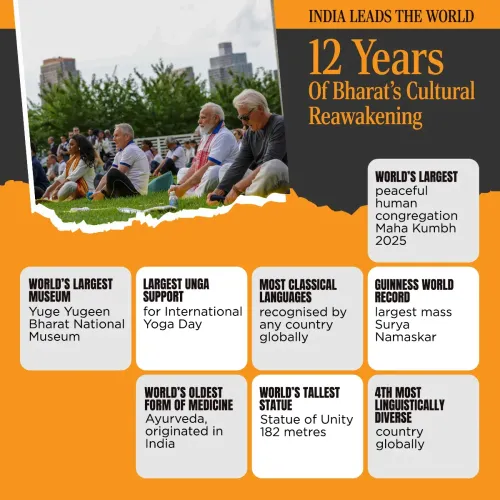
Sitharaman's post, tagged #12YearsOfSeva, stated: 'With people at the heart of development, a stronger and a Atmanirbhar Bharat is taking shape.' The message is part of a coordinated BJP communication drive marking 12 years since the party came to power at the Centre in May 2014 under Prime Minister Narendra Modi. Senior party leaders and ministers have used the hashtag to highlight governance milestones across sectors.
As Union Finance Minister, Sitharaman has been a central figure in shaping the economic architecture of this period, presenting seven consecutive Union Budgets and steering fiscal policy through the post-pandemic recovery.
Policy Backdrop
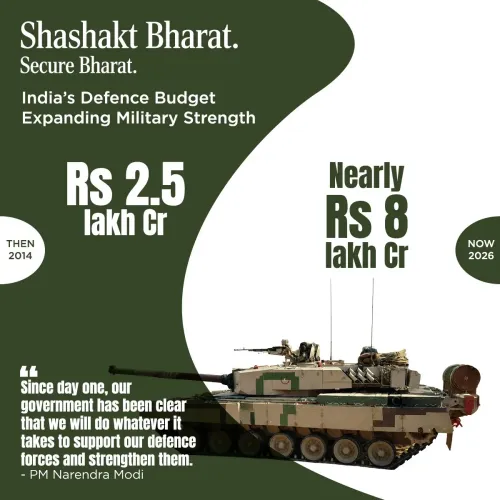
Atmanirbhar Bharat Abhiyan was announced by Prime Minister Narendra Modi in May 2020 alongside a stimulus package of Rs 20 lakh crore, structured around five pillars: economy, infrastructure, system, vibrant demography, and demand. The campaign sought to reduce India's dependence on imports and strengthen domestic supply chains in sectors ranging from defence and electronics to pharmaceuticals.
The self-reliance push extended and deepened earlier initiatives such as Make in India, launched in 2014, giving them renewed urgency in the wake of pandemic-era supply chain disruptions. Production Linked Incentive (PLI) schemes across more than a dozen sectors became the principal instrument for incentivising domestic manufacturing under this framework.
Stakeholders and Impact
The Atmanirbhar Bharat framework has touched a broad range of stakeholders — from small and medium enterprises seeking a level playing field against imports, to large domestic manufacturers in sectors such as semiconductors, mobile phones, and specialty chemicals that have received PLI support. Indian citizens are the stated beneficiaries of the people-centric development narrative the government has consistently advanced.
Critics have periodically questioned whether self-reliance targets translate into measurable import substitution, while proponents point to rising domestic production figures in electronics and defence as evidence of structural change. The Finance Ministry, under Sitharaman, has positioned successive budgets as instruments of this broader transformation.
What's Next
The #12YearsOfSeva campaign is expected to continue through the week as the BJP marks the anniversary across social media and public events. On the policy front, the rollout and performance assessment of PLI schemes and the findings of the next Economic Survey on self-reliance targets will be closely watched as indicators of how far the Atmanirbhar Bharat vision has translated into structural economic change. With the government now in its third consecutive term, the anniversary messaging is also widely seen as laying the groundwork for the next phase of economic reform communication.
Point of View
Linking the Finance Ministry's economic record directly to the BJP's broader governance narrative at a politically significant milestone. By invoking Atmanirbhar Bharat — the government's most prominent post-2020 economic brand — she signals continuity between pandemic-era crisis management and the current growth story. The 'people at the heart of development' framing is a deliberate counter to opposition critiques of inequality and joblessness, anchoring the government's identity in inclusive growth rather than aggregate GDP. As the BJP enters the second year of its third term, such messaging also serves to consolidate the party's ideological positioning ahead of a busy state-election calendar.
NationPress
21 Sept 2026
Frequently Asked Questions
What is #12YearsOfSeva?
#12YearsOfSeva is a BJP social media campaign marking twelve years since the party came to power at the Centre in May 2014 under Prime Minister Narendra Modi, with leaders sharing governance highlights across platforms.
What is Atmanirbhar Bharat?
Atmanirbhar Bharat Abhiyan is a national self-reliance initiative launched by PM Modi in May 2020 with a Rs 20 lakh crore economic package, aimed at boosting domestic manufacturing and reducing India's dependence on imports.
What did Nirmala Sitharaman post on 9 June 2026?
Finance Minister Nirmala Sitharaman posted on X that 'With people at the heart of development, a stronger and a Atmanirbhar Bharat is taking shape,' as part of the #12YearsOfSeva campaign.
What are PLI schemes and how do they relate to Atmanirbhar Bharat?
Production Linked Incentive schemes offer financial incentives to domestic manufacturers in sectors such as electronics, pharmaceuticals and defence, and are the primary policy tool through which the Atmanirbhar Bharat vision is being implemented.
How long has Nirmala Sitharaman been Finance Minister?
Nirmala Sitharaman has served as Union Finance Minister since 2019 and has presented seven consecutive Union Budgets, making her the longest-serving Finance Minister in India's post-independence history.