Delhi-NCR Wakes Up to Fog After Rain; More Rain Forecasted on March 23
Synopsis
After a night of rain, dense fog enveloped Delhi-NCR on Saturday morning, reducing visibility across the region. With another round of showers expected on March 23, residents are advised to stay informed about weather alerts.
Key Takeaways
Dense fog in Delhi-NCR due to recent rainfall.
Another round of showers is expected on March 23.
Temperatures will gradually rise to between 26-28°C.
Air quality is in the 'moderate' range post-rain.
Residents are advised to stay informed about weather alerts.
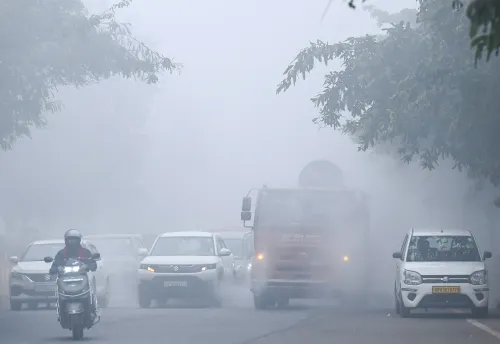
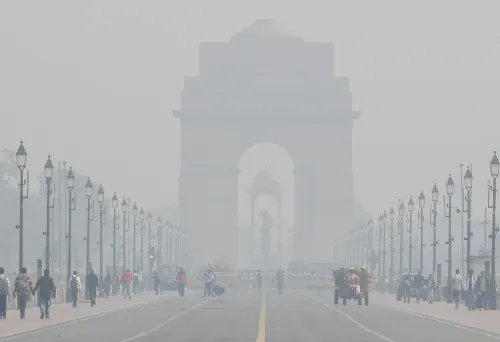
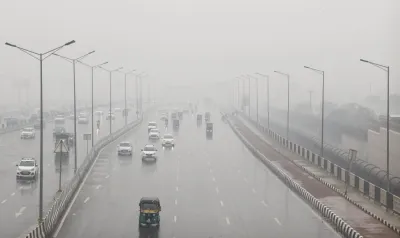
New Delhi, March 21 (NationPress) Residents of the national capital experienced a thick layer of fog on Saturday morning, following rainfall the night before, which significantly reduced visibility across various locations.
Similar foggy conditions were noted throughout the Delhi-NCR region, including areas like Delhi Cantt, North Ridge, Ghaziabad, and Noida, where a delicate fog enveloped the skyline.
The India Meteorological Department (IMD) has stated that this current phase of unstable weather is expected to persist, with additional rainfall anticipated on March 23.
While skies may slowly begin to clear, the lingering moisture in the atmosphere combined with recent showers has resulted in the formation of morning fog across the Delhi-NCR area.
In spite of the cloudy and humid conditions, temperatures are predicted to gradually increase starting Saturday. The maximum temperature is anticipated to fluctuate between 26 and 28 degrees Celsius over the next few days, indicating a shift towards warmer weather after the recent cool spell.
Furthermore, air quality has improved following the rain. The IMD has forecasted that the Air Quality Index (AQI) will remain in the 'moderate' range for the foreseeable future.
Data from the Central Pollution Control Board (CPCB) on Friday revealed an overall AQI of 123, signifying relatively better air quality compared to previous days.
Several monitoring stations in Delhi reported AQI levels within the moderate range. Anand Vihar and RK Puram both recorded AQI levels of 176, while Dwarka and Chandni Chowk recorded 118. Bawana had an AQI of 123, and the vicinity of Jawaharlal Nehru University reported a lower level of 106.
The AQI scale, which ranges from 0 to 500, categorizes air quality into six levels from 'good' to 'severe' based on potential health effects. A 'moderate' rating denotes acceptable air quality for the majority, although sensitive groups may still experience minor discomfort.
The enhanced air quality follows a refreshing change in weather on Friday, when residents enjoyed overcast skies, strong winds, and a noticeable decrease in temperature after rain fell in multiple areas of the city.
With additional rain expected in the upcoming days, authorities encourage residents to stay informed about weather alerts, especially during early mornings and late evenings when fog and limited visibility may impact daily travel.
Point of View
I observe that the recent weather changes in Delhi-NCR, including the fog and upcoming rainfall, are relevant for residents. This article provides vital information about air quality improvements and encourages awareness regarding travel conditions.
NationPress
24 Sept 2026
Frequently Asked Questions
Why is there fog in Delhi-NCR?
Fog in Delhi-NCR is caused by high moisture content in the air combined with recent rainfall, leading to reduced visibility.
What is the expected temperature in Delhi-NCR?
Temperatures are expected to rise gradually, settling between 26 and 28 degrees Celsius over the next few days.
How is the air quality in Delhi-NCR?
The air quality has improved, with the AQI currently in the 'moderate' range, indicating acceptable conditions for most individuals.
When is the next round of rain expected?
Another round of rainfall is forecasted for March 23.
What should residents do during foggy conditions?
Residents should stay updated on weather alerts, especially during early morning and late evening hours when visibility is reduced.