Modi's punctuality push: From 'chalta hai' to 'badal sakta hai' in Indian governance
Synopsis
Modi's punctuality campaign is more than a scheduling lesson — it is a deliberate attempt to rewrite a cultural contract. By pointing to Delhi Metro's 99.9% on-time record and backing it with PRAGATI and CPGRAMS, he is making the case that India's historic tolerance for delay is not destiny but policy failure — and that 'badal sakta hai' is a governance promise, not just a slogan.
Key Takeaways
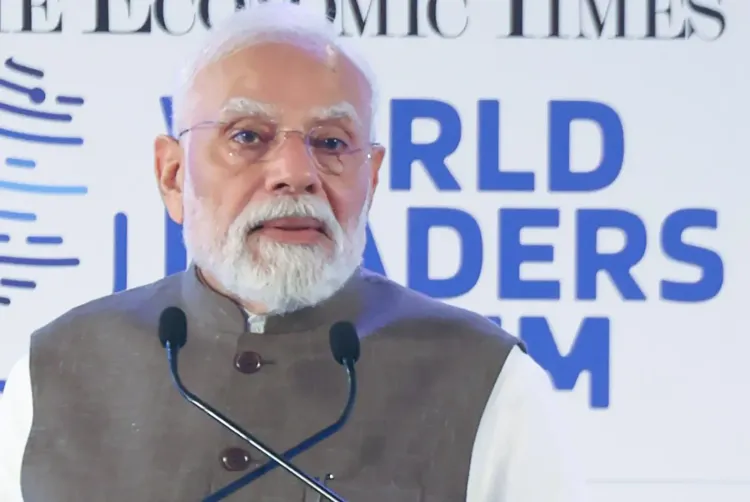
PM Modi has repeatedly linked punctuality to national competitiveness, discipline, and institutional accountability at forums including Mann Ki Baat and the ET World Leaders Conference .
The Delhi Metro and Namo Bharat Rapid Rail reportedly maintain 99.9 per cent punctuality, cited by Modi as proof that India can shed its reputation for delay.
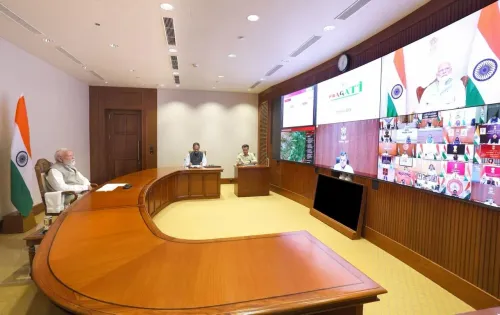
The PRAGATI platform enables real-time, Prime Minister-level review of stalled projects and grievances across states and Union Ministries.
CPGRAMS allows citizens to lodge, track, and escalate complaints across all central ministries, departments, and states, attaching enforceable timelines to redressal.
Modi's call to replace 'chalta hai' with 'badal sakta hai' frames cultural inertia around delay as a structural barrier to India's global competitiveness.
Prime Minister Narendra Modi has made punctuality a recurring centrepiece of his governance narrative — not merely as a scheduling virtue but as a lever to dismantle a deeply entrenched cultural tolerance for delay that has shaped Indian public life for generations. Speaking at forums ranging from Mann Ki Baat to the ET World Leaders Conference, Modi has consistently framed on-time delivery as a measure of national discipline, institutional respect, and economic competitiveness.
A Culture of Delay, Decades in the Making
The roots of India's complicated relationship with punctuality run deep. For much of the post-Independence era, late trains, delayed government files, and overdue public services were not anomalies — they were the norm. Citizens adapted: arriving at railway stations braced for extended waits, placing bricks in queues to hold their spot, and accepting that bureaucratic resolution could stretch into years.
The abbreviation IST — officially Indian Standard Time — was repurposed in popular humour as 'Indian Stretchout Time', a wry acknowledgment of how comprehensively lateness had been normalised. Even school assemblies and public events routinely began well past their announced hour. The phrase 'chalta hai' — roughly, 'anything goes' — became a cultural shorthand for this collective shrug toward delay.
Notably, during the Emergency years of the 1970s, proponents of that period pointed to trains and government offices running on schedule as a rare silver lining — a telling indication of how exceptional punctuality felt in the Indian context.
Modi's Reframe: Punctuality as Governance
Against this historical backdrop, Modi's recent praise for the Delhi Metro and Namo Bharat Rapid Rail — both of which reportedly maintain 99.9 per cent punctuality — carries deliberate symbolic weight. By holding up these systems as benchmarks, he frames timely governance not as an administrative nicety but as a political deliverable that citizens can measure in minutes.
His call to replace 'chalta hai' with 'badal sakta hai' (things can change) is a direct rhetorical challenge to cultural inertia. In a country competing for global investment and manufacturing share, the argument runs, the tolerance for delay is not a quirk — it is a structural liability.
Policy Instruments Behind the Rhetoric
The punctuality push is not confined to speeches. Several policy initiatives have been deployed to institutionalise timeliness across governance layers.
Mission Raftaar targeted a doubling of average train speeds, embedding speed discipline into railway operations. The PRAGATI (Pro-Active Governance and Timely Implementation) platform enables the Prime Minister to conduct direct, real-time reviews of stalled projects and grievances in partnership with states and Union Ministries — effectively making delay visible at the highest level of government.
For citizens, CPGRAMS — India's flagship digital grievance redressal platform — allows complaints to be lodged, tracked, and escalated across all central ministries, departments, and states. By attaching timelines to grievance resolution, the system converts an abstract commitment to efficiency into a trackable obligation.
Why It Matters Beyond the Metaphor
The significance of Modi's punctuality narrative lies in its dual register. At the practical level, it addresses real friction points: delayed trains, slow file movement, and deferred public services that have historically eroded citizen trust in institutions. At the symbolic level, punctual infrastructure becomes a proxy for punctual government — reform made legible to ordinary people through everyday experience.
Critics might argue that the gap between rhetoric and ground-level implementation remains wide in many districts, and that digital grievance platforms are only as effective as the bureaucratic will behind them. Nevertheless, the framing itself represents a measurable shift: where lateness was once shrugged off, it is now officially positioned as a problem to be solved.
Whether the cultural reset from 'chalta hai' to 'badal sakta hai' outlasts the political moment that produced it will depend on whether the institutional reforms behind the rhetoric prove durable — and verifiable.
Point of View
Unlike many governance promises. But the gap between the Delhi Metro's 99.9% record and the average district collectorate's file-movement speed is vast, and that gap is where the rhetoric will be tested. Modi is essentially betting that visible infrastructure wins — metro trains, rapid rails — can shift public perception of state efficiency broadly, even where back-end bureaucratic reform is slower. The risk is that the metaphor outpaces the machinery, and 'badal sakta hai' becomes the new 'chalta hai' for unfulfilled timelines.
NationPress
22 Aug 2026
Frequently Asked Questions
What is PM Modi's 'chalta hai' to 'badal sakta hai' campaign about?
It is PM Modi's effort to replace India's long-standing cultural tolerance for delay — summed up in the phrase 'chalta hai' (anything goes) — with a new standard of timeliness in governance and public life, captured in 'badal sakta hai' (things can change). The campaign links punctual infrastructure and services to broader national competitiveness and institutional accountability.
What is the PRAGATI platform and how does it enforce punctuality in governance?
PRAGATI (Pro-Active Governance and Timely Implementation) is a digital platform that allows the Prime Minister to conduct direct, real-time reviews of stalled government projects, schemes, and grievances in coordination with states and Union Ministries. It is designed to make delays visible at the highest level of government and accelerate resolution.
What punctuality record has the Delhi Metro achieved?
The Delhi Metro reportedly maintains a 99.9 per cent punctuality record, which PM Modi has cited as evidence that India can build and operate world-class, on-time public infrastructure. The Namo Bharat Rapid Rail has been cited alongside it as another benchmark.
What is CPGRAMS and who can use it?
CPGRAMS is India's flagship digital platform for public grievance redressal, enabling citizens to lodge, track, and escalate complaints across all central ministries, departments, and states. It attaches enforceable timelines to grievance resolution, converting a bureaucratic obligation into a trackable commitment.
Why has India historically had a reputation for delays?
For decades after Independence, late trains, slow file movement, and deferred public services were routine, and citizens adapted accordingly — arriving early at stations, placing objects in queues to hold their spot, and accepting multi-year waits for bureaucratic resolution. The phrase 'Indian Stretchout Time' became popular shorthand for this normalised lateness, which Modi's governance narrative now explicitly targets.