Madhuban Chowk skywalk to open by Nov 30: Delhi CM Rekha Gupta

Synopsis
Delhi's Madhuban Chowk is getting its first grade-separated pedestrian crossing — a ₹9.62 crore skywalk-FOB that will stitch together two Metro stations and Rohini District Court by 30 November. With the project already 60% done, it marks a rare last-mile connectivity win on one of the capital's most congested corridors.
Key Takeaways
Delhi CM Rekha Gupta confirmed the Madhuban Chowk skywalk-FOB is expected to open by 30 November .
The project is being built by the Public Works Department (PWD) at a cost of ₹9.62 crore and is 60% complete .
The structure will connect Pitampura Metro Station , Madhuban Chowk Metro Station , and Rohini District Court .
Pedestrians currently have no grade-separated crossing on the Outer Ring Road at this location.
The skywalk is expected to reduce pedestrian-vehicle conflicts and ease traffic congestion at the busy junction.
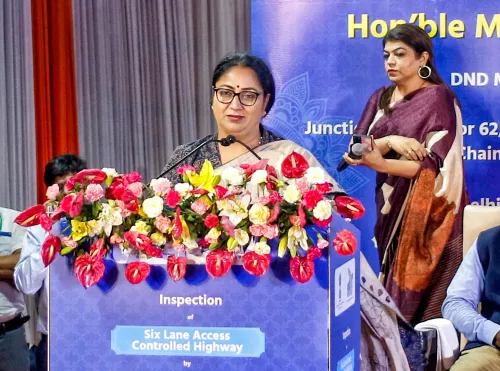
Delhi Chief Minister Rekha Gupta on Saturday, 22 August announced that a skywalk and foot over bridge (FOB) under construction at Madhuban Chowk in North Delhi is expected to open to the public by 30 November. The infrastructure project aims to give pedestrians a safe, grade-separated crossing over the busy Outer Ring Road, eliminating the need to navigate traffic at road level.
Project Status and Cost
The skywalk-FOB is being developed by the Public Works Department (PWD) at a total cost of ₹9.62 crore and is currently 60 per cent complete, according to the Chief Minister. The structure runs along the Outer Ring Road corridor, one of Delhi's most congested arterial stretches.
Key Connectivity Gains
Once operational, the facility will provide dedicated pedestrian linkage between Pitampura Metro Station, Madhuban Chowk Metro Station, and Rohini District Court. The route is expected to benefit a wide cross-section of daily commuters — Metro passengers, advocates, court staff, litigants, and local residents — who currently have no grade-separated crossing option at this junction.
Traffic and Safety Impact
A dedicated elevated pedestrian corridor at Madhuban Chowk is designed to reduce pedestrian-vehicle conflicts that are common at busy intersections along the Outer Ring Road. Officials noted that separating foot traffic from road traffic should also ease vehicular congestion at the chowk, where peak-hour gridlock is a recurring problem.
Metro Connectivity and Sustainable Mobility
Chief Minister Gupta highlighted that the skywalk's completion coincides with the opening of Madhuban Chowk Metro Station, strengthening last-mile connectivity in the area. A safe, covered pedestrian link between Metro stations and key nearby destinations is expected to encourage greater Metro ridership and support Delhi's push toward public transport-based urban mobility. The project, she said, is 'an important step towards safer pedestrian movement, better Metro connectivity and stronger last-mile connectivity.'
Point of View
But the location is well-chosen — Madhuban Chowk sits at a confluence of Metro access and a district court, generating dense, daily foot traffic with no safe crossing. The ₹9.62 crore price tag is modest by urban infrastructure standards, which raises the question of why this gap persisted so long. The real test will be whether the 30 November deadline holds; Delhi has a pattern of infrastructure projects slipping past announced timelines, and with 40% of construction still pending, the margin is tight. If delivered on time, it sets a useful benchmark for last-mile Metro connectivity projects across the capital.
NationPress
22 Aug 2026
Frequently Asked Questions
When will the Madhuban Chowk skywalk open to the public?
Delhi Chief Minister Rekha Gupta has said the Madhuban Chowk skywalk and foot over bridge is likely to open by 30 November. The project is currently 60 per cent complete.
How much does the Madhuban Chowk skywalk project cost?
The project is being built at a cost of ₹9.62 crore by the Public Works Department (PWD) of Delhi along the Outer Ring Road.
Which locations will the Madhuban Chowk skywalk connect?
The skywalk-FOB will provide pedestrian connectivity between Pitampura Metro Station, Madhuban Chowk Metro Station, and Rohini District Court, benefiting Metro commuters, legal professionals, and local residents.
Why is the Madhuban Chowk skywalk being built?
There is currently no grade-separated pedestrian crossing at Madhuban Chowk on the Outer Ring Road. The skywalk will allow pedestrians to cross above road level, improving safety and reducing conflicts with vehicular traffic.
How will the skywalk help Metro connectivity in the area?
The skywalk coincides with the opening of Madhuban Chowk Metro Station and will strengthen last-mile connectivity by linking two Metro stations to Rohini District Court, potentially boosting Metro ridership in North Delhi.