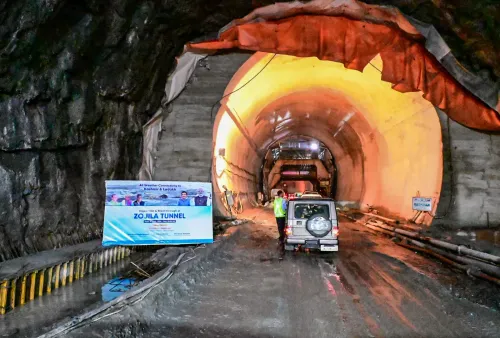
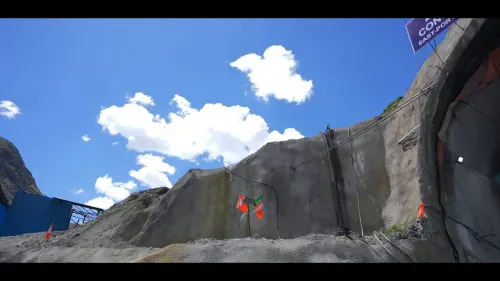
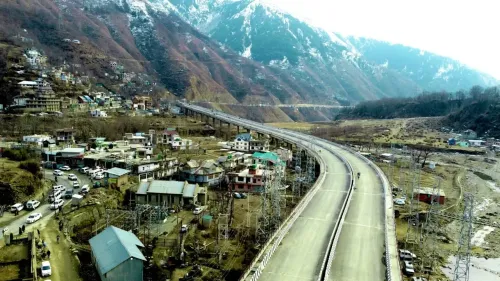
Gadkari flags 810m viaduct, AT-03 tunnel on NH-44 in J&K
Synopsis
Union Minister Nitin Gadkari has announced the completion of an 810-metre viaduct near Ramsoo and the 3.5-km AT-03 Tunnel on NH-44 in Ramban district, J&K, at a cost of ₹680 crore, bypassing one of the highway's most landslide-prone stretches to secure all-weather access to the Kashmir Valley.
Key Takeaways
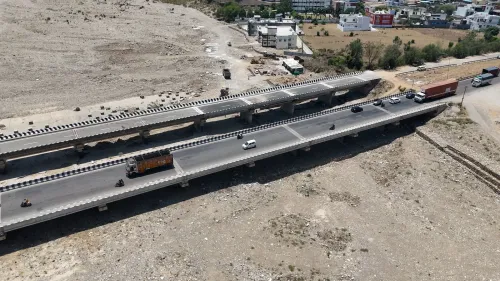
An 810-metre viaduct on the northbound carriageway near Ramsoo, Ramban district has been completed on NH-44 .
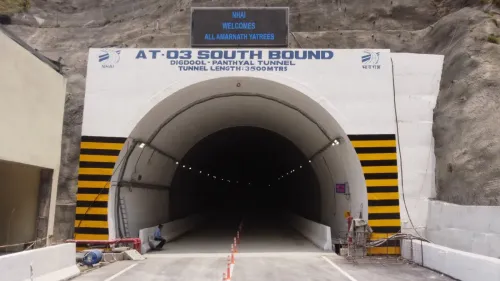
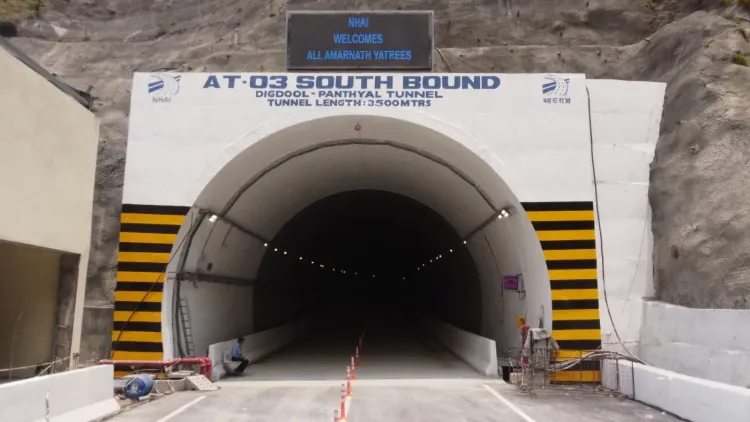
The 3.5-km AT-03 Tunnel on the southbound carriageway connects Digdole to Panthyal on the same highway.
Both structures were built at a combined cost of ₹680 crore .
They bypass the landslide-prone Ramban–Banihal section, promising all-weather connectivity to the Kashmir Valley .
Key beneficiaries include tourists, local commuters, defence vehicles, freight operators , and suppliers of essential goods.
The works are linked to the Bharatmala Pariyojana and the PM GatiShakti national infrastructure planning framework.
Union Road Transport and Highways Minister Nitin Gadkari on Wednesday, 1 July 2026, announced the completion of two major infrastructure works on NH-44 in Jammu and Kashmir — an 810-metre viaduct near Ramsoo in Ramban district and the 3.5-km AT-03 Tunnel connecting Digdole to Panthyal — built at a combined cost of ₹680 crore.
Context
Gadkari's post described the two structures as 'engineering marvels' that 'bypass one of the most landslide-prone stretches of the Ramban–Banihal section, ensuring safer, faster, and all-weather connectivity to the Kashmir Valley.' The viaduct sits on the northbound carriageway while the AT-03 Tunnel serves the southbound carriageway, together forming a bidirectional bypass of a chronically hazardous segment of the highway.
The minister tagged Lieutenant Governor Manoj Sinha and the Office of the LG of Jammu and Kashmir in the announcement, signalling close coordination between the Union Ministry and the UT administration on the project's delivery.
Policy Backdrop
The works are part of a broader programme to replace the most vulnerable segments of the old Jammu–Srinagar highway. The Bharatmala Pariyojana, launched in 2015, identified NH-44 upgrades as a priority corridor for faster freight movement and strategic defence access. Following the reorganisation of Jammu and Kashmir into a Union Territory in 2019, multiple tunnel and elevated-road packages on this corridor were fast-tracked by the central government.
The hashtag #GatiShakti used in the minister's post links the announcement to the PM GatiShakti National Master Plan, the government's digital platform for integrated, multimodal infrastructure planning. The Ramban–Banihal section has historically been among the most disrupted stretches of NH-44, with frequent landslides cutting off the Kashmir Valley for days at a time during monsoon and winter months.
Stakeholders and Impact
Gadkari's post enumerated the direct beneficiaries: tourists, local commuters, defence vehicles, freight operators, and suppliers of essential goods to the Valley. All-weather access on this corridor has long been a strategic priority, given that the highway serves as the primary land route for military logistics to the Kashmir Valley and onward to Ladakh.
For civilian users, the bypass structures are expected to significantly cut travel time between Jammu and Srinagar and reduce accident risk on a stretch that has historically recorded a disproportionate share of highway fatalities. Freight operators and the tourism sector — both critical to J&K's economy — stand to gain from more predictable transit windows throughout the year.
What's Next
The completion of the viaduct and AT-03 Tunnel marks progress on individual packages, but the broader Ramban–Banihal corridor programme includes additional tunnels and bypass structures still under various stages of construction. The government is expected to track remaining packages through the PM GatiShakti platform to ensure coordinated delivery across civil, defence, and logistics requirements.
With the monsoon season under way, the operational readiness of these new structures will be an early test of their stated purpose: providing uninterrupted connectivity precisely when the old alignment is most vulnerable to disruption.
Point of View
Gadkari signals that J&K infrastructure is being treated as a joint Centre-UT priority rather than a purely administrative handoff. The announcement, timed at the onset of the monsoon, is also politically calculated: it pre-empts the season's inevitable landslide news cycle with a narrative of proactive engineering. More broadly, it fits a pattern in which the ministry uses high-visibility project completions to sustain momentum for the larger, slower-moving Bharatmala pipeline.
NationPress
1 Jul 2026
Frequently Asked Questions
What is the AT-03 Tunnel on NH-44 in Jammu and Kashmir?
The AT-03 Tunnel is a 3.5-km tunnel on the southbound carriageway of NH-44 , connecting Digdole to Panthyal in Ramban district . It is part of a bypass of the landslide-prone Ramban–Banihal section and was built at a combined cost of ₹680 crore alongside the Ramsoo viaduct.
What is the Ramsoo viaduct on NH-44?
The Ramsoo viaduct is an 810-metre elevated road structure on the northbound carriageway of NH-44 near Ramsoo in Ramban district, J&K . It bypasses one of the most hazardous, landslide-prone stretches of the Jammu–Srinagar highway.
How much did the NH-44 viaduct and tunnel in Ramban cost?
The 810-metre Ramsoo viaduct and the 3.5-km AT-03 Tunnel together were built at a total cost of ₹680 crore , as announced by Union Minister Nitin Gadkari on 1 July 2026 .
Why is the Ramban-Banihal section of NH-44 so dangerous?
The Ramban–Banihal section of NH-44 is one of the most landslide-prone stretches of the Jammu–Srinagar highway. Frequent landslides, especially during monsoon and winter, regularly cut off the Kashmir Valley from the rest of the country, disrupting civilian traffic, defence logistics, and essential supplies.
What is Bharatmala Pariyojana and how is it linked to J&K highways?
Bharatmala Pariyojana is a central government highway development programme launched in 2015 that identified NH-44 upgrades as a priority corridor. Post-2019, multiple tunnel and bypass projects on the Jammu–Srinagar route, including the Ramsoo viaduct and AT-03 Tunnel, were fast-tracked under this framework.