Gadkari hails Zojila Tunnel main bore breakthrough
Synopsis
Union Minister Nitin Gadkari announced the historic breakthrough of the Zojila Tunnel's main bore on June 9, 2026, marking a pivotal milestone in the 14.2-km project that will provide all-weather road connectivity between Jammu-Kashmir and Ladakh under the Bharatmala Pariyojana.
Key Takeaways
Union Minister Nitin Gadkari announced the main-bore breakthrough of the Zojila Tunnel on June 9, 2026 .
The tunnel is 14.2 kilometres long and will provide bidirectional, all-weather connectivity between Srinagar and Leh .
The project was approved in 2018 under Bharatmala Pariyojana at an estimated cost exceeding Rs 6,800 crore .
The breakthrough follows the model set by the Atal Tunnel at Rohtang , inaugurated in 2020 .
Residents of Ladakh and Kargil , defence forces, and the tourism and trade sectors are the primary beneficiaries.
Remaining works include tunnel finishing, approach roads, safety systems and trial runs before formal inauguration.
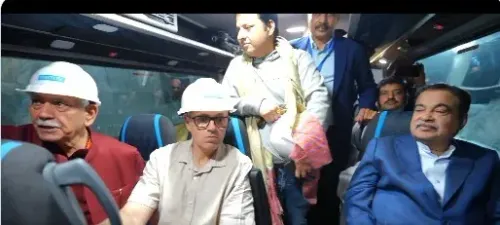
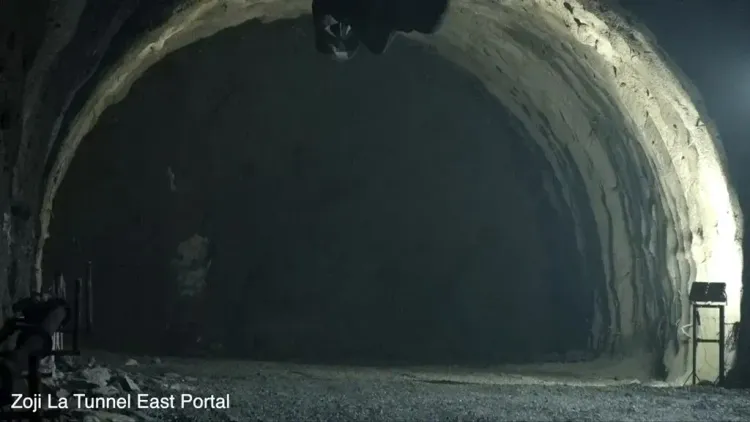
Union Road Transport and Highways Minister Nitin Gadkari on Tuesday, June 9, 2026, announced the historic breakthrough of the main bore of the Zojila Tunnel, calling it a landmark chapter in India's infrastructure journey and a transformative step toward all-weather connectivity between Jammu and Kashmir and Ladakh.
Context
Posting on X, Gadkari described the development as 'ऐतिहासिक ब्रेकथ्रू' (historic breakthrough) of the Zojila Tunnel's main bore, framing it as 'an important chapter in all-weather connectivity between Jammu-Kashmir and Ladakh and in India's infrastructure development journey.' He tagged Lieutenant Governor of Jammu and Kashmir Manoj Sinha, Jammu and Kashmir Chief Minister Omar Abdullah, and the Lieutenant Governor of Ladakh in the post, signalling coordinated acknowledgement across the two Union Territories.
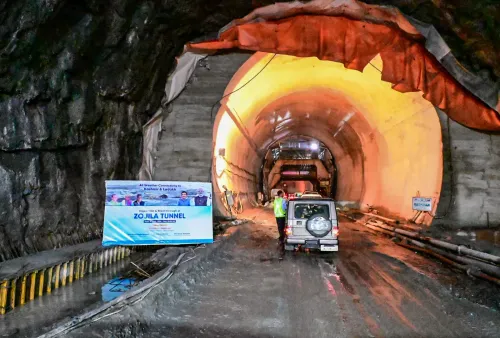
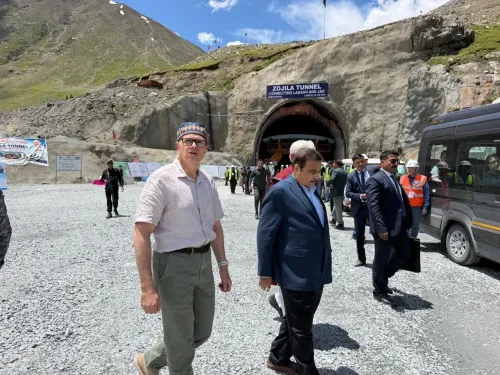
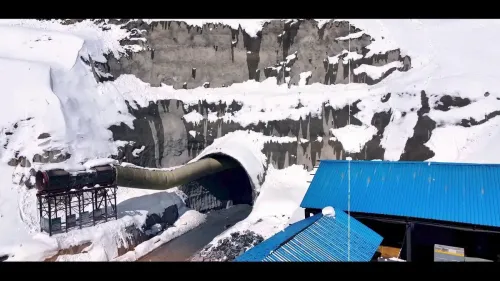
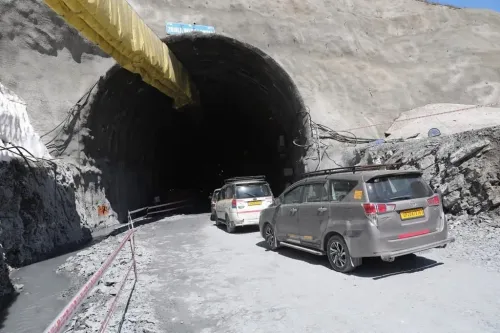
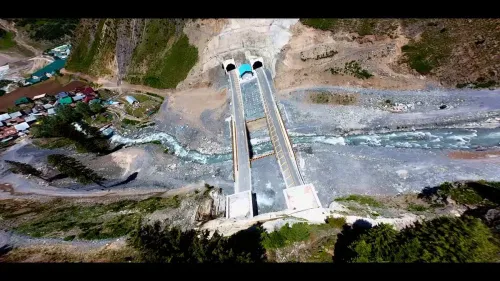
The Zojila Tunnel is a 14.2-kilometre bidirectional tunnel being built to provide a year-round road link between Srinagar and Leh via the Zojila Pass, which is currently closed for several months each year due to heavy snowfall. The breakthrough of the main bore marks the moment the two ends of the tunnel excavation meet, a critical civil-engineering milestone before finishing and safety works begin.
Policy Backdrop
The project received Cabinet approval in 2018 under the Bharatmala Pariyojana at an estimated cost exceeding Rs 6,800 crore. Bharatmala is the Centre's flagship highway development programme aimed at building economic corridors and improving border-area connectivity. The Zojila project is also aligned with PM Gati Shakti, the National Master Plan launched in October 2021 to integrate road, rail and tunnel planning across ministries for faster project execution — a hashtag Gadkari used in the post itself.
The precedent for such high-altitude tunnel construction was set by the Atal Tunnel at Rohtang, inaugurated in 2020, which established the engineering and operational template for all-weather Himalayan connectivity. The reorganisation of Jammu and Kashmir into two Union Territories in 2019 brought direct central oversight to strategic border infrastructure, accelerating the pace of projects in the region.
Stakeholders and Impact
The tunnel's completion will most directly benefit the residents of Ladakh and Kargil, who currently face months of road isolation every winter, cutting them off from essential supplies, medical access and economic activity. The defence forces stationed along India's borders with Pakistan and China in the region will gain a reliable, year-round logistics route, a factor of considerable strategic weight.
The tourism and trade sectors in both Union Territories stand to gain significantly. Ladakh's tourism economy, which is heavily concentrated in the summer months due to access constraints, could extend its season, while trade in goods between the Kashmir Valley and Leh could become more consistent and cost-effective throughout the year.
What's Next
With the main bore breakthrough achieved, attention shifts to the completion of remaining tunnel finishing works, approach roads and safety systems — including ventilation, lighting and emergency bays — followed by trial runs before a formal inauguration. Parliament is likely to see updates on revised project costs and timelines as the project moves toward its final phase. The Zojila Tunnel, once open, will form a critical link in the broader network of connectivity initiatives binding the western Himalayan region to the national highway system.
Point of View
Arriving as the Centre continues to project infrastructure delivery in border Union Territories as a core governance achievement. For the BJP, high-altitude connectivity projects serve a dual narrative — civilian welfare and national security — that resonates across voter segments. The timing also reinforces the Gati Shakti framework as a credible multi-ministry coordination mechanism, not merely a planning document. Gadkari's decision to tag both the J&K Lieutenant Governor and the elected Chief Minister signals a deliberate attempt to project cross-institutional consensus around a project of pan-regional importance.
NationPress
23 Oct 2026
Frequently Asked Questions
What is the Zojila Tunnel and why is it important?
The Zojila Tunnel is a 14.2-km bidirectional tunnel being built to provide all-weather road connectivity between Srinagar and Leh via the Zojila Pass, which is currently closed for several months each year due to heavy snow. It will benefit civilians, defence forces, and trade in the region.
What does 'tunnel breakthrough' or 'breakthrough' mean in construction?
A tunnel breakthrough, also called a 'holing through,' is the moment when excavation from both ends of a tunnel meets in the middle, completing the main bore. It is a major civil-engineering milestone after which finishing, safety and approach works begin.
What is the cost of the Zojila Tunnel project?
The Zojila Tunnel project was approved by the Cabinet in 2018 under the Bharatmala Pariyojana at an estimated cost exceeding Rs 6,800 crore.
When was the Zojila Tunnel project approved?
The project received Cabinet approval in 2018 as part of the Bharatmala Pariyojana, the Centre's flagship highway and connectivity programme.
How does the Zojila Tunnel compare to the Atal Tunnel at Rohtang?
The Atal Tunnel at Rohtang, inaugurated in 2020, is a comparable high-altitude tunnel project that provided all-weather connectivity to Lahaul-Spiti in Himachal Pradesh. It served as the engineering and operational precedent for the Zojila project in Jammu and Kashmir and Ladakh.