Zojila Tunnel breakthrough: ₹6,800 crore project nears completion for J&K-Ladakh link
Synopsis
The main tunnel at the Zojila Tunnel Project was breached on 9 June, bringing the ₹6,800 crore all-weather link between J&K and Ladakh within reach of completion. When done, a journey that takes nearly two hours will take 30 minutes — and India's Army will have a year-round strategic corridor through one of the world's most forbidding mountain passes.
Key Takeaways
Nitin Gadkari witnessed the main tunnel breakthrough at Minamarg, Kargil on 9 June .
The ₹6,800 crore Zojila Tunnel is nearly 14 km long, built at altitudes between 2,900 and 3,310 metres .
Travel time between Sonamarg and Minamarg will fall from nearly 2 hours to about 30 minutes .
Road and tunnel projects worth ₹18,000 crore are under implementation between Kargil and Leh-Ladakh .
The tunnel will enable year-round Indian Army movement, reinforcing strategic preparedness in the border region.
J&K LG Manoj Sinha , CM Omar Abdullah , and Ladakh LG V.K.
Saxena (virtually) attended the milestone event.
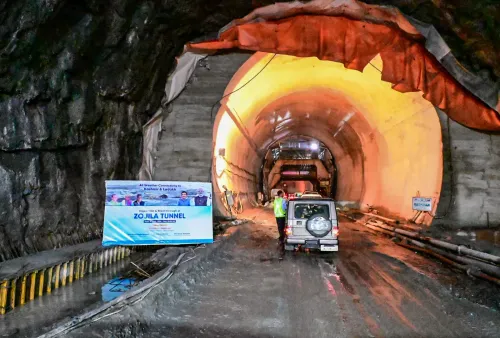
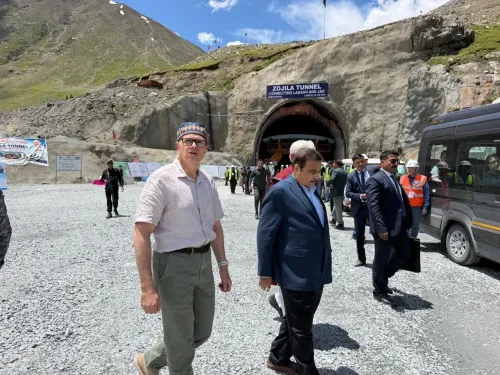
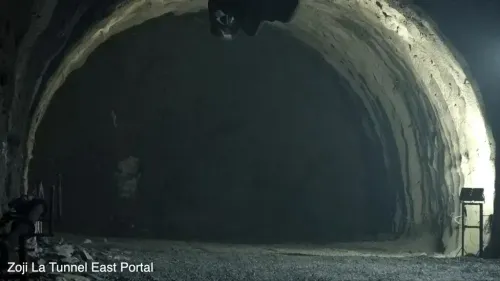
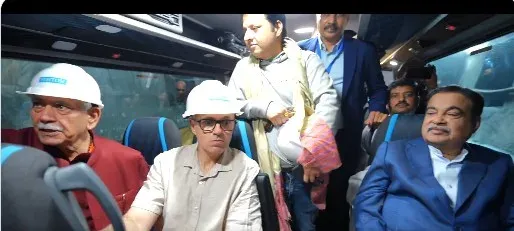
Union Minister of Road Transport and Highways Nitin Gadkari on Tuesday, 9 June witnessed the historic breakthrough of the main tunnel at the eastern portal of the Zojila Tunnel Project at Minamarg in Kargil district, marking a pivotal milestone in the ₹6,800 crore infrastructure push to establish all-weather connectivity between Jammu and Kashmir and Ladakh.
A Engineering Milestone in Extreme Terrain
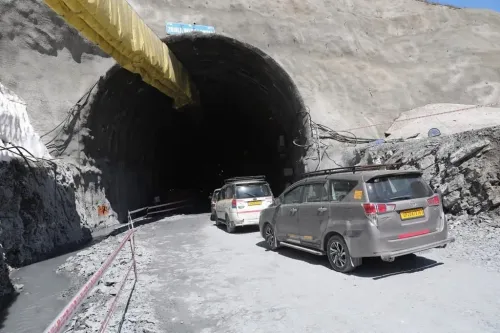
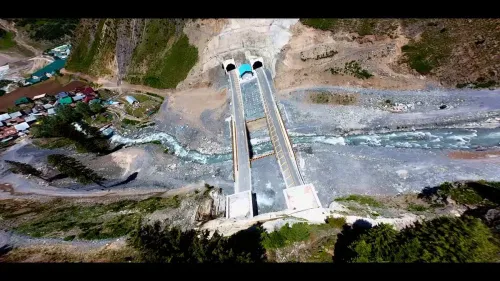
The nearly 14-km-long bi-directional tunnel is being constructed between Baltal and Minamarg on National Highway-1, at altitudes ranging from 2,900 to 3,310 metres. It ranks among India's most ambitious mountain infrastructure undertakings, carved through terrain widely regarded as among the most geologically challenging in the world.
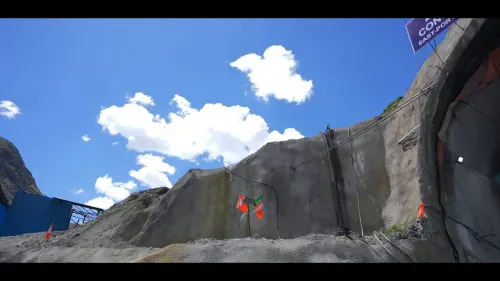
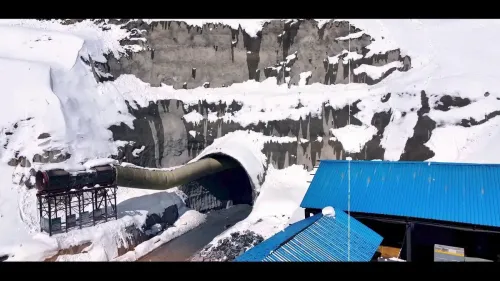
Progress on the project has continued despite heavy snowfall, harsh weather, and complex geological conditions — a feat credited to engineers, workers, consultants, contractors, and the National Highways and Infrastructure Development Corporation Limited (NHIDCL). The tunnel includes eight cut-and-cover sections, four bridges, 40 culverts, snow galleries, catch dams, avalanche protection structures, and dedicated approach roads.
What Changes for Travellers and Commuters
Once operational, travel time between Sonamarg and Minamarg will shrink from nearly two hours to approximately 30 minutes, delivering significant savings in both time and fuel. The tunnel will also dramatically reduce accident risks and the disruptions routinely caused by avalanches and severe weather that currently render the route impassable for months each year.
The tunnel will be equipped with modern ventilation systems, automatic fire detection, advanced CCTV surveillance, and cross-passage facilities for pedestrians — bringing it in line with global safety benchmarks for mountain tunnels.
Strategic and Security Significance
Gadkari described the Zojila Tunnel as 'much more than a transportation project,' calling it a gateway to development for the region. From a national security standpoint, year-round connectivity will enable faster movement of the Indian Army, equipment, supplies, and logistics — strengthening strategic preparedness along a sensitive border corridor.
This comes amid a broader infrastructure push in the region: road and tunnel projects worth approximately ₹18,000 crore are currently under implementation between Kargil and Leh-Ladakh. Among them is the Kargil–Zanskar–Padum highway project, which is improving access to the Zanskar region while bolstering strategic connectivity and Army movement.
Economic and Regional Impact
The tunnel is expected to boost tourism, facilitate trade, and improve access to remote communities. Local employment generation and regional economic integration are cited as key downstream benefits. Gadkari also noted that South and North Bypass projects in Leh are being developed to ease traffic management and provide seamless movement for vehicles heading towards Srinagar, Manali, and Khardung La without passing through the city.
Senior Officials Present at the Breakthrough
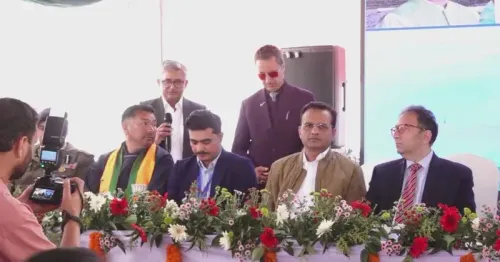
Jammu and Kashmir Lieutenant Governor Manoj Sinha, Chief Minister Omar Abdullah, Members of Parliament, public representatives, and senior officials were present at the Minamarg site. Ladakh Lieutenant Governor V.K. Saxena joined the event virtually. Gadkari congratulated all those associated with the breakthrough.
With the main tunnel now breached, attention shifts to fit-out, safety installations, and approach infrastructure — the final stretch before one of India's most strategically vital road links becomes operational year-round.
Point of View
Safe, year-round corridor is considerable; fit-out, approach roads, and safety systems still lie ahead. The ₹18,000 crore regional pipeline signals intent, but the Zanskar and Leh bypass projects have their own timelines and geological risks. The strategic dividend — faster Army logistics in a region that saw conflict as recently as 2020 — is real, but it accrues only when the last bolt is in place and the tunnel actually opens to traffic.
NationPress
23 Sept 2026
Frequently Asked Questions
What is the Zojila Tunnel Project?
The Zojila Tunnel is a nearly 14-km-long bi-directional tunnel being built between Baltal and Minamarg on National Highway-1 at altitudes of 2,900 to 3,310 metres. The ₹6,800 crore project aims to provide all-weather connectivity between Jammu and Kashmir and Ladakh, eliminating seasonal road closures caused by snow and avalanches.
What happened at the Zojila Tunnel on 9 June 2025?
Union Minister Nitin Gadkari witnessed the breakthrough of the main tunnel at the eastern portal in Minamarg, Kargil district — a critical construction milestone indicating that the tunnel bore has been fully excavated through the mountain. Senior officials including J&K LG Manoj Sinha and CM Omar Abdullah were present at the site.
How will the Zojila Tunnel benefit travellers?
Once operational, travel time between Sonamarg and Minamarg will reduce from nearly two hours to approximately 30 minutes. The tunnel will also eliminate weather-related closures, cut fuel costs, and reduce accident risks on one of India's most hazardous mountain stretches.
What is the strategic importance of the Zojila Tunnel?
Year-round connectivity through Zojila will allow faster and more efficient movement of the Indian Army, equipment, and supplies along a sensitive border corridor. The tunnel is part of a broader ₹18,000 crore infrastructure push between Kargil and Leh-Ladakh that includes the Kargil–Zanskar–Padum highway.
What safety features will the Zojila Tunnel have?
The tunnel will be equipped with modern ventilation systems, automatic fire detection, advanced CCTV surveillance, and cross-passage facilities for pedestrians. Structural protections include eight cut-and-cover sections, four bridges, 40 culverts, snow galleries, catch dams, and avalanche protection structures.