Garo Hills Autonomous District Council polls to use separate ST electoral roll
Synopsis
Meghalaya has fundamentally changed how the Garo Hills Autonomous District Council picks its voters and candidates — non-tribal residents are out of the electoral roll entirely. The shift, years in the making and shaped by a High Court ruling, still leaves the next election date unresolved, with a fresh ST-only roll yet to be prepared.
Key Takeaways
Vijayashankar approved amendments to GHADC election rules on 30 September 2026 , mandating a separate ST-only electoral roll .
The Meghalaya government will notify the GHADC (Second Amendment) Rules, 2026 in the state Gazette.
Rule 8 now requires candidates to hold ST status; Rule 129 establishes a dedicated tribal voter roll for GHADC polls.
The change follows a Meghalaya High Court ruling that struck down an earlier executive notification imposing ST certificate requirements.
GHADC elections, originally scheduled for April 2026 , remain postponed; the council's tenure has been extended to 18 October .
Preparation of the new separate electoral roll is now the key step in fixing the next election date.
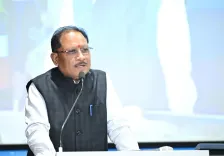
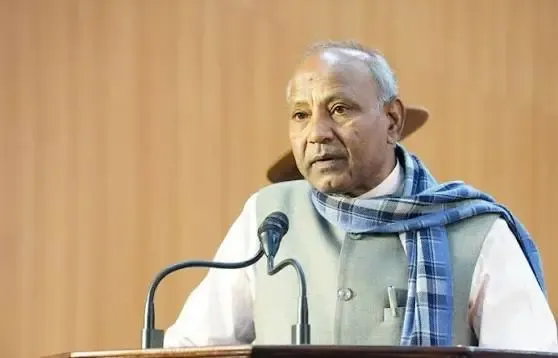
Elections to the Garo Hills Autonomous District Council (GHADC) will henceforth be conducted using a separate electoral roll restricted to Scheduled Tribe (ST) voters, effectively excluding non-tribal residents from the council's voter list. The change follows Governor C.H. Vijayashankar's approval of amendments to the election rules, officials confirmed on Wednesday, 30 September 2026.
What the Amendment Changes
The Meghalaya government is now expected to notify the GHADC (Second Amendment) Rules, 2026 in the state Gazette. The notification will give effect to revisions in the Assam and Meghalaya Autonomous Districts (Constitution of District Councils) Rules, 1951, the foundational framework governing autonomous district councils in the region.
Three rules are central to the overhaul. Rule 8 makes ST status a mandatory qualification for candidates contesting GHADC elections. Rule 128 lays down ST eligibility criteria for voters, while Rule 129 provides for the creation of a dedicated electoral roll specifically for GHADC elections — ending the longstanding practice of borrowing the state Assembly electoral roll.
The Legal Road That Led Here
The amendment process did not follow a straightforward path. The Meghalaya High Court had previously struck down an executive notification issued by the GHADC that sought to make possession of an ST certificate a mandatory condition for candidates. The court ruled that such a requirement had to be introduced through a prescribed rule-making mechanism, not through administrative fiat.
Following that legal setback, the GHADC constituted a committee in May 2025 to examine election provisions and assess the feasibility of a separate electoral roll. The council passed an initial amendment to Rule 8 on 23 March, and subsequently passed the full amendment Bill on 10 August, after the Governor granted approval for its introduction in the council on 6 August.
What the Government Said
Chief Minister Conrad K. Sangma reiterated the state government's commitment to safeguarding indigenous community rights, asserting that governance and policymaking must remain accountable to the communities they are meant to serve. The amendment is widely seen as a legislative reinforcement of tribal self-governance in the Garo Hills region.
Election Timeline Remains Uncertain
The development comes against a backdrop of considerable uncertainty over when the next GHADC elections will be held. The tenure of the existing council has been extended until 18 October, after polls originally scheduled for April 2026 were postponed following unrest in parts of Garo Hills.
Officials noted that the preparation and finalisation of the new separate electoral roll will now be a critical precondition in determining the timeline for the next GHADC polls. Notably, the exercise of preparing a fresh tribe-specific roll from scratch — rather than drawing from an existing Assembly list — could add weeks or months to the pre-election process.
Point of View
But it also raises a deeper question: how long will it take to build a credible, litigation-proof ST-only electoral roll from scratch? With elections already delayed once due to unrest, and the existing council's tenure expiring on 18 October, the administrative clock is tighter than the political messaging suggests. Chief Minister Conrad Sangma's invocation of indigenous rights protection is sound politics in Garo Hills, but the real measure of intent will be how quickly — and transparently — the new electoral roll is compiled and challenged-proofed before the next polls.
NationPress
30 Sept 2026
Frequently Asked Questions
What is the GHADC separate tribal electoral roll amendment?
It is a rule change approved by Meghalaya Governor C.H. Vijayashankar on 30 September 2026, requiring the Garo Hills Autonomous District Council to maintain its own electoral roll restricted to Scheduled Tribe voters, replacing the earlier practice of using the state Assembly roll. Candidates must also hold ST status to contest GHADC elections.
Why did Meghalaya need to amend the GHADC election rules?
The Meghalaya High Court struck down an earlier executive notification by the GHADC that made ST certification mandatory for candidates, ruling it had to be done through formal rule-making. The amendment process was initiated to meet that legal requirement, with a committee formed in May 2025 to examine feasibility.
When are the next GHADC elections expected?
No date has been fixed yet. Elections originally scheduled for April 2026 were postponed following unrest in parts of Garo Hills, and the existing council's tenure has been extended to 18 October. Finalising the new separate ST electoral roll is now the key prerequisite before a fresh election schedule can be announced.
Who is affected by the GHADC electoral roll change?
Non-tribal residents of Garo Hills who were previously eligible to vote in GHADC elections will be excluded from the new electoral roll. Only Scheduled Tribe voters will be enrolled, and only ST-status candidates may contest council seats.
What rules govern the GHADC election amendment?
The changes amend the Assam and Meghalaya Autonomous Districts (Constitution of District Councils) Rules, 1951. Rule 8 mandates ST status for candidates, Rule 128 sets ST eligibility for voters, and Rule 129 provides for the creation of a separate GHADC-specific electoral roll.