Giriraj Singh Highlights Women's Role in Startups, Textiles
Synopsis
Union Textiles Minister Giriraj Singh on 27 May 2026 highlighted that women hold nearly half the ownership in India's 2.5 lakh startups and are vital to the textiles sector, citing water-soluble sanitary napkins as an example of women-led innovation under the Startup India and Make in India frameworks.
Key Takeaways
Union Textiles Minister Giriraj Singh posted on 27 May 2026 celebrating women's entrepreneurial and innovative contributions to the Indian economy.
The minister cited women's near- 50 percent ownership share across 2.5 lakh startups in India as a marker of progress — though this figure originates from the minister's post and has not been independently verified.
A water-soluble sanitary napkin was highlighted as an example of 'revolutionary innovation' by Indian women entrepreneurs.
Singh underscored women's participation in the textiles sector — India's second-largest employer — as 'very important' and pledged continued support.
The post invokes flagship government schemes Startup India (launched 2016) and Make in India (launched 2014), both of which include women-entrepreneur components.
The ministry's ATUFS scheme and the Stand-Up India programme remain the primary policy instruments targeting women in textiles and enterprise respectively.
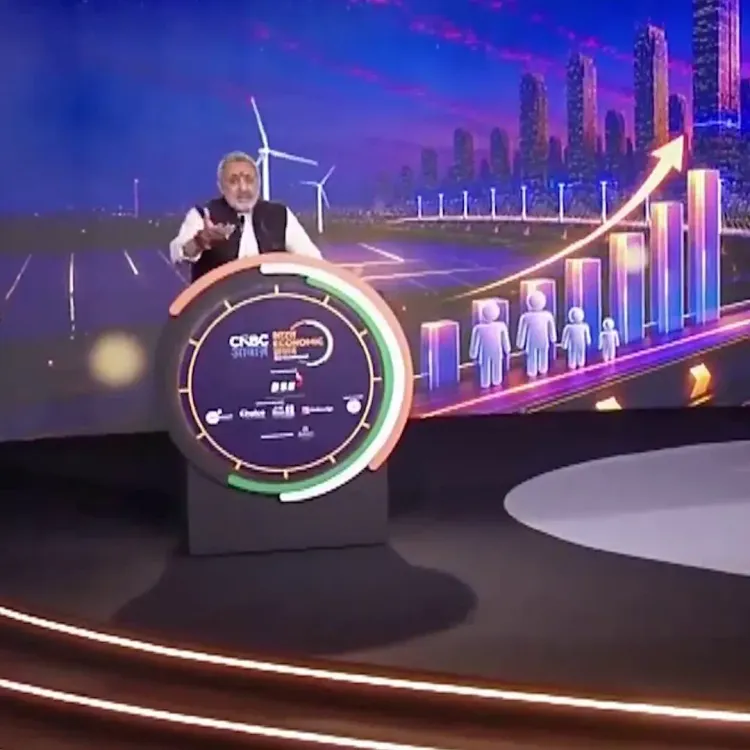
Union Textiles Minister Giriraj Singh on Wednesday, 27 May 2026, took to X to highlight the growing entrepreneurial power of Indian women, citing their participation in the country's startup ecosystem and the textiles sector as evidence of a transforming economy. The minister pointed to innovations such as water-soluble sanitary napkins and claimed that women account for nearly half the ownership stake across 2.5 lakh startups in India today.
Posting in Hindi, Singh wrote: 'हमारे देश में प्रतिभा और ब्रेन की कोई कमी नहीं है' ['Our country has no shortage of talent and brains'], adding that revolutionary innovations and an equal share in startups signal a 'New India where women are leading.' He specifically flagged the textiles sector as a domain where women's participation is 'very important' and pledged to continue advancing with this strength.
Context
The post arrives as the Startup India programme — formally launched on 16 January 2016 — continues to be a flagship marker of India's innovation credentials. The scheme was designed from the outset with a component targeting women entrepreneurs alongside SC/ST founders, and successive anniversaries have been used by the government to showcase progress on gender inclusion in enterprise. Singh's remarks reinforce that framing by linking grassroots innovation directly to women-led ventures.
The reference to a water-soluble sanitary napkin is presented by the minister as a symbol of the kind of socially relevant, women-centric innovation India is now producing. While the specific product or startup behind this innovation was not independently detailed in the post, the example is used to argue that Indian ingenuity is solving real-world problems at the intersection of health and sustainability.
Policy Backdrop
The Make in India initiative, announced on 25 September 2014, identified textiles as one of its priority sectors, later expanding to include dedicated sub-schemes for women in apparel and garments manufacturing. The Amended Technology Upgradation Fund Scheme (ATUFS), operational since 2016 under the Ministry of Textiles, has sought to increase female participation across the textile value chain by subsidising machinery and technology adoption.
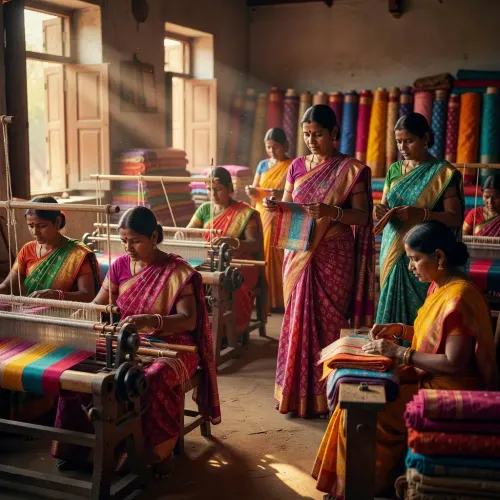
Textiles is India's second-largest employer after agriculture, with a workforce that has historically been majority-female in spinning, weaving, and garment units. The sector is therefore a natural focal point for any government narrative that ties manufacturing growth to women's economic empowerment. Singh's ministry has consistently used this structural reality to argue that textile-sector growth is, by definition, women's empowerment in practice.
Stakeholders and Impact
Women entrepreneurs and textile workers are the primary stakeholders in the vision Singh articulated. For micro and small enterprises run by women — particularly in states such as Tamil Nadu, Gujarat, Maharashtra, and West Bengal where textile clusters are concentrated — sustained policy attention translates into access to credit, technology subsidies, and market linkages. The Stand-Up India component of Startup India was explicitly designed to deliver institutional credit to women-led businesses, and its continuation is directly relevant to this constituency.
At the macroeconomic level, raising female labour-force participation in formal manufacturing and entrepreneurship is seen as one of India's most significant untapped growth levers. The minister's framing — connecting innovation, startups, and textiles under a single 'Nari Shakti' umbrella — signals that the government intends to keep this narrative central to its economic messaging ahead of upcoming policy announcements.
What's Next
Observers will watch the next Union Budget and any forthcoming revision to the Production-Linked Incentive (PLI) scheme for textiles for concrete targets or earmarked incentives specifically for women-led enterprises. An updated national textile policy, which has been in discussion, could formalise gender-inclusion benchmarks for the sector. Singh's post suggests the ministry is building a public case for such measures, using social media to set the narrative before formal policy announcements are made.
Point of View
Make in India, and Nari Shakti — into a single, shareable narrative ahead of what could be a significant textile policy or budget cycle. By anchoring the argument in a tangible innovation (water-soluble sanitary napkins) rather than abstract statistics, the minister attempts to give the gender-inclusion agenda a human and aspirational texture. The claim of women holding half of 2.5 lakh startups, if substantiated by official data, would be a genuinely striking policy outcome; its deployment here without a cited source is characteristic of social-media policy communication that prioritises momentum over verifiability. Ultimately, the post signals that the Ministry of Textiles is positioning women's economic agency as both a moral argument and a growth strategy — a framing that is likely to intensify as India seeks to expand its share of global apparel and technical-textile exports.
NationPress
10 Oct 2026
Frequently Asked Questions
What did Giriraj Singh say about women in startups?
Union Textiles Minister Giriraj Singh stated on 27 May 2026 that women hold nearly half the ownership share across 2.5 lakh startups in India, calling it evidence of a 'New India where women are leading.' He also cited water-soluble sanitary napkins as an example of women-driven innovation.
How many startups does India have and what is women's share?
According to Giriraj Singh's post on 27 May 2026, India has 2.5 lakh startups, with women accounting for nearly half the ownership. This figure has not been independently verified and originates from the minister's social media statement.
What is the role of women in India's textile sector?
India's textile sector is the country's second-largest employer after agriculture and has historically employed a large proportion of women in spinning, weaving, and garment units. Government schemes such as ATUFS and Stand-Up India have sought to increase women's formal participation and entrepreneurship in the sector.
What is Startup India and how does it support women entrepreneurs?
Startup India is a flagship government scheme launched on 16 January 2016 to foster innovation and entrepreneurship through tax benefits, funding support, and regulatory easing. Its Stand-Up India component specifically targets women and SC/ST entrepreneurs by facilitating institutional credit for business creation.
What is the Make in India initiative's connection to women in textiles?
Make in India, launched on 25 September 2014, identified textiles as a priority sector and later included dedicated sub-schemes for women in apparel and garments manufacturing. The initiative aims to position India as a global manufacturing hub while integrating gender-inclusion goals into industrial growth.