Giriraj Singh Flags 7.3% IIP Growth as Proof of Make in India Push
Synopsis
Union Textiles Minister Giriraj Singh highlighted India's IIP growth of 7.3% in June 2026, calling it a 23-month high driven by manufacturing, power, and textiles — and directly attributing the surge to Make in India, PLI schemes, and sustained infrastructure investment under the Viksit Bharat 2047 vision.
Key Takeaways
India's IIP grew 7.3% in June 2026 , reaching what Union Textiles Minister Giriraj Singh described as a 23-month high .
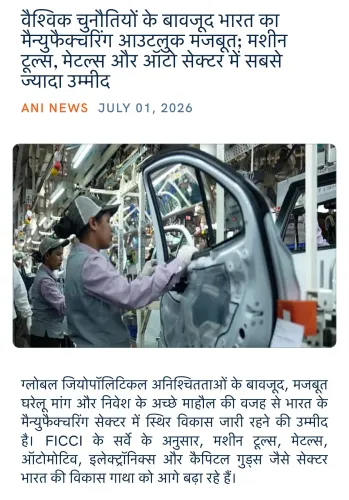
Manufacturing, power, and textiles were cited as the key outperforming sectors in the month.
Singh attributed the growth to the government's Make in India initiative, PLI schemes , and sustained infrastructure investment.
PLI schemes were first announced in the Union Budget 2020-21 and expanded to 14 sectors , including textiles in 2021 .
The post was framed within the Viksit Bharat 2047 vision of transforming India into a developed economy by the centenary of independence.
The next key markers will be subsequent MoSPI monthly IIP releases and any mid-year review of PLI disbursements for textiles.
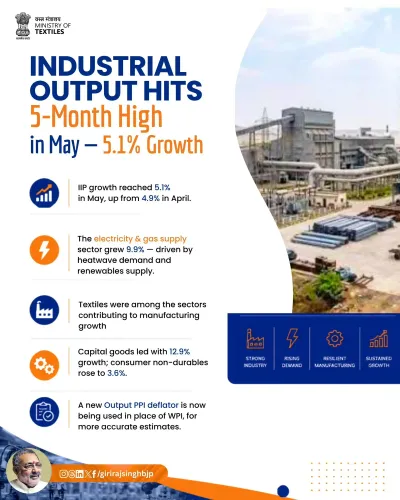
India's industrial engine just posted its strongest reading in nearly two years — and Union Textiles Minister Giriraj Singh is pointing directly at policy as the reason. On Wednesday, 29 July 2026, the minister took to X to highlight that India's Index of Industrial Production (IIP) grew 7.3 percent in June 2026, reaching what he described as a 23-month high.
In his post, Singh wrote that sectors such as manufacturing, power, and textiles had delivered strong performances — and that the numbers validated the government's sustained bet on #MakeInIndia, #PLI (Production Linked Incentive schemes), and infrastructure investment. 'सरकार की नीति सकारात्मक परिणाम दे रही है' — 'the government's policy is delivering positive results' — was his central claim.
What the 7.3% IIP Print Signals
A 23-month high in industrial output is not a routine data point. It suggests that the manufacturing momentum — which had shown signs of fatigue through parts of 2024-25 — has found fresh traction. Singh specifically named three sectors: manufacturing, power, and textiles. All three sit at the intersection of the government's core industrial priorities.
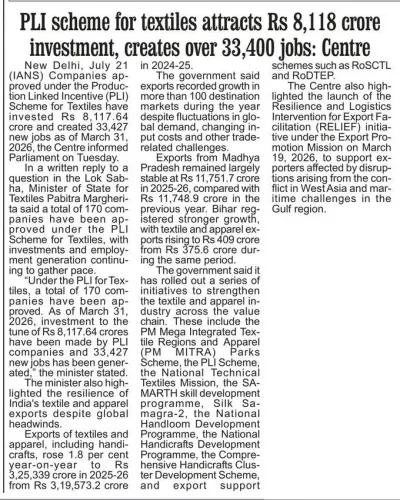
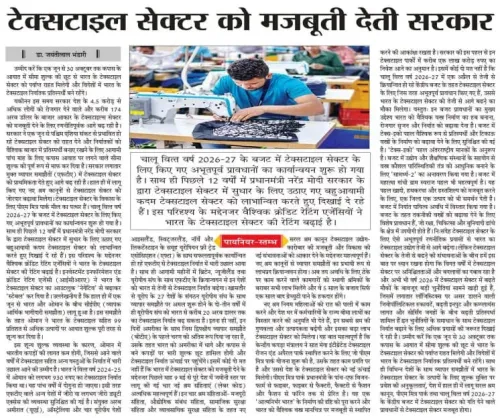
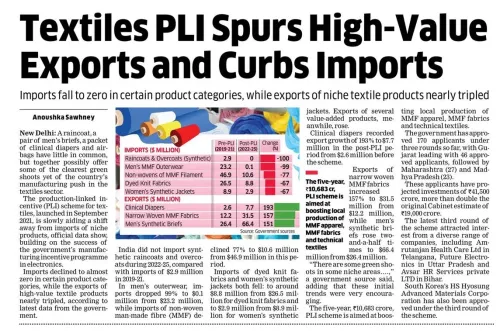
Textiles, in particular, carries special weight for Singh. As the minister responsible for the sector, he has consistently argued that PLI incentives for apparel and man-made fibre — introduced when textiles was added as a beneficiary sector under the scheme in 2021 — are beginning to translate into measurable output gains. A strong IIP print gives that argument concrete ground to stand on.
Make in India, PLI, and a Decade of Industrial Rewiring
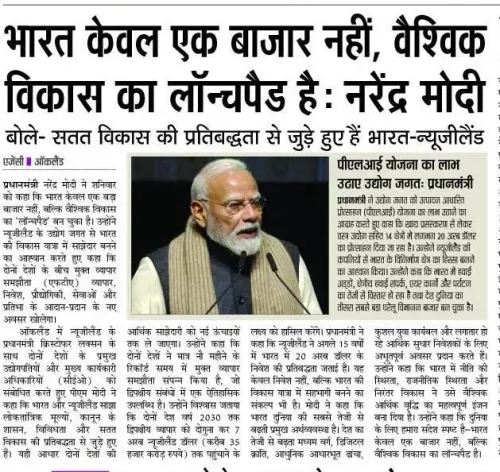
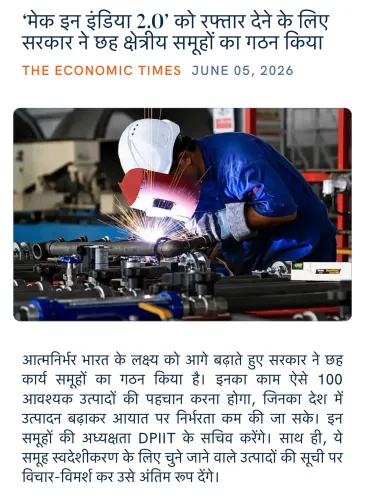
Make in India was launched in September 2014 with an explicit goal: raise the share of manufacturing in India's GDP and position the country as a global production hub. For years, critics noted the gap between ambition and output data. The PLI framework — first announced in the Union Budget 2020-21 and later expanded to 14 sectors — was designed to close that gap by tying government incentives directly to incremental production targets.
Infrastructure has been the third leg of the stool. The National Infrastructure Pipeline, unveiled in 2019, channelled public and private capital into roads, power grids, and logistics — the connective tissue without which industrial output cannot scale. Singh's post invokes all three levers together, framing June's IIP number as the cumulative return on that decade-long policy architecture.
Textiles and the Viksit Bharat 2047 Frame
Singh closed his post with the hashtag #ViksitBharat2047 — the government's long-term vision to reach developed-economy status by 2047, the centenary of independence. Linking a monthly IIP release to that 25-year horizon is a deliberate framing choice: it positions each data point not as a standalone figure but as a milestone on a longer journey.
For textiles — an employment-intensive sector with deep roots in states like Bihar, Singh's own constituency — the stakes are particularly direct. Strong output numbers mean jobs, and jobs in labour-intensive manufacturing are the clearest near-term proof of the Viksit Bharat thesis working at the ground level.
The next test will come with the Ministry of Statistics and Programme Implementation's subsequent monthly IIP releases, and with any mid-year review of PLI disbursements for textiles in the parliamentary session ahead. For now, the minister has planted his flag firmly on the June numbers — and dared the data to speak for itself.
Point of View
PLI, and Viksit Bharat 2047 in a single breath, he is doing more than celebrating a number: he is building a narrative of policy continuity and compounding returns. For the textiles ministry specifically, a strong IIP read is useful ammunition in budget and allocation cycles. The broader pattern — linking every positive macro data point to the 2047 vision — signals that the government intends to fight the next electoral cycle on an economic track record, not just welfare delivery.
NationPress
29 Jul 2026
Frequently Asked Questions
What is India's IIP growth rate for June 2026?
Union Textiles Minister Giriraj Singh stated that India's Index of Industrial Production grew by 7.3 percent in June 2026 , which he described as a 23-month high .
Which sectors drove India's IIP growth in June 2026?
According to Singh's post, manufacturing, power, and textiles were the key sectors that delivered strong performances and contributed to the June 2026 IIP reading.
What is the PLI scheme and how does it relate to textiles?
The Production Linked Incentive (PLI) scheme was first announced in the Union Budget 2020-21 and ties government incentives to incremental domestic production. Textiles was added as a beneficiary sector in 2021 , covering apparel and man-made fibre segments.
What is Viksit Bharat 2047?
Viksit Bharat 2047 is the Indian government's long-term national vision to transform India into a fully developed economy by 2047 , the centenary of independence, through sustained manufacturing growth, infrastructure investment, and policy reform.
When was Make in India launched?
Make in India was launched in September 2014 by the Government of India to increase the share of manufacturing in GDP and position India as a global production and investment destination.