Giriraj Singh flags India's push in technical textiles
Synopsis
Union Textiles Minister Giriraj Singh on 29 October 2026 underscored India's self-reliance drive in technical textiles, citing PM Modi's leadership in strengthening capabilities across 12 application verticals — from agriculture to aerospace — backed by the Rs 1,480-crore National Technical Textiles Mission.
Key Takeaways
Union Textiles Minister Giriraj Singh posted on 29 October 2026 highlighting India's self-reliance push in technical textiles.
He cited 12 strategic verticals including agriculture, healthcare, infrastructure, defence, and aerospace as the focus areas.
The National Technical Textiles Mission (NTTM) , approved in 2020 with an outlay of Rs 1,480 crore , is the primary policy vehicle driving this push.
The PLI scheme for textiles , notified in 2021 , further targets man-made fibres and technical textiles to attract investment and scale capacity.
The minister's statement signals continued political momentum for the sector ahead of the next Budget and potential policy revision cycles.
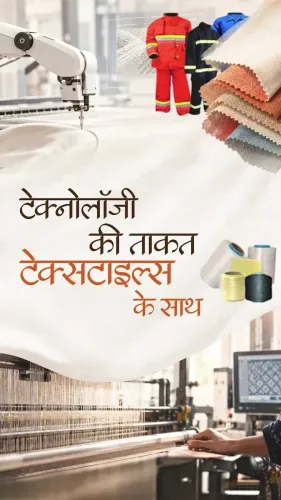
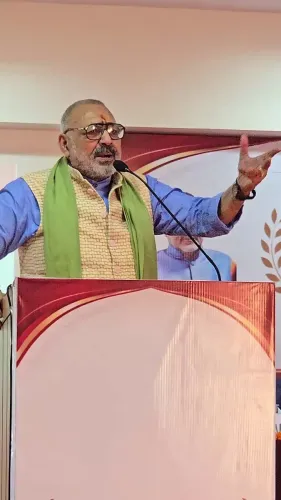
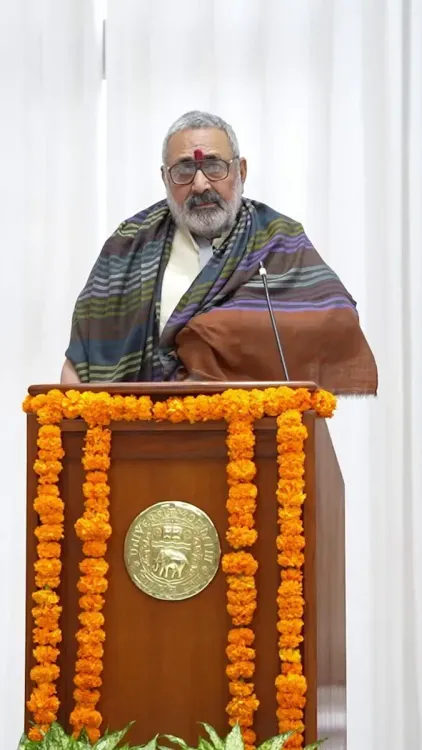
From farm fields to fighter jets, India is stitching together a new industrial story — and Union Textiles Minister Giriraj Singh wants the world to take notice. On Thursday, 29 October 2026, the minister took to X to spotlight India's growing self-reliance in technical textiles, framing it as a leap across 12 strategic verticals that span agriculture, healthcare, infrastructure, defence, and aerospace.
Posting in Hindi, Singh wrote: 'टेक्निकल टेक्सटाइल के क्षेत्र में भारत की आत्मनिर्भरता, आधुनिक विनिर्माण और तकनीकी नवाचार को नई दिशा दे रही है' — 'India's self-reliance in technical textiles is giving new direction to modern manufacturing and technological innovation.' He credited the progress to the leadership of Prime Minister Narendra Modi, saying the country is strengthening its capabilities across all 12 verticals.What the 12 verticals actually cover
Technical textiles are not what most people picture when they hear 'textiles.' These are high-performance materials engineered for function rather than fashion — think geo-textiles that stabilise highways, agro-textiles that protect crops, medical-grade nonwovens used in surgical gowns, protective gear for soldiers, and composite materials that go into aircraft components. The breadth of the 12 application segments — ranging from agrotech and meditech to mobiltech and aerotech — is precisely why policymakers have treated them as a strategic priority for import substitution.
India's dependence on imported technical textile products has historically been a vulnerability across multiple sectors simultaneously. A disruption in supply abroad can ripple through road construction, hospital supply chains, and defence procurement all at once. That cross-cutting exposure is what gave the push for domestic capacity its urgency.
The National Technical Textiles Mission at the core
The policy backbone Singh is implicitly invoking is the National Technical Textiles Mission (NTTM), approved by the Union Cabinet in 2020 with an outlay of Rs 1,480 crore. The mission was designed to drive research, boost domestic production, and cut import dependence across exactly those 12 application areas. It dovetailed with the Production Linked Incentive (PLI) scheme for textiles, notified in 2021, which targeted man-made fibres and technical textiles specifically to attract fresh investment and scale up manufacturing capacity.
Together, the two schemes represent the clearest articulation yet of India's ambition to move up the textile value chain — away from commodity cotton and toward engineered materials that command global demand and carry defence, infrastructure, and healthcare applications.
Why Singh's signal matters now
A minister's X post mid-cycle is rarely noise. Singh's emphasis on 'new direction' and 'modern manufacturing' at this moment points toward a push to consolidate mission gains ahead of the next Union Budget cycle and any revised textile export policy. The sectors most directly in play — textile manufacturers and technical textile exporters — will be watching for fresh incentives or production targets in coming months.
India's Atmanirbhar Bharat framework, launched as an overarching economic doctrine in 2020, positioned high-value manufacturing as central to reducing strategic import dependency. Technical textiles, unglamorous as the phrase sounds, are quietly one of the most consequential test cases for whether that doctrine translates into industrial reality.
If the 12 verticals fire together, India does not just clothe itself differently — it builds the material infrastructure for agriculture, medicine, roads, and aerospace on its own terms. That is the bet Singh is publicly renewing today.
Point of View
The minister frames the sector's strategic breadth as a selling point to investors and exporters alike. The timing, mid-cycle and ahead of budget season, suggests the ministry is building a narrative for fresh policy action. The deeper story, however, is whether India's domestic production capacity has actually closed the gap on imports that the NTTM and PLI were designed to address — a question the next round of mission progress data will answer.
NationPress
29 Oct 2026
Frequently Asked Questions
What is the National Technical Textiles Mission?
The National Technical Textiles Mission (NTTM) is a central government scheme approved in 2020 with an outlay of Rs 1,480 crore. It aims to develop India's research, production, and export capabilities across 12 technical textile application segments, reducing the country's dependence on imports.
What are the 12 verticals in India's technical textiles policy?
The 12 application verticals include agrotech (agriculture), meditech (medical), geotech (infrastructure), mobiltech (mobility/transport), protechtech (protection/defence), aerotech (aerospace), buildtech (construction), clothtech (functional apparel), hometech (home furnishings), indutech (industrial), oekotech (environment), and sporttech (sports).
What is India's PLI scheme for technical textiles?
The Production Linked Incentive (PLI) scheme for textiles, notified in 2021, provides financial incentives to manufacturers of man-made fibres and technical textiles to attract fresh investment, scale up production capacity, and make India more competitive in global markets.
Why is Giriraj Singh emphasising technical textiles?
As Union Textiles Minister, Giriraj Singh oversees the National Technical Textiles Mission and related PLI schemes. His emphasis signals the government's sustained political commitment to building domestic manufacturing capability in high-value technical textile segments ahead of potential Budget-cycle policy moves.
How does technical textiles fit into Atmanirbhar Bharat?
Technical textiles serve as a cross-cutting strategic material used in agriculture, healthcare, roads, defence, and aerospace. Building domestic capacity in all 12 verticals directly reduces India's import vulnerability across multiple critical sectors simultaneously, making it a high-priority pillar of the Atmanirbhar Bharat self-reliance doctrine.