Giriraj Singh meets P. TAL founder, hails ₹35 cr startup journey
Synopsis
Union Textiles Minister Giriraj Singh met P. TAL founder Aditya Aggarwal on 5 June 2026, lauding the startup's rise from modest beginnings to ₹35 crore in annual revenue, with a ₹100 crore target for the year, framing it as proof of India's youth-led innovation potential.
Key Takeaways
Giriraj Singh , Union Textiles Minister, met Aditya Aggarwal , founder of handicrafts startup P.
TAL , on 5 June 2026 .
TAL has grown to an annual turnover of ₹35 crore and is targeting ₹100 crore in the current year.
The minister praised the founder's journey as evidence that youth-led innovation can drive India's development goals.
The meeting connects to the government's Startup India initiative, launched in January 2016 to support new ventures through funding and compliance relief.
TAL operates in handicrafts and textiles , two priority sectors under the Ministry of Textiles and the Atmanirbhar Bharat framework.
Singh linked the startup's success to the Viksit Bharat 2047 vision, positioning youth entrepreneurship as central to India's economic ambitions.
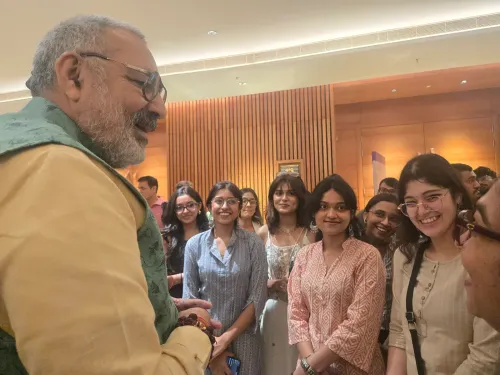
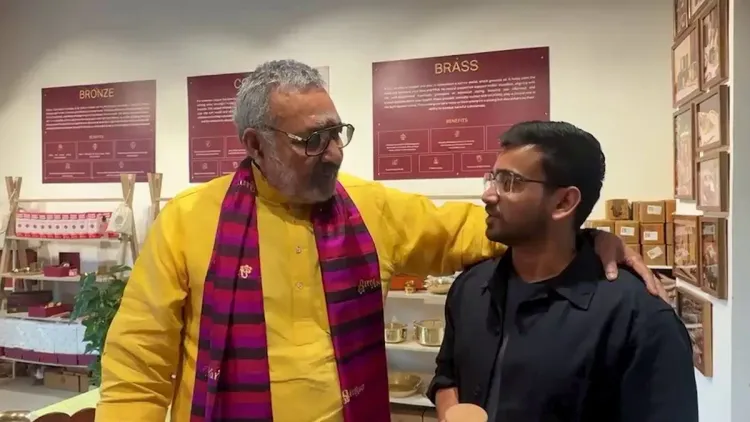
Union Textiles Minister Giriraj Singh on Friday, 5 June 2026, met Aditya Aggarwal, the young founder of handicrafts and textiles startup P. TAL, praising the entrepreneur's journey from limited resources to an annual turnover of ₹35 crore — with a stated target of ₹100 crore in the current financial year.
Context
Minister Singh shared details of the meeting on X, writing in Hindi: 'आज P. TAL के युवा संस्थापक आदित्य अग्रवाल से भेंट हुई' ('Today I met the young founder of P. TAL, Aditya Aggarwal'). He noted that Aggarwal's entrepreneurial journey, which began with limited resources, has grown to an annual business of ₹35 crore and is now moving toward a target of ₹100 crore this year.
Singh described the success as proof that 'innovation, hard work and determination can take young India to limitless possibilities.' He added that the energy of India's youth — willing to dream big, take risks and create something new — is 'the greatest strength in building a developed India.'
Policy Backdrop
The meeting aligns with the government's Startup India initiative, launched in January 2016, which aims to foster entrepreneurship through tax benefits, simplified compliance and funding support for new ventures. P. TAL operates at the intersection of two priority sectors for the Ministry of Textiles: handicrafts and textiles, both of which the government has sought to modernise and scale under the Atmanirbhar Bharat framework.
Ministers across portfolios have increasingly used individual startup success stories to illustrate the broader demographic dividend argument — that India's young population, channelled into innovation-led enterprise, can drive the country toward its Viksit Bharat 2047 development targets.
Stakeholders and Impact
P. TAL's growth trajectory is significant for the handicraft MSME segment, a sector that employs millions of artisans across India but has historically struggled with scale and market access. A startup bridging traditional craft with modern business practices — and crossing the ₹35 crore revenue mark — offers a replicable model that policymakers are keen to highlight.
Young entrepreneurs in the textiles and handicrafts space are the most direct beneficiaries of the ministry's attention. Increased visibility through ministerial endorsements can attract institutional investors and unlock government-backed funding channels available under Startup India and related schemes.
What's Next
The Ministry of Textiles is expected to continue spotlighting youth-led enterprises in the run-up to the next Union Budget and any forthcoming textiles policy review. Whether P. TAL's ₹100 crore turnover target for the current year translates into broader policy support — such as inclusion in government procurement or export promotion programmes — will be watched closely by the handicrafts sector. Singh's post, hashtagged #StartUpIndia and #NewIndia, signals that such stories will remain central to the government's communication of its economic vision.
Point of View
If met, would make P. TAL a credible case study for scaling traditional-sector MSMEs, lending weight to policy arguments for deeper state support in handicrafts. The post's hashtag choices, bridging #Handicrafts with #StartUpIndia, reflect a calculated effort to link legacy sectors with the aspirational language of New India.
NationPress
19 Sept 2026
Frequently Asked Questions
Who is Aditya Aggarwal of P. TAL?
Aditya Aggarwal is the young founder of P. TAL, a startup operating in the handicrafts and textiles space, whose entrepreneurial journey from limited resources to an annual turnover of ₹35 crore was highlighted by Union Textiles Minister Giriraj Singh on 5 June 2026.
What is P. TAL and what does it do?
P. TAL is an Indian startup in the handicrafts and textiles sector. It has grown to an annual turnover of ₹35 crore and is targeting ₹100 crore in the current financial year, according to details shared by Minister Giriraj Singh.
What is the Startup India initiative?
Startup India is a flagship government scheme launched in January 2016 to promote entrepreneurship and innovation through tax benefits, easier regulatory compliance and funding support for new ventures across sectors.
Why did Giriraj Singh meet P. TAL's founder?
Union Textiles Minister Giriraj Singh met P. TAL founder Aditya Aggarwal to recognise the startup's growth journey and to highlight youth entrepreneurship in the handicrafts and textiles sector as part of the government's broader Startup India and Viksit Bharat narrative.
What is Viksit Bharat 2047?
Viksit Bharat 2047 is the Indian government's vision to make India a fully developed nation by 2047, the centenary of independence, with youth-led innovation and entrepreneurship positioned as key drivers of that goal.