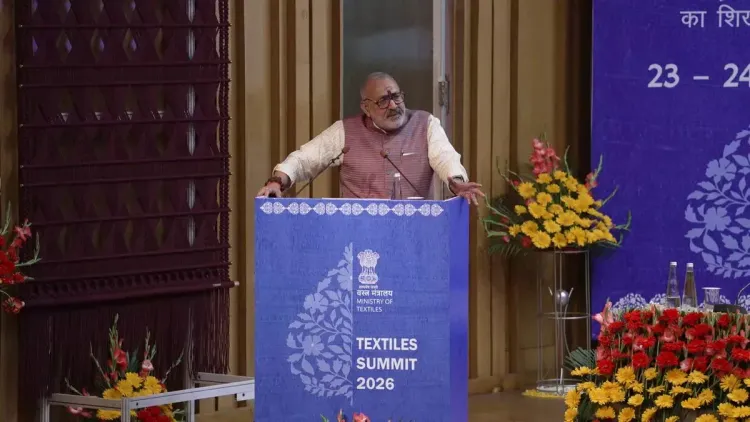
Giriraj Singh Pushes Buyer-Driven Model for Textile Exports
Synopsis
Union Textiles Minister Giriraj Singh on June 25, 2026, pledged to reorient India's textile sector toward buyer requirements and global demand, committing to ESG standards, traceability, digital support, and an exporter-friendly ecosystem to drive export growth.
Key Takeaways
Giriraj Singh called for moving India's textile sector from a seller-driven to a buyer-driven model aligned with global demand.
The Minister committed to embedding ESG standards, traceability, digital support, and better connectivity in the textile ecosystem.
The push mirrors EU and US buyer due-diligence requirements that now govern major global supply chains.
The PLI Scheme for Textiles , worth Rs 10,683 crore , and the RoSCTL scheme form the existing policy foundation for this export push.
MSME manufacturers and textile exporters are the primary stakeholders who stand to benefit from improved digital and compliance infrastructure.
Progress will be tracked through the updated National Textile Policy and quarterly apparel and technical textile export data.
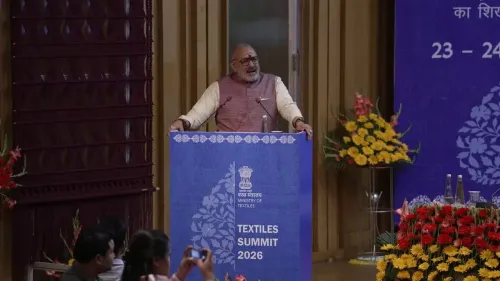
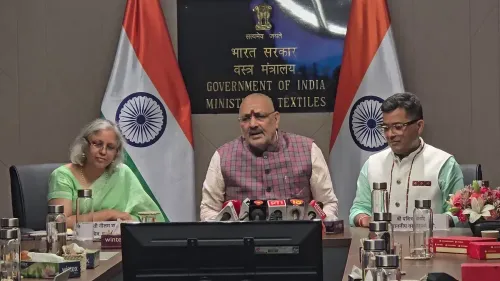
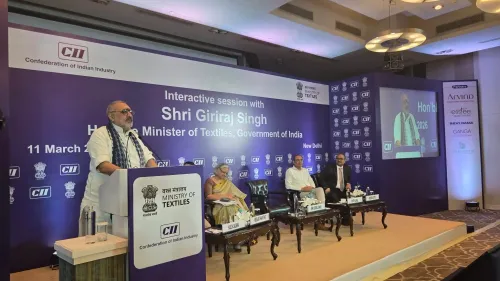
Union Textiles Minister Giriraj Singh on Thursday, June 25, 2026, called for a fundamental shift in India's textile export strategy — moving from a seller-driven market to one shaped by buyer requirements and global demand, while committing to embed ESG standards, traceability, digital support, and better connectivity across the sector.
Posting on X, the Minister outlined his vision: 'टेक्सटाइल क्षेत्र में ESG, ट्रेसेबिलिटी, डिजिटल सपोर्ट, बेहतर कनेक्टिविटी और निर्यातक-अनुकूल इकोसिस्टम के माध्यम से नई गति देने का संकल्प है।' (There is a resolve to give new momentum to the textile sector through ESG, traceability, digital support, better connectivity, and an exporter-friendly ecosystem.) He added that the time has come to move beyond the seller market and develop products in line with buyer needs and global demand — an approach he described as the path to taking India's textile sector to 'new heights.'
Context
The statement comes as Indian textile exporters face intensifying competition from Bangladesh and Vietnam, both of which have captured significant global apparel market share over the past decade. Global brands and retail chains, particularly in the European Union and the United States, are increasingly imposing mandatory due-diligence requirements on supply chains — covering environmental impact, labour standards, and end-to-end traceability. Singh's emphasis on ESG and traceability directly addresses these buyer-side pressures.
The pivot to a buyer-driven model also reflects lessons from post-pandemic supply-chain diversification, as global brands seek to reduce dependence on single-country sourcing. India's large and diverse textile manufacturing base — spanning cotton, man-made fibres, and technical textiles — positions it as a credible alternative, provided it can match the compliance and product-development agility that major buyers now demand.
Policy Backdrop
The Ministry of Textiles has pursued a series of export-oriented reforms since 2014. The Make in India initiative, launched in September 2014, identified textiles as a core focus sector for boosting domestic manufacturing and export competitiveness. The RoSCTL scheme, introduced in 2019, reimburses state and central taxes for apparel and made-ups exporters, improving cost competitiveness.
The Production Linked Incentive (PLI) Scheme for Textiles, approved by the Cabinet in September 2021 with an outlay of Rs 10,683 crore, targets man-made fibre apparel and technical textiles — segments where global demand is growing fastest. Singh's call for an 'exporter-friendly ecosystem' signals that the ministry intends to build on this foundation with updated digital infrastructure and sustainability frameworks.
Stakeholders and Impact
Textile exporters and MSME manufacturers stand to be most directly affected by any policy changes that flow from this direction. Smaller units, which form the backbone of India's apparel and home-textiles supply chain, have historically struggled to meet the documentation and compliance demands of international buyers — making the digital support and traceability commitments particularly significant for them.
For larger integrated mills and exporters, the shift toward a buyer-driven product-development model could mean closer collaboration with global brands at the design and specification stage, rather than offering off-the-shelf inventory. The Minister's framing suggests the government sees this as a structural upgrade, not merely a short-term export push.
What's Next
Industry watchers will look to the rollout of an updated National Textile Policy and quarterly export figures for apparel and technical textiles in the coming fiscal year as concrete measures of progress. The government's ability to translate the Minister's stated resolve into operational frameworks — covering ESG certification pathways, digital traceability platforms, and connectivity infrastructure for textile clusters — will determine whether this vision moves from intent to impact.
Point of View
Domestic exporters, and the BJP's industrial constituency that the Textiles Ministry is aligned with contemporary supply-chain expectations. The emphasis on ESG and traceability is strategically timed: the EU's Corporate Sustainability Due Diligence Directive and similar US measures are beginning to reshape sourcing decisions, and India risks losing orders to more compliance-ready competitors if it does not move quickly. The 'buyer-driven' framing is also a subtle acknowledgement that past efforts — including the PLI scheme — have focused on supply-side incentives without sufficiently integrating demand-side intelligence. Whether the ministry can operationalise this vision through concrete infrastructure, certification systems, and cluster-level digital tools will be the real test of this stated resolve.
NationPress
25 Jun 2026
Frequently Asked Questions
What did Giriraj Singh say about textile exports?
On June 25, 2026, Union Textiles Minister Giriraj Singh said India must move beyond a seller-driven market and develop textile products aligned with buyer requirements and global demand, while committing to ESG, traceability, digital support, and an exporter-friendly ecosystem.
What is the PLI scheme for textiles?
The Production Linked Incentive scheme for textiles, approved in September 2021, offers Rs 10,683 crore in incentives to promote man-made fibre apparel and technical textiles, targeting segments with high global export demand.
Why is ESG important for Indian textile exports?
Major buyers in the EU and US are increasingly requiring suppliers to meet environmental, social, and governance standards as part of mandatory due-diligence regulations, making ESG compliance a prerequisite for accessing premium global markets.
What is a buyer-driven model in textiles?
A buyer-driven model means manufacturers develop products based on the specific requirements, quality standards, and compliance demands of international buyers, rather than producing standard inventory and seeking customers for it.
How does India compete with Bangladesh and Vietnam in textiles?
India is pursuing fiscal incentives like RoSCTL and PLI, alongside investments in digital infrastructure, sustainability standards, and traceability systems, to offer global brands a compliant and diversified alternative to Bangladesh and Vietnam.