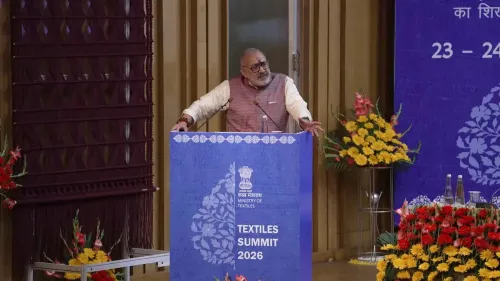
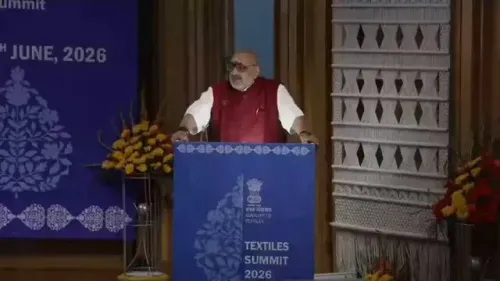
Giriraj Singh: Textiles sector stood firm amid US tariff hike
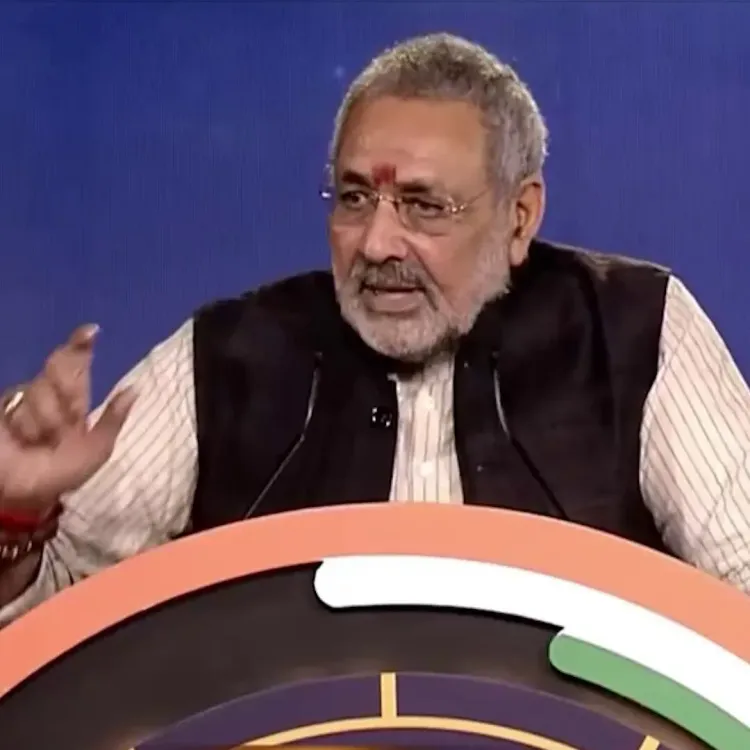
Synopsis
Textiles Minister Giriraj Singh says India pivoted to new export markets after the US raised tariffs, crediting PM Modi's guidance for keeping the sector stable. The move reflects a broader push to diversify away from traditional Western buyers under the AtmanirbharBharat framework.
Key Takeaways
Union Textiles Minister Giriraj Singh stated on 26 May 2026 that India adopted a diversification policy in response to US tariff increases on textile imports.
The strategy involved targeting new export destination countries beyond traditional markets like the US and EU.
Singh credited the direction to Prime Minister Narendra Modi , framing it as a guided policy response rather than a reactive measure.
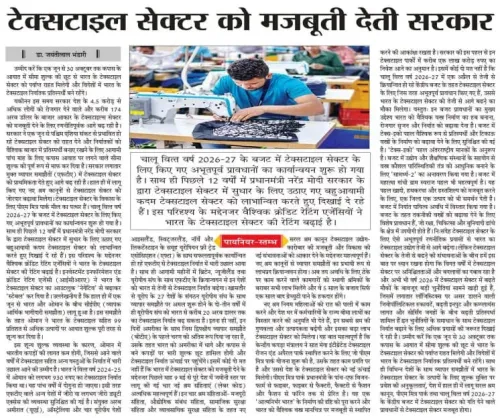
India's textile sector employs an estimated 4.5 crore workers directly, making export stability a major economic and social priority.
The diversification aligns with existing government frameworks including the PLI scheme for textiles and the AtmanirbharBharat initiative.
Key alternative markets being pursued include regions in Africa , West Asia , Latin America , and Southeast Asia .
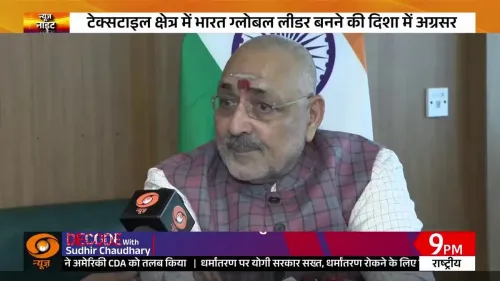
Union Textiles Minister Giriraj Singh on Tuesday, 26 May 2026 said that India's textile sector responded to United States tariff increases by adopting a diversification strategy under the guidance of Prime Minister Narendra Modi, pivoting to new export destinations and keeping the sector resilient despite global headwinds.
Context
Posting on X, Singh wrote in Hindi: 'जब अमेरिका ने टैरिफ बढ़ाया, तब माननीय प्रधानमंत्री श्री नरेन्द्र मोदी जी के मार्गदर्शन में हमने Diversification नीति अपनाई' — 'When America raised tariffs, under the honourable Prime Minister Shri Narendra Modi's guidance, we adopted a diversification policy.' He added that new countries were targeted for exports, ensuring the textile sector remained 'firmly unyielding' even amid global challenges.
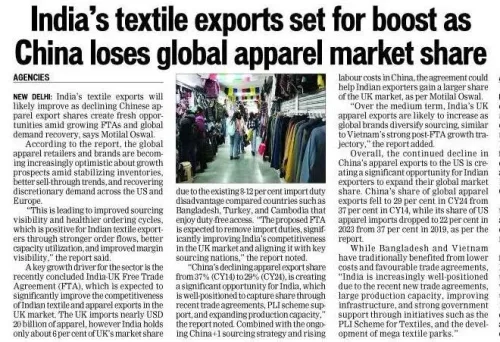
The post comes against the backdrop of ongoing trade friction between India and the United States, where revised US tariff schedules have affected several labour-intensive Indian export sectors, textiles among the most exposed.
Policy Backdrop
India's textile and apparel sector is one of the country's largest employment generators, supporting an estimated 4.5 crore workers directly and many more in allied industries. Export markets — historically dominated by the US and the European Union — have been under pressure as importing nations recalibrate trade policy.
The government's AtmanirbharBharat framework and the Production Linked Incentive (PLI) scheme for textiles, launched to boost man-made fibre and technical textiles segments, form the structural backbone of this diversification push. Newer markets in Africa, West Asia, Latin America, and parts of Southeast Asia have been identified as priority destinations to reduce dependence on traditional Western buyers.
Singh, who holds the Textiles portfolio in the Modi cabinet and represents Begusarai constituency in Bihar, has been a vocal advocate for linking domestic manufacturing strength to export ambition under the Make in India umbrella.
Stakeholders and Impact
Exporters in textile hubs such as Surat, Tiruppur, Ludhiana, Panipat, and Ichalkaranji are directly affected by shifts in US trade policy. A successful pivot to alternative markets would cushion order books for weavers, spinners, and garment manufacturers who collectively drive a significant share of India's merchandise exports.
Industry bodies representing cotton yarn spinners and apparel exporters have previously called for government-backed market development funds and preferential trade agreements with emerging economies to sustain export momentum when traditional markets impose higher duties.
For workers — a large proportion of whom are women in garment units — stable export demand translates directly into wage security and continued employment, making the diversification narrative politically as well as economically significant.
What's Next
The minister's statement signals that New Delhi views the US tariff pressure not as a crisis but as a catalyst for structural rebalancing of India's textile export portfolio. Ongoing negotiations for bilateral trade agreements with several regions could formalise the market-access gains that the diversification drive seeks.
Analysts will watch upcoming export data from the Apparel Export Promotion Council (AEPC) and the Cotton Textiles Export Promotion Council (TEXPROCIL) for evidence of whether the shift to new geographies is translating into sustained order growth, or whether the sector still faces a net shortfall from reduced US demand.
Point of View
With credit routed squarely to PM Modi's leadership. It fits a pattern where cabinet ministers use social media to narrate policy wins in accessible, vernacular language ahead of potential trade-deal announcements. The invocation of 'AtmanirbharBharat' and 'ExportGrowth' in the same breath signals the government's intent to position export diversification not as retreat from the US market, but as proactive global ambition. Whether the data backs the optimism will be the real test.
NationPress
10 Oct 2026
Frequently Asked Questions
Why did India's textile sector need to diversify exports?
The United States raised tariffs on imports, which pressured Indian textile exporters who relied heavily on the US market. India responded by targeting new export destinations to maintain overall export volumes.
What is the government's textile export diversification policy?
Under the AtmanirbharBharat framework, the government has been encouraging textile exporters to enter new markets in Africa, West Asia, Latin America, and Southeast Asia, supported by schemes like the PLI for textiles.
What did Giriraj Singh say about US tariffs and Indian textiles?
Singh said that when the US raised tariffs, India adopted a diversification policy under PM Modi's guidance, pivoting to new countries for exports, which kept the textile sector resilient amid global challenges.
How many people does India's textile sector employ?
India's textile and apparel sector directly employs an estimated 4.5 crore workers, making it one of the country's largest sources of employment, particularly for women in garment manufacturing.
Which Indian textile export councils track export performance?
The Apparel Export Promotion Council (AEPC) and the Cotton Textiles Export Promotion Council (TEXPROCIL) are the primary bodies that monitor and report on India's textile export data.