Goyal Backs Fast-Track Courts for Paper Leak Cases
Synopsis
Union Minister Piyush Goyal on 23 July 2026 announced that fast-track courts will prosecute paper-leak accused, invoking the Public Examinations (Prevention of Unfair Means) Act, 2024, and reaffirming PM Modi's government commitment to safeguarding youth opportunities through credible examination systems.
Key Takeaways
Union Minister Piyush Goyal announced on 23 July 2026 that fast-track courts will be used to prosecute those involved in examination paper leaks.
The move builds on the Public Examinations (Prevention of Unfair Means) Act, 2024 , enacted in February 2024 to penalise malpractices in public exams.
The government's action follows high-profile controversies around NEET-UG and several state-level recruitment examinations that triggered nationwide protests.
Students, parents, and aspirants preparing for NEET , JEE , and SSC examinations are the primary beneficiaries of stronger enforcement.
Goyal framed India's youth as 'its biggest asset', linking examination integrity directly to the nation's human-capital and development goals.
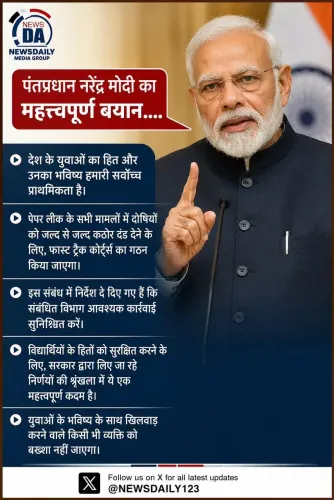
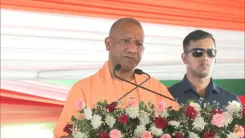
Union Commerce and Industry Minister Piyush Goyal on Thursday, 23 July 2026, pledged that fast-track courts will be deployed to prosecute those responsible for examination paper leaks, reaffirming the Modi government's commitment to protecting the futures of India's youth.
Context
In his post, Minister Goyal stated: 'Fast-track courts will now ensure that those involved in paper leaks are brought to justice.' He described India's youth as 'its biggest asset' and assured students and parents that 'the future of the nation's youth will never be compromised.' The statement signals a judicial escalation in the government's response to a problem that has repeatedly disrupted major national examinations.
Paper leaks have emerged as one of the most politically and socially sensitive issues in India's examination ecosystem, affecting millions of aspirants who invest years preparing for competitive tests. The government's invocation of fast-track courts represents an attempt to signal deterrence through speedier justice delivery.
Policy Backdrop
The announcement builds on the Public Examinations (Prevention of Unfair Means) Act, 2024, a central legislation enacted in February 2024 that prescribed stringent penalties for paper leaks, impersonation, and other malpractices in public examinations. The law was a direct legislative response to a series of high-profile controversies, most notably those surrounding the NEET-UG and several state-level recruitment examinations.
Following those controversies, the central government directed states to strengthen examination security frameworks and expedite pending prosecutions. The reference to fast-track courts in Goyal's post suggests a further institutional push — routing paper-leak cases through dedicated judicial channels to reduce delays that have historically blunted the deterrent effect of existing law.
Prime Minister Narendra Modi's government has consistently framed examination integrity as integral to its broader agenda of expanding youth opportunity, linking clean recruitment processes to the country's human-capital ambitions.
Stakeholders and Impact
The most immediate stakeholders are the millions of students and parents who depend on the credibility of national and state-level entrance and recruitment examinations — including NEET, JEE, and SSC tests — for access to higher education and government employment. For many aspirants from smaller towns and economically weaker backgrounds, these examinations represent the primary pathway to upward mobility.
Coaching institutes, examination-conducting bodies, and state governments are also directly affected, as they bear responsibility for maintaining security at examination centres. Faster judicial proceedings could heighten accountability across this chain, from paper-setters to logistics contractors.
What's Next
Observers will watch for state-level notifications formally designating special or fast-track courts to hear paper-leak cases under the 2024 Act, as well as any proposed amendments to strengthen the legislation further. The next cycles of major examinations — NEET, JEE, and SSC recruitments — will serve as an early test of whether security protocols have measurably improved. Sustained political attention at the Union Cabinet level, reflected in statements like Goyal's, is likely to keep pressure on examination authorities to demonstrate tangible reform.
Point of View
The statement suggests the government is aware that legislative action alone has not fully restored trust. The broader arc points toward an increasing convergence of judicial, legislative, and political instruments in the governance of India's high-stakes examination ecosystem.
NationPress
23 Jul 2026
Frequently Asked Questions
What are fast-track courts for paper leaks in India?
Fast-track courts are designated judicial bodies that hear specific categories of cases on an expedited basis. In the context of paper leaks, the government has signalled that such courts will be used to ensure swifter prosecution of those accused of leaking examination papers, reducing the delays that have historically weakened deterrence.
What is the Public Examinations (Prevention of Unfair Means) Act 2024?
The Public Examinations (Prevention of Unfair Means) Act was enacted in February 2024 and prescribes stringent penalties — including imprisonment and heavy fines — for malpractices such as paper leaks, impersonation, and organised cheating in public examinations conducted by central bodies.
Which exams have been affected by paper leaks in India?
NEET-UG has been among the most high-profile cases, alongside several state-level recruitment and entrance examinations. These incidents triggered nationwide protests and prompted both legislative and administrative responses from the central government.
What did Piyush Goyal say about paper leaks?
Minister Piyush Goyal stated that fast-track courts will ensure those involved in paper leaks are brought to justice, described India's youth as its biggest asset, and assured students and parents that the government firmly stands with them and will never compromise the future of the nation's youth.
How does the Modi government plan to stop paper leaks in India?
The government's approach combines legislation through the 2024 Act, directions to states to strengthen examination security, and now the deployment of fast-track courts to expedite prosecutions — all aimed at restoring the credibility of national and state-level competitive examinations.