Goyal backs Nadda's push for self-reliant med-tech India
Synopsis
Commerce Minister Piyush Goyal on 8 August 2026 amplified Health Minister J P Nadda's article on India's med-tech self-reliance drive, spotlighting the PLI scheme and Medical Devices Parks as the twin engines reducing import dependency and making healthcare more affordable.
Key Takeaways
Piyush Goyal on 8 August 2026 shared and endorsed an opinion piece by Health Minister J P Nadda on India's med-tech self-reliance drive.
The Production Linked Incentive (PLI) scheme for medical devices and the Medical Devices Parks programme were both approved in 2020 as part of the Aatmanirbhar Bharat package.
The schemes aim to boost domestic manufacturing of medical devices and reduce India's dependence on imported equipment.
Goyal's amplification signals active Commerce-Health Ministry coordination on industrial policy for the health sector.
The med-tech PLI mirrors similar incentive structures deployed in electronics, bulk drugs, and automobiles to address import vulnerability.
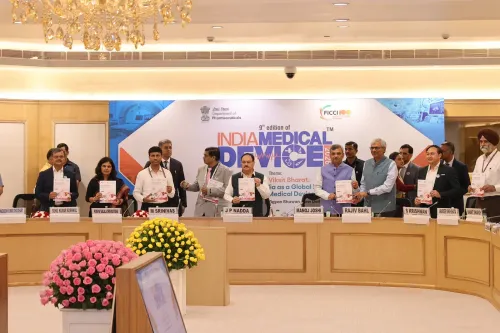
India's medical device sector is at the centre of a deliberate industrial pivot — and Union Commerce and Industry Minister Piyush Goyal is amplifying that message. On Saturday, 8 August 2026, Goyal shared an opinion piece authored by Union Health and Family Welfare Minister J P Nadda, calling it 'insightful' and spotlighting the government's drive to build an 'Aatmanirbhar Med-Tech Ecosystem' — one that makes healthcare more affordable, accessible, and resilient for every Indian.
In the piece, Nadda argues that flagship schemes such as the Production Linked Incentive (PLI) for medical devices and the Medical Devices Parks programme are doing twin duty: turbocharging domestic manufacturing while steadily cutting the country's reliance on imported equipment and components. Goyal's decision to amplify the article signals active coordination between the Commerce Ministry and the Health Ministry on industrial policy for the sector — a pairing that has become a hallmark of the Modi government's Aatmanirbhar Bharat strategy.
PLI and Medical Devices Parks: the policy engine behind the push
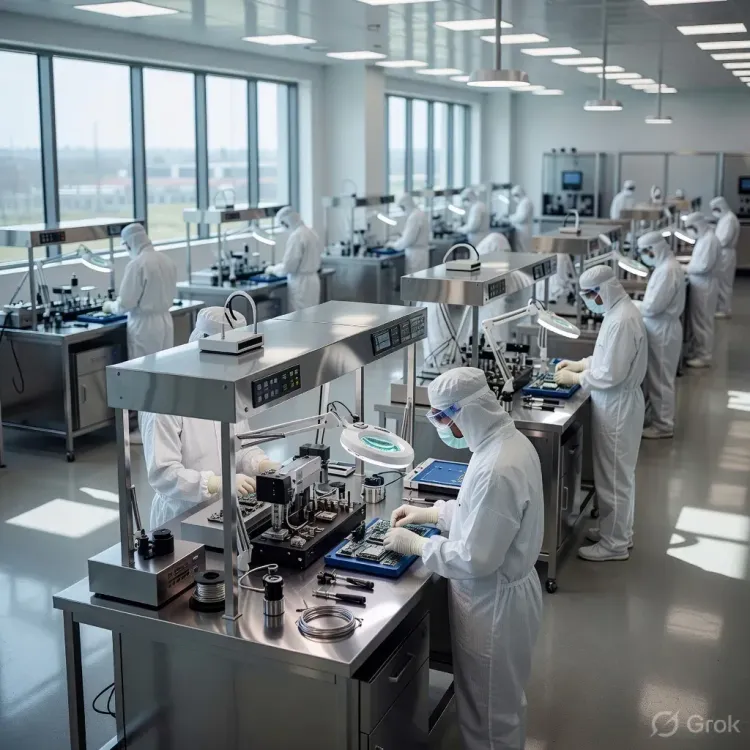
Both schemes trace their origin to 2020, when the Cabinet cleared them as part of the Aatmanirbhar Bharat economic package — a response to the supply-chain shocks the pandemic exposed in critical sectors. The PLI scheme for medical devices offers tiered financial incentives to manufacturers who scale up domestic production, while the Medical Devices Parks programme funds dedicated industrial clusters equipped with shared testing, calibration, and regulatory infrastructure that individual firms cannot afford alone.
The logic mirrors PLI interventions already deployed in electronics, bulk drugs, and automobiles — sectors where import dependency had become a strategic vulnerability. In medical devices, that vulnerability was stark: India imported the bulk of high-value diagnostic and surgical equipment, leaving the healthcare system exposed to global supply disruptions and foreign-currency pricing pressures.
Commerce meets Health: why this ministerial alignment matters
Goyal's amplification of a Health Ministry message is not incidental. As Leader of the House in the Rajya Sabha and the minister who steers trade and industrial policy, his public endorsement signals that med-tech self-reliance is being treated as a trade-policy priority — not just a health-sector aspiration. When the Commerce Ministry and Health Ministry speak in one voice on manufacturing incentives, it strengthens the case for sustained budgetary support and eases regulatory coordination for investors.
For domestic manufacturers, that alignment translates into a clearer long-term signal: the government intends to keep the policy architecture in place long enough to make capacity investment worthwhile. For the broader healthcare system, the promise is simpler — equipment made in India, priced for India.
The real test now is execution: how much investment the Parks have attracted, how many manufacturers have scaled under PLI, and whether import-substitution targets show up in the next Union Budget's fine print. The policy framework is built. The numbers will tell the story.
Point of View
Visible since the 2020 PLI rollout, reflects the BJP government's broader strategy of framing industrial policy as a national-security and public-health imperative, not just an economic one. The move also pre-positions the government to defend import-substitution targets ahead of the next Union Budget review. Whether the PLI and Parks schemes have delivered measurable investment and output gains, however, remains the harder question the government will eventually have to answer publicly.
NationPress
8 Aug 2026
Frequently Asked Questions
What is the PLI scheme for medical devices in India?
The Production Linked Incentive (PLI) scheme for medical devices, approved in 2020 under the Aatmanirbhar Bharat package, offers financial incentives to domestic manufacturers who scale up production of medical equipment, aiming to reduce India's dependence on imports.
What are Medical Devices Parks in India?
Medical Devices Parks are government-funded dedicated industrial clusters, cleared by the Cabinet in 2020, that provide common infrastructure such as testing and calibration facilities to support clusters of medical device manufacturers.
Why is India trying to reduce medical device imports?
India historically imported a large share of high-value diagnostic and surgical equipment, leaving its healthcare system exposed to global supply disruptions and foreign-currency price pressures — vulnerabilities that became acute during the pandemic.
What did Piyush Goyal say about med-tech on 8 August 2026?
On 8 August 2026, Commerce Minister Piyush Goyal shared Health Minister J P Nadda's opinion piece on India's med-tech self-reliance drive, calling it insightful and highlighting how PLI and Medical Devices Parks are boosting domestic manufacturing.
What is Aatmanirbhar Bharat in the context of healthcare?
Aatmanirbhar Bharat, launched in 2020, is India's national self-reliance initiative; in healthcare it encompasses PLI schemes and infrastructure programmes designed to build domestic capacity in medical devices and pharmaceuticals and reduce import dependency.