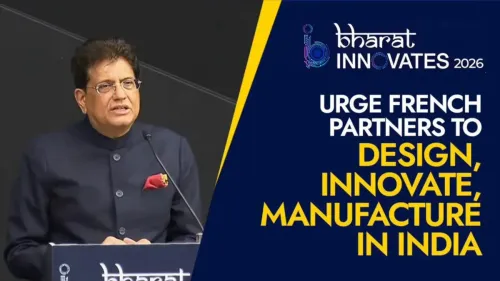
Goyal Flags Massive Support for India Semiconductor Push
Synopsis
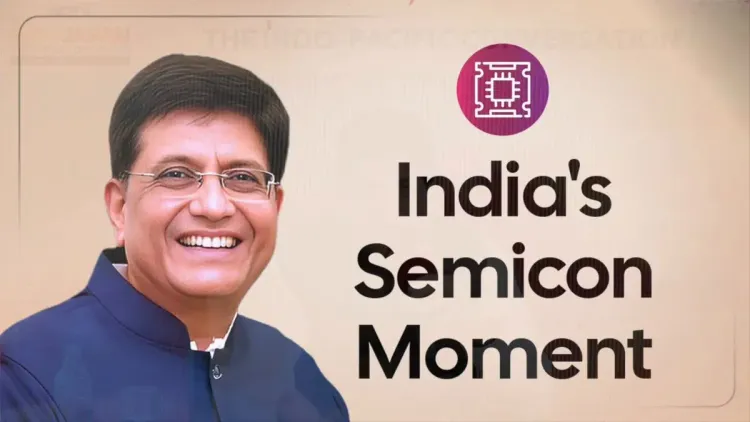
Commerce Minister Piyush Goyal on 2 July 2026 flagged massive support for India's bid to integrate into the global semiconductor supply chain, underlining momentum behind the ₹76,000 crore India Semiconductor Mission and allied partnerships including the US-India iCET framework.
Key Takeaways
Union Commerce Minister Piyush Goyal on 2 July 2026 cited 'massive support' for India's semiconductor supply-chain integration.
The India Semiconductor Mission , launched in 2021 , carries a ₹76,000 crore outlay covering chip design, fabrication, and assembly.
Micron Technology announced a $2.7 billion assembly and test plant in Gujarat in 2023 , one of the mission's flagship investments.
Tata Electronics has received approvals for semiconductor and display fab facilities under the same mission.
The US-India iCET framework, launched in 2023 , anchors bilateral cooperation on semiconductor and AI supply-chain resilience.
Commissioning timelines for approved projects and new announcements at upcoming Semicon India events are the next key milestones to watch.
Union Commerce and Industry Minister Piyush Goyal on Thursday, 2 July 2026 highlighted what he described as 'massive support' for India's integration into the global semiconductor supply chain, signalling growing international and domestic momentum behind the country's chip ambitions.
Context
The minister's post comes as India's semiconductor drive enters a critical execution phase. The India Semiconductor Mission (ISM), launched in 2021 with a ₹76,000 crore outlay, has been the central plank of New Delhi's strategy to build indigenous capacity in chip design, fabrication, and assembly and test operations. Goyal, as the minister overseeing trade and industrial incentives for electronics, has been a key face of this push on the international stage.
The post's emphasis on 'massive support' points to a broad coalition of backing — spanning allied governments, global chipmakers, and Indian industry — that has coalesced around the country's semiconductor ambitions over the past three years.
Policy Backdrop
India's semiconductor policy rests on interlocking pillars. The Production Linked Incentive (PLI) scheme for electronics, extended in 2020-21, covers semiconductor components and displays, while the ISM provides capital-support incentives for approved projects. Internationally, the Initiative on Critical and Emerging Technology (iCET), launched in 2023 under the US-India bilateral framework, specifically targets semiconductor and artificial-intelligence supply-chain resilience as a shared priority.
The US CHIPS and Science Act of 2022 further accelerated allied-nation diversification, with India positioned as a preferred destination for assembly, test, and packaging capacity. Micron Technology, the US memory chip firm, announced a $2.7 billion semiconductor assembly and test plant in Gujarat in 2023, one of the most prominent early anchors of that strategy. The Tata Group's Tata Electronics unit has also received approvals for semiconductor and display fabrication facilities under the mission.
Stakeholders and Impact
The beneficiaries of a successful semiconductor integration extend well beyond large corporations. India's engineering workforce — one of the world's largest pools of chip-design talent — stands to gain from the creation of high-value manufacturing and design jobs. Global semiconductor firms seeking to diversify away from concentration risks in Taiwan and China view India as a credible alternative hub, particularly for back-end packaging and assembly operations.
Electronics manufacturers supplying both domestic and export markets would gain from shorter, more resilient supply chains if India's fab and assembly ecosystem matures on schedule. The minister's statement of 'massive support' may also be read as a signal to investors that political and policy continuity behind the mission remains firm.
What's Next
The immediate focus for the sector is on commissioning timelines for the approved fabrication and assembly projects, including the Micron plant in Gujarat and Tata Electronics' facilities. The Semicon India conference series has served as a key platform for fresh investment announcements, and any new commitments in the coming months will be closely watched as a measure of how 'massive' the support the minister referenced truly is.
India's trajectory in semiconductors will ultimately be judged not by policy announcements but by the pace at which silicon moves from approved blueprints to operating production lines — a test that the coming months will begin to answer.
Point of View
' the minister is simultaneously reassuring existing investors like Micron and Tata Electronics and positioning India as a consensus choice for further supply-chain diversification. The statement fits a broader pattern in which New Delhi has used high-profile ministerial communication to reinforce the narrative that India is a stable, long-term alternative to Taiwan-and-China-centric chip supply chains. The real test, however, will be whether commissioning milestones for approved projects arrive on schedule — a metric no amount of political signalling can substitute for.
NationPress
2 Jul 2026
Frequently Asked Questions
What is India's role in the global semiconductor supply chain?
India is positioning itself as a hub for semiconductor assembly, test, packaging, and design through the India Semiconductor Mission, backed by a ₹76,000 crore government outlay and partnerships with allied nations under frameworks like the US-India iCET.
What is the India Semiconductor Mission?
The India Semiconductor Mission is a central government programme launched in 2021 with a ₹76,000 crore outlay to develop India's semiconductor design, fabrication, and assembly ecosystem and reduce import dependence.
Which companies have invested in India's semiconductor sector?
Micron Technology announced a $2.7 billion semiconductor assembly and test plant in Gujarat in 2023, while Tata Electronics has received government approvals for semiconductor and display fabrication facilities under the India Semiconductor Mission.
What is the iCET framework between India and the US?
The Initiative on Critical and Emerging Technology (iCET) is a bilateral framework launched in 2023 by India and the United States to expand cooperation on semiconductors, artificial intelligence, and supply-chain resilience.
Why is India important for semiconductor supply chain diversification?
India offers a large engineering talent pool, government incentives, and geopolitical alignment with Western nations seeking to reduce concentration risks in Taiwan and China, making it an attractive destination for chip assembly and packaging capacity.