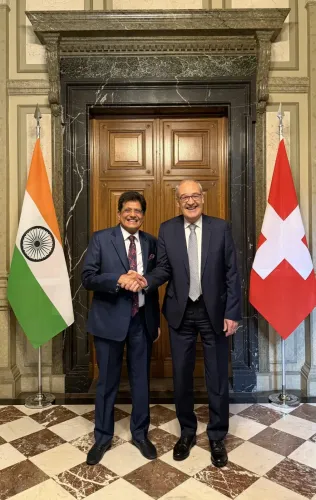
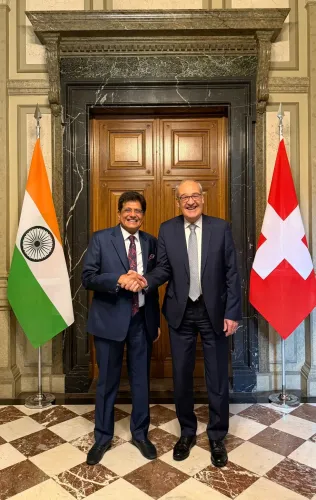
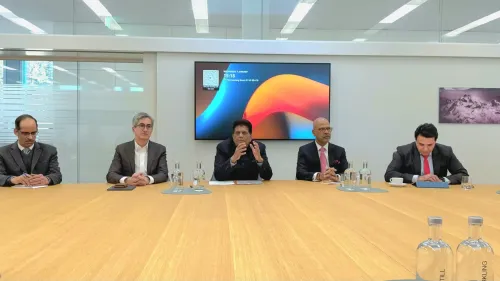
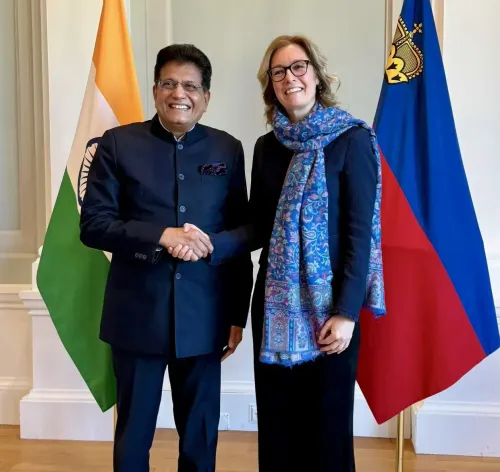
Goyal meets Liechtenstein's Hereditary Prince, pushes EFTA TEPA ties
Synopsis
Union Commerce Minister Piyush Goyal met Hereditary Prince Alois of Liechtenstein on 28 October 2026, reaffirming the $100 billion investment pledge under the India-EFTA TEPA signed in March 2024 and highlighting India's Ease of Doing Business reforms to attract EFTA capital.
Key Takeaways
Hereditary Prince Alois of Liechtenstein is on an official visit to India, meeting senior government leaders including Commerce Minister Piyush Goyal.
The India-EFTA Trade and Economic Partnership Agreement (TEPA) was signed on 10 March 2024 and includes a $100 billion investment commitment over 15 years .
EFTA comprises four nations: Iceland, Liechtenstein, Norway and Switzerland .
Goyal highlighted India's Ease of Doing Business reforms as a key driver of an investor-friendly environment for EFTA capital.
India's TEPA with EFTA is part of a broader strategy of securing trade and investment agreements with the UAE, Australia , and the EU .
Sector-specific investment announcements and implementation timelines under TEPA remain the key metrics to watch.
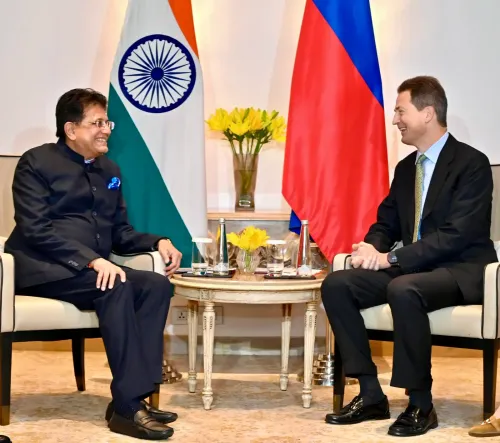
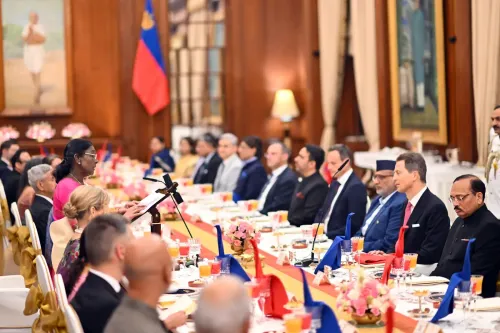
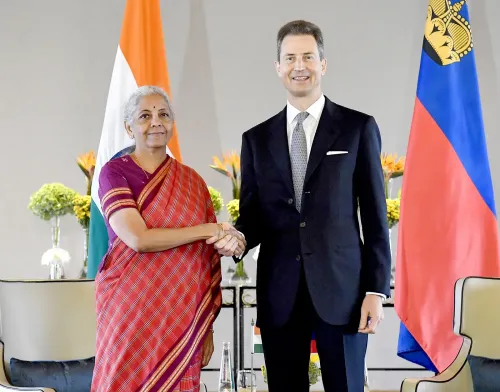
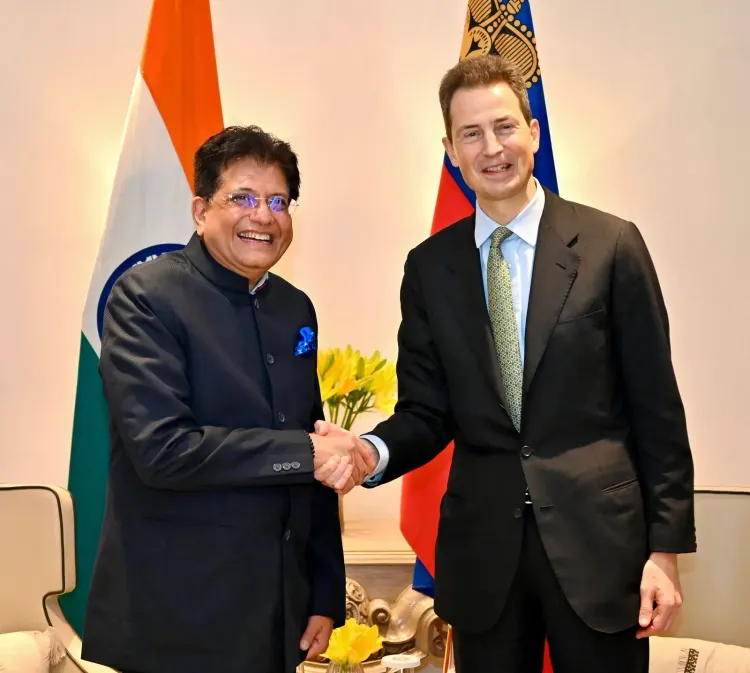
A $100 billion investment commitment was at the heart of the conversation when Union Commerce and Industry Minister Piyush Goyal met H.S.H. Hereditary Prince Alois of Liechtenstein in New Delhi on Wednesday, 28 October 2026, as the Prince made a rare official visit to India.
The $100 billion promise at the centre of TEPA talks
The India-EFTA Trade and Economic Partnership Agreement — signed on 10 March 2024 — carries a landmark pledge: $100 billion in investment over 15 years from the four EFTA nations of Iceland, Liechtenstein, Norway and Switzerland. That number was squarely on the table during Goyal's courtesy call. 'The $100 billion investment commitment under the India-EFTA TEPA reflects the shared ambition to deepen investment linkages, drive growth, and create big opportunities for businesses,' the Minister noted.
Liechtenstein, though geographically tiny, punches well above its weight in financial services and investment diplomacy — making the Hereditary Prince's visit a symbolically and commercially significant one. The principality is one of only four EFTA member states, and its participation in TEPA conversations carries weight for the broader bloc's implementation posture.
Ease of Doing Business: India's pitch to European capital
Goyal used the meeting to underscore India's ongoing structural reforms. He highlighted 'sustained efforts to create an investor-friendly business environment through reforms to enhance Ease of Doing Business' — a policy thread that has run through successive Union budgets since 2014. The pitch is deliberate: as TEPA moves from a signed document toward actual capital flows, India needs to demonstrate that the regulatory scaffolding is ready to receive European investment at scale.
India has been methodically building a web of trade and investment agreements with European and Indo-Pacific partners — deals with the UAE and Australia are already in force, while negotiations with the EU continue. TEPA with EFTA fits squarely into that diversification strategy, de-risking India's export and investment landscape beyond any single bilateral relationship.
What the EFTA investment clock is now ticking toward
The critical question after every high-level TEPA conversation is the same: which sectors, which timelines, and which firms will be first to translate the $100 billion headline into actual factory gates and financial commitments. Implementation milestones and sector-specific investment announcements are now the metrics that will define whether March 2024's signing ceremony becomes a durable economic partnership or a well-photographed aspiration.
With Hereditary Prince Alois on Indian soil and the Commerce Minister underlining the reform agenda in person, the signal to EFTA capital is clear — India is open, and the clock on that fifteen-year commitment is running.
Point of View
India is using high-level diplomatic touchpoints to remind EFTA capitals that the $100 billion commitment has a clock attached. For Goyal, who has been the political face of India's FTA push, the meeting reinforces continuity in the trade agenda regardless of bilateral political cycles. Liechtenstein's outsized role in EFTA financial architecture means engagement with the principality carries disproportionate weight on investment facilitation. The emphasis on Ease of Doing Business also suggests New Delhi is anticipating scrutiny from European investors over regulatory predictability — and getting ahead of it.
NationPress
28 Oct 2026
Frequently Asked Questions
What is the India-EFTA TEPA?
The India-EFTA Trade and Economic Partnership Agreement is a trade and investment pact signed on 10 March 2024 between India and the four EFTA nations — Iceland, Liechtenstein, Norway and Switzerland. It includes a landmark $100 billion investment commitment over 15 years from EFTA countries into India.
Who is Hereditary Prince Alois of Liechtenstein?
Hereditary Prince Alois is the Hereditary Prince and Regent of Liechtenstein, who undertakes official diplomatic engagements on behalf of the principality. He is currently on an official visit to India.
What did Piyush Goyal discuss with Liechtenstein's Hereditary Prince?
Commerce Minister Piyush Goyal discussed strengthening India-Liechtenstein economic and trade ties, enhanced cooperation under the India-EFTA TEPA, and India's Ease of Doing Business reforms to attract foreign investment.
Which countries are part of EFTA?
EFTA — the European Free Trade Association — comprises four countries: Iceland, Liechtenstein, Norway and Switzerland . None of these are EU members.
How does India-EFTA TEPA fit into India's broader trade strategy?
TEPA is part of India's push to diversify trade and investment partners, alongside free trade agreements with the UAE and Australia and ongoing negotiations with the EU . It is designed to secure large-scale European investment while opening new export markets for Indian goods.