Goyal Vows Crackdown on Drug Ecosystem Over Next 3 Years
Synopsis
Union Minister Piyush Goyal has announced a sweeping three-year crackdown on India's drug ecosystem, covering supply chains, trafficking networks, and demand reduction. The pledge signals a whole-of-government approach building on the NDPS Act and the Nasha Mukt Bharat Abhiyan.
Key Takeaways
Piyush Goyal announced on 26 June 2026 that India will launch a severe crackdown on the 'entire drug ecosystem' over the next three years .
The term 'ecosystem' signals action across supply chains, financing, distribution, and demand — not just isolated seizures.
The Narcotics Control Bureau (NCB) under the Ministry of Home Affairs is the apex agency tasked with coordinating enforcement.
The Nasha Mukt Bharat Abhiyan , launched in August 2020 , forms the demand-reduction pillar of India's anti-drug strategy.
Key trafficking corridors run through Punjab , Rajasthan , and the Northeast , linked to the Golden Crescent producing region.
Possible amendments to the NDPS Act, 1985 and stronger centre-state coordination are expected follow-up steps.
Union Commerce and Industry Minister Piyush Goyal on Friday, 26 June 2026 pledged a decisive, multi-year offensive against the entire drug ecosystem in India, signalling that enforcement action would be sustained and systemic rather than episodic.
Context
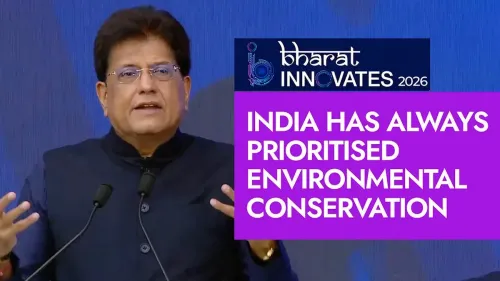
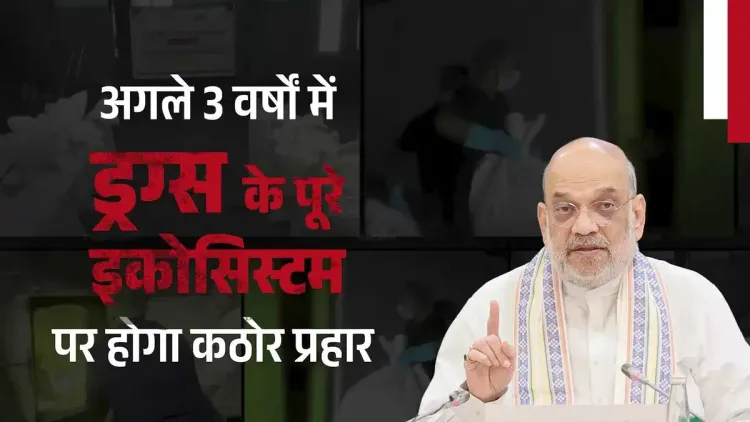
Posting on X, Goyal stated — 'अगले 3 वर्षों में ड्रग्स के पूरे इकोसिस्टम पर होगा कठोर प्रहार' ('There will be a severe strike on the entire drug ecosystem in the next 3 years') — framing the government's intent as a comprehensive assault on narcotics networks rather than isolated seizures. The statement, accompanied by a video, underscores the ruling dispensation's intent to treat drug trafficking as a whole-of-government priority through at least 2029.
The choice of the word 'ecosystem' is deliberate: it encompasses supply chains, financing networks, street-level distribution, and demand-side vulnerabilities, suggesting that enforcement, awareness, and rehabilitation will be pursued in tandem.
Policy Backdrop
India's foundational anti-narcotics law, the Narcotic Drugs and Psychotropic Substances (NDPS) Act, 1985, provides the legal scaffolding for prosecution and asset seizure. The Narcotics Control Bureau (NCB), operating under the Ministry of Home Affairs, remains the apex central agency coordinating inter-state and cross-border enforcement.
On the demand-reduction side, the government launched the Nasha Mukt Bharat Abhiyan in August 2020, targeting youth and vulnerable communities with awareness drives and rehabilitation support. The Abhiyan has covered hundreds of districts identified as high-burden zones, particularly along trafficking corridors in Punjab, Rajasthan, and the Northeast.
India sits in a challenging geography: the Golden Crescent — comprising Afghanistan, Iran, and Pakistan — remains the world's largest opium-producing region, and Indian territory serves as both a transit zone and a destination market for heroin and synthetic drugs.
Stakeholders and Impact
Border communities in Punjab and the Northeast bear a disproportionate burden of drug-related harm, with trafficking networks exploiting porous frontiers. A sustained three-year enforcement drive, if backed by inter-agency coordination between state police forces and central agencies such as the NCB, the Directorate of Revenue Intelligence (DRI), and Customs, could disrupt established smuggling pipelines.
For youth — identified as the most at-risk demographic — the parallel push on awareness and rehabilitation under schemes like the Nasha Mukt Bharat Abhiyan aims to reduce demand even as supply-side pressure is intensified. Civil society organisations working in drug rehabilitation stand to gain greater policy and possibly financial support if the government formalises this three-year roadmap.
What's Next
Observers will watch for concrete legislative or administrative steps in upcoming Parliament sessions, including possible amendments to the NDPS Act to sharpen penalties or streamline asset-forfeiture provisions. Enhanced coordination frameworks between state governments and central agencies — particularly in high-trafficking states — are likely to be a near-term deliverable.
The government's ability to translate this ministerial commitment into measurable outcomes — seizure volumes, prosecution rates, and rehabilitation enrolments — will be the true test of the three-year timeline Goyal has publicly set.
Point of View
His statement carries legislative weight and may foreshadow NDPS Act amendments in upcoming sessions. The pledge fits a broader BJP governance narrative of long-horizon security commitments, though the proof will lie in inter-agency coordination and measurable outcomes rather than ministerial intent alone. Border-state politics — particularly in Punjab, where drug abuse has long been an electoral flashpoint — add a sharp political dimension to what is framed as a law-enforcement announcement.
NationPress
26 Jun 2026
Frequently Asked Questions
What did Piyush Goyal say about drugs?
Piyush Goyal announced on 26 June 2026 that the government will launch a severe crackdown on India's entire drug ecosystem over the next three years, targeting supply chains, trafficking networks, and demand simultaneously.
What is the Nasha Mukt Bharat Abhiyan?
The Nasha Mukt Bharat Abhiyan is a national awareness and rehabilitation campaign launched in August 2020 to reduce drug demand among youth and vulnerable communities across India.
Which agency leads India's anti-narcotics enforcement?
The Narcotics Control Bureau (NCB), functioning under the Ministry of Home Affairs, is India's apex central agency for combating illicit drug trafficking and coordinating anti-narcotics operations.
What is the NDPS Act?
The Narcotic Drugs and Psychotropic Substances (NDPS) Act, enacted in 1985, is India's primary law regulating the production, trade, and consumption of controlled substances, and provides the legal basis for drug-related prosecutions and asset seizures.
Which regions in India are most affected by drug trafficking?
Punjab, Rajasthan, and the Northeastern states are the most affected regions, as they lie along established trafficking corridors linked to the Golden Crescent — the opium-producing zone spanning Afghanistan, Iran, and Pakistan.