Gujarat exceeds earthwork target: 2.21 crore cubic metres in three years
Synopsis
Gujarat's Water Resources Department quietly exceeded its three-year earthwork target by over 18 lakh cubic metres, completing work across 1,474 sites and 4,223 kilometres of waterways. The campaign — spanning reservoir strengthening, canal desilting, and salinity control — is the state's most concrete step yet toward its water-surplus ambition.
Key Takeaways
Gujarat completed 2.21 crore cubic metres of earthwork between 2022-23 and 2024-25 , exceeding the target of 203 lakh cubic metres .
Work was carried out across 1,474 sites , covering 4,223 kilometres of canals and waterways.
Structural improvement activities spanned approximately 123 lakh square metres .
An average of 88 to 96 units of government machinery were deployed throughout the campaign.
Works included reservoir strengthening, canal desilting, salinity ingress prevention, and emergency flood-relief operations.
Minister Ishwarsinh Patel credited the drive with increasing reservoir strength and extending canal lifespan for tail-end farmers.
The Gujarat government has completed 2.21 crore cubic metres (221.37 lakh cubic metres) of earthwork across the state between 2022-23 and 2024-25, surpassing its original target of 203 lakh cubic metres for the three-year period. Water Resources and Water Supply Minister Ishwarsinh Patel announced the achievement on Wednesday, 20 May, attributing it to sustained special drives by the Water Resources Department aimed at strengthening irrigation infrastructure.
Scale of Work Completed
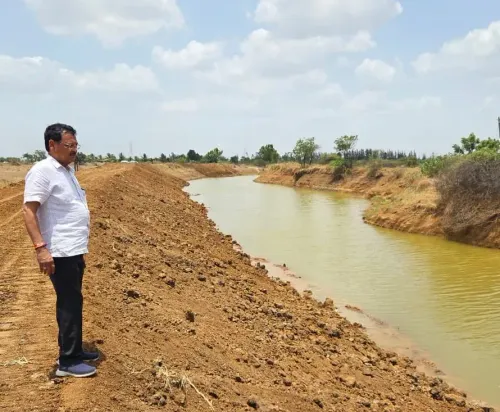
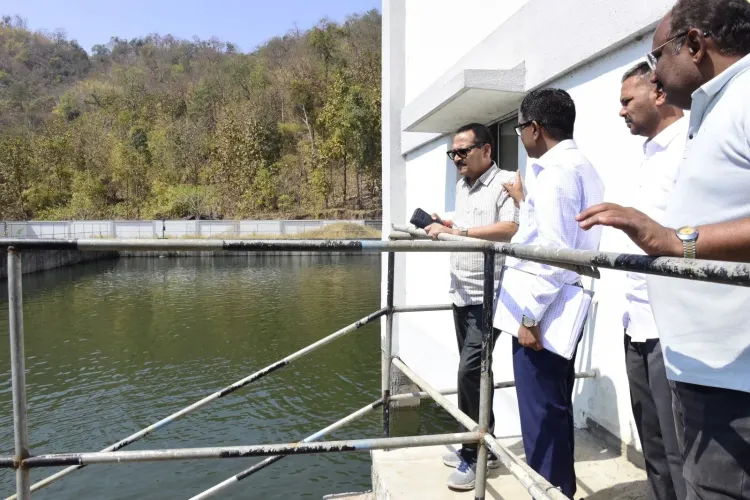
The earthwork campaign covered 1,474 sites across Gujarat, with an average of 88 to 96 units of government machinery deployed at any given time. Structural improvement and maintenance activities spanned approximately 123 lakh square metres, covering a total canal and waterway length of 4,223 kilometres.
Works included deepening and desilting of reservoirs, canals, rivers, check dams, streams, channels, and lakes. Removal of unwanted vegetation — bushes and shrubs growing on dams, canals, lakes, and channels — was also carried out as part of the three-year drive.
What the Campaign Covered
According to Minister Patel, the operations encompassed conservation and strengthening of reservoirs, maintenance of canals and drainage systems, reinforcement of earthen embankments and bunds, prevention of salinity ingress, and construction of cofferdams as specialised engineering interventions.
Cleaning, restoration of canal and drainage networks, removal of obstructions affecting floodwater flow, and emergency flood-relief operations were also executed using modern heavy earth-moving machinery. The Irrigation Mechanical Circles of Vadodara and Ahmedabad played a central role in coordinating infrastructure works across different regions.
Government's Position
'The department had established a new milestone under the guidance of Chief Minister Bhupendra Patel by surpassing the target,' Minister Patel said. He credited the department's staff and labourers for remaining 'engaged day and night despite geographical challenges and adverse weather conditions' to complete the campaign.
Patel added that the completion of the drive has increased the structural strength of the state's reservoirs while also extending the lifespan and water-carrying capacity of its canal networks — benefits that are expected to reach farmers at the tail-end of canal systems who have historically had limited access to irrigation.
What Comes Next
The minister indicated that the Irrigation Mechanical Department would continue modernisation and technology-based works in coming years, expressing confidence that Gujarat would 'move further towards becoming a water-surplus state.' The three-year campaign is seen as a foundation for longer-term water security planning in a state that has faced recurring drought stress in several districts.
Point of View
But the real measure of this campaign is whether tail-end farmers — historically the last to benefit from canal networks — are seeing reliable water access. Earthwork volume is an input metric; crop yields and irrigation coverage in drought-prone districts are the output metrics that matter. Gujarat has a track record of strong infrastructure execution, yet water stress persists in Saurashtra and Kutch. The state's water-surplus ambition will need more than desilting drives — it will require demand-side management and equitable distribution frameworks that no earthwork campaign alone can deliver.
NationPress
13 Oct 2026
Frequently Asked Questions
How much earthwork did Gujarat complete in the last three years?
Gujarat completed 2.21 crore cubic metres (221.37 lakh cubic metres) of earthwork between 2022-23 and 2024-25, exceeding its original target of 203 lakh cubic metres. The work was carried out across 1,474 sites by the state's Water Resources Department.
What was the purpose of Gujarat's three-year earthwork campaign?
The campaign aimed to strengthen reservoirs, increase water storage and canal-carrying capacity, and extend irrigation access to farmers at the tail-end of canal networks. It also covered desilting, vegetation removal, salinity ingress prevention, and emergency flood-relief operations.
Which regions led the irrigation infrastructure work in Gujarat?
The Irrigation Mechanical Circles of Vadodara and Ahmedabad played a central role in maintaining and improving irrigation infrastructure across different regions of the state using heavy earth-moving machinery.
Who announced Gujarat's earthwork milestone and when?
Water Resources and Water Supply Minister Ishwarsinh Patel announced the achievement on 20 May, crediting the campaign's success to the guidance of Chief Minister Bhupendra Patel and the sustained efforts of department staff.
What are Gujarat's next steps for water infrastructure?
The Irrigation Mechanical Department has indicated it will continue modernisation and technology-based works in coming years, with the stated goal of moving Gujarat toward becoming a water-surplus state.