Gujarat's Yuva Aapda Mitra scheme trains 4,526 volunteers across 17 districts, 50% women target set
Synopsis
Gujarat has trained 4,526 community disaster responders under the Yuva Aapda Mitra Scheme — but the more striking detail is the 50 per cent women participation target, a deliberate push to recast disaster response as a gender-inclusive function. With each volunteer equipped with a ₹10,000 kit and ₹5 lakh insurance, the state is building a first-responder layer that specialised teams simply cannot match for speed at the local level.
Key Takeaways
4,526 volunteers trained under Gujarat's Yuva Aapda Mitra Scheme against a phase target of 11,850 across 17 districts .
The scheme mandates 50 per cent women participation in disaster response roles.
Each trained volunteer receives an Emergency Responder Kit worth ₹10,000 (15 items) and ₹5 lakh insurance cover for three years.
District-level EERR kits worth ₹19 lakh — including inflatable rescue boats and satellite GPS — support large-scale operations.
Aapda Mitras from Bharuch were deployed during the COVID-19 pandemic and 2020 floods , validating the model in real emergencies.
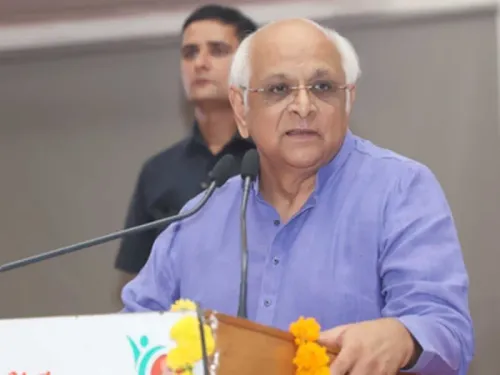
The scheme, originally launched by NDMA in 2016 with 200 volunteers in Bharuch, now operates under Chief Minister Bhupendra Patel .
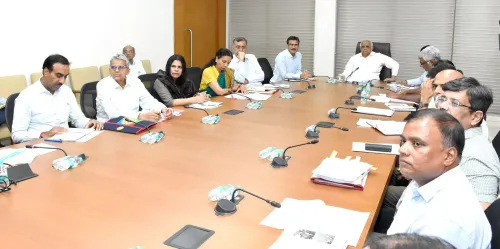
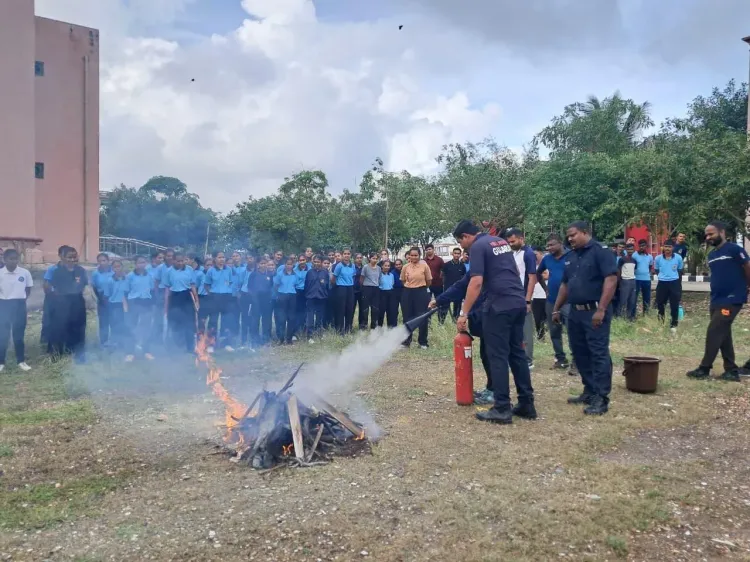
Gujarat has trained 4,526 volunteers under the first phase of the Yuva Aapda Mitra Scheme, building a community-based disaster response force across 17 districts of the state, with a specific mandate that 50 per cent of all participants be women. The Gujarat State Disaster Management Authority (GSDMA) confirmed the figures, underscoring the scheme's role in strengthening grassroots emergency preparedness before specialised response teams can be mobilised.
Scheme Scale and Progress
The current phase targets 11,850 volunteers drawn from the National Cadet Corps (NCC), National Service Scheme (NSS), My Bharat (MYB), and Bharat Scouts and Guides (BS&G). Against this target, 4,526 volunteers have completed training — representing roughly 38 per cent of the phase goal. The programme operates under the leadership of Chief Minister Bhupendra Patel and was originally launched by the National Disaster Management Authority (NDMA) in 2016 with just 200 volunteers in Bharuch district.
Under a preceding phase — the 'Upscaling of Aapda Mitra Scheme' — 5,500 volunteers from the same 17 districts received 12 days of training through the State Disaster Response Force (SDRF). The current phase condenses initial training to seven days, conducted by the SDRF and master trainers, followed by advanced instruction through the Sardar Patel Institute of Public Administration (SPIPA).
Who Qualifies and What They Receive
Aapda Mitras are local volunteers aged between 18 and 40 years who are physically and mentally fit for emergency rescue work. Applicants must be district residents who have cleared at least Class 7. Age relaxation is available for ex-servicemen, retired medical professionals, and civil engineers.
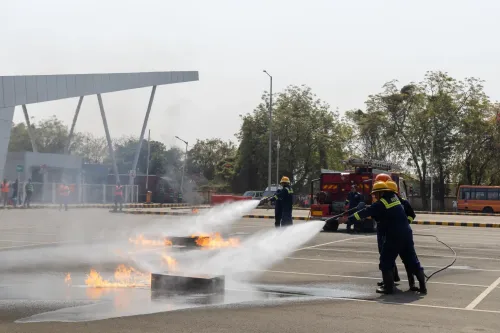
Every trained volunteer receives an Emergency Responder Kit worth ₹10,000, containing 15 essential items — including a life jacket, solar torch, first-aid kit, helmet, and a 50-metre defence-grade rescue rope. On completing training, volunteers are issued a certificate, an identity card, and ₹5 lakh insurance cover valid for three years.
District-Level Infrastructure
The programme covers Ahmedabad, Amreli, Anand, Bhavnagar, Jamnagar, Junagadh, Kheda, Kutch, Morbi, Narmada, Navsari, Porbandar, Rajkot, Surat, Tapi, Vadodara and Valsad districts. Each district also maintains an Emergency Equipment Reserve Resource (EERR) kit valued at ₹19 lakh, equipped with an inflatable rescue boat, chainsaw, satellite GPS, and walkie-talkies.
District Emergency Operation Centres (DEOCs) maintain updated contact lists of all trained Aapda Mitras and mobilise them during emergencies. According to officials, citizens and local authorities can directly approach the DEOC to request volunteer assistance.
Proven in the Field
The scheme's real-world value was demonstrated when Aapda Mitras from Bharuch actively supported district authorities during the COVID-19 pandemic and the severe floods of 2020. Their involvement in relief and public service efforts highlighted the model's effectiveness as a first-responder bridge before specialised teams arrive.
With the women participation target of 50 per cent still to be fully achieved and roughly 7,324 more volunteers to be trained in the current phase, the GSDMA's next milestones will test whether the programme can scale equitably and sustain field readiness across Gujarat's disaster-prone districts.
Point of View
And mainstreaming women as trained first responders has measurable community outcomes, particularly in flood and cyclone-prone areas. That said, training completion at 38 per cent of the phase target signals execution lag. The real test is whether GSDMA can sustain volunteer engagement beyond certification — attrition in community volunteer programmes is a documented challenge, and a dormant Aapda Mitra list at a DEOC is not the same as a deployable force.
NationPress
13 Jul 2026
Frequently Asked Questions
What is the Yuva Aapda Mitra Scheme in Gujarat?
The Yuva Aapda Mitra Scheme is a community-based disaster response programme that trains local volunteers aged 18 to 40 to conduct immediate rescue and relief operations before specialised teams arrive. Launched nationally by the NDMA in 2016, it has been expanded across 17 districts of Gujarat under Chief Minister Bhupendra Patel.
How many volunteers have been trained under the scheme so far?
As of the latest figures from the GSDMA, 4,526 volunteers have completed training in the current phase, against a target of 11,850 volunteers drawn from NCC, NSS, My Bharat, and Bharat Scouts and Guides across 17 districts.
What is the women participation target under the Aapda Mitra Scheme?
The GSDMA has set a specific target of 50 per cent participation by women to strengthen their role in disaster risk management — a deliberate push to make community disaster response gender-inclusive.
What do trained Aapda Mitra volunteers receive?
Each trained volunteer receives an Emergency Responder Kit worth ₹10,000 containing 15 essential items including a life jacket, solar torch, first-aid kit, helmet, and a 50-metre defence-grade rescue rope. They also receive a certificate, an identity card, and ₹5 lakh insurance cover valid for three years.
Which districts are covered under Gujarat's Aapda Mitra Scheme?
The scheme covers 17 districts: Ahmedabad, Amreli, Anand, Bhavnagar, Jamnagar, Junagadh, Kheda, Kutch, Morbi, Narmada, Navsari, Porbandar, Rajkot, Surat, Tapi, Vadodara, and Valsad.