Haryana CM Nayab Singh Saini: Technology cuts farm input costs, boosts returns
Synopsis
Haryana CM Nayab Singh Saini used the CII's fifth Innovative Farmers' Meet in Kurukshetra to argue that agricultural technology earns its place only when it shows up in a farmer's account book — not just a conference presentation. With ₹907 crore already disbursed and 1.95 lakh solar pumps installed, the policy architecture is being built; the real test is last-mile affordability and repair access.
Key Takeaways
Haryana CM Nayab Singh Saini addressed the 5th Innovative Farmers' Meet in Ladwa, Kurukshetra on 23 September 2026 , organised by the CII .
He said technology is useful to farmers 'only when it is affordable, easy to use and can also be repaired locally in or around villages.' Under the PM-KUSUM scheme , 1.95 lakh solar pumps have been installed with a 75% subsidy for farmers in Haryana. ₹907 crore has been disbursed as stubble management subsidy to 10 lakh farmers at ₹1,200 per acre .
About 2 lakh farmers have registered 3 lakh acres on Haryana's natural farming portal; 23,930 farmers covering 44,000 acres have been verified.
Saini called for cooperative machinery access, youth training in farm equipment repair, and greater crop diversification including pulses, oilseeds and vegetables.
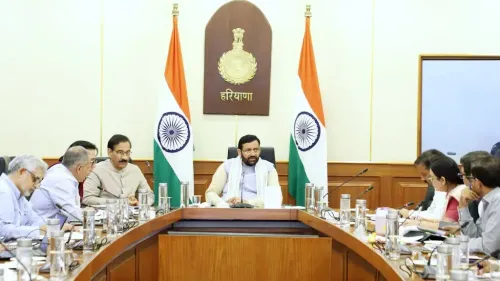
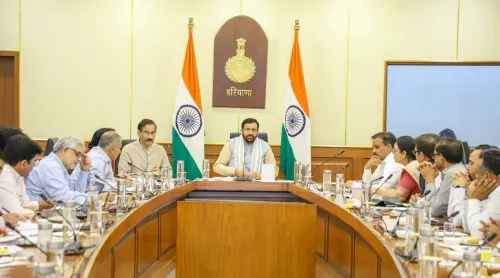
Haryana Chief Minister Nayab Singh Saini on Wednesday, 23 September 2026, said technology 'reduces a farmer's input costs, lowers the need for manual labour and increases returns from crops' — calling it 'the real innovation for farmers.' Addressing the closing session of the fifth Innovative Farmers' Meet in Ladwa town, Kurukshetra, Saini stressed that agricultural technology is meaningful only when it is affordable, easy to use, and repairable locally.
Key Remarks at the Innovative Farmers' Meet
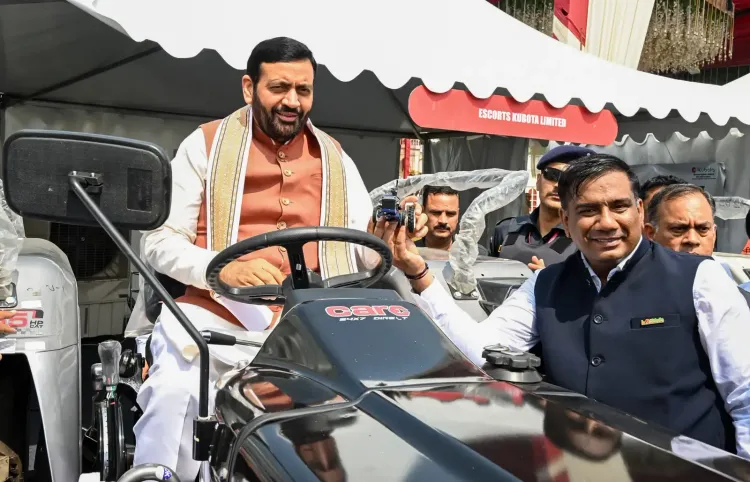
The event was organised by the Confederation of Indian Industry (CII) and marked a departure from typical urban-centric industry conferences. Saini noted that the distinctive feature of the Innovative Farmers' Meet was that discussions were 'not confined to big cities or conference halls, but were being taken directly to farmers.' He inaugurated and toured an exhibition of agricultural machinery and interacted with progressive farmers on the sidelines.
'The true success of any technology should be reflected in the farmer's account book,' Saini said, underlining an output-first approach to agri-innovation.
Challenges Facing Agriculture and Recommended Measures
The Chief Minister acknowledged that agriculture today 'faces serious challenges such as weather uncertainties, increasing water scarcity and deteriorating soil health.' He called for a shift toward farming practices that can withstand changing conditions while raising farmers' income.
For the Haryana belt, where paddy and wheat dominate cropping patterns, Saini recommended direct seeding of rice, crop-specific micro-irrigation, and land levelling. He urged farmers to get soil tested and apply fertilisers according to their land's specific requirements, while maintaining soil fertility through crop diversification, organic matter, and scientific guidance.
Machinery Access, Youth Training and Cooperative Models
Saini pointed out that small farmers cannot individually afford expensive machinery and emphasised the role of farmer groups, cooperative societies, and rental machinery centres. 'The benefits of one machine should reach multiple farms,' he said. He also called for training village youth to operate and repair farm equipment, arguing this would simultaneously reduce farmers' costs and generate rural employment.
Government Schemes and Natural Farming Push
The Chief Minister cited several ongoing initiatives under the Narendra Modi-led central government. Under the PM-KUSUM scheme, farmers receive a 75 per cent subsidy for solar pump installation, and 1.95 lakh solar pumps have been installed in Haryana so far. For paddy stubble management, ₹1,200 per acre has been disbursed, with ₹907 crore already provided as subsidy to 10 lakh farmers.
On natural farming, Saini said approximately 2 lakh farmers have registered 3 lakh acres on the state's dedicated portal. Verification of 23,930 farmers covering 44,000 acres has been completed, and in 2025-26, natural farming was practised on 20,727 acres across the state. He urged industries to support farmers with training on quality and food safety standards and help them access better markets.
With Haryana's agricultural sector at an inflection point between traditional cropping and technology-led diversification, the pace at which affordable innovations reach smallholder farms will be the defining measure of these commitments.
Point of View
But the prescription stops short of structural reform. Haryana's cropping pattern remains heavily tilted toward water-intensive paddy and wheat, and the incentive architecture around MSP still crowds out the diversification Saini publicly endorses. The natural farming numbers, while growing, cover a fraction of the state's cultivated area. Until the government aligns procurement policy with its diversification rhetoric, speeches at industry-organised meets will struggle to move the needle at the village level.
NationPress
23 Sept 2026
Frequently Asked Questions
What did Haryana CM Nayab Singh Saini say about farm technology at the CII event?
Saini said technology 'reduces a farmer's input costs, lowers the need for manual labour and increases returns from crops,' calling it 'the real innovation for farmers.' He stressed that technology is useful only when it is affordable, easy to use, and repairable locally near villages.
What is the Innovative Farmers' Meet and where was it held?
The Innovative Farmers' Meet is a platform organised by the Confederation of Indian Industry (CII) to bring agricultural technology discussions directly to farmers rather than confining them to city-based conferences. The fifth edition was held in Ladwa town in Kurukshetra, Haryana, on 23 September 2026.
How much has Haryana provided as paddy stubble management subsidy?
Haryana has disbursed ₹907 crore as subsidy to 10 lakh farmers for proper management and baling of paddy stubble, at a rate of ₹1,200 per acre.
What is the status of natural farming in Haryana?
Around 2 lakh farmers have registered 3 lakh acres on Haryana's natural farming portal. Verification of 23,930 farmers for adopting natural farming on 44,000 acres has been completed, and in 2025-26, natural farming was undertaken on 20,727 acres in the state.
What did the Chief Minister say about farm machinery access for small farmers?
Saini said small farmers cannot afford to purchase every expensive machine individually and called for greater use of farmer groups, cooperative societies, and rental machinery centres so that the benefits of one machine can reach multiple farms. He also urged training village youth to operate and repair agricultural equipment.