JP Nadda to launch SSBSK child health programme on 30 June
Synopsis
India is overhauling its newborn and child health architecture with the SSBSK — a single programme that absorbs two separate flagship schemes and, for the first time, introduces risk-stratified home visits, post-partum mental health screening, and digital tracking from birth to age three. The scale and structural integration make this the most significant community child health reform in recent years.
Key Takeaways
JP Nadda will launch the Samagra Shishu Bal Swasthya Karyakram (SSBSK) on 30 June 2025 at Vigyan Bhawan, New Delhi .
SSBSK merges HBNC and HBYC into one unified national programme covering birth to 36 months . 'At-risk' newborns will receive up to 9 home visits in the first 42 days ; at-risk children up to 8 visits through 36 months.
For the first time, post-partum maternal mental health screening is included as a structured community-care component.
Digital tools including Decision-Support Systems and child tracking apps will be deployed to strengthen monitoring and referral.
Frontline workers — ASHAs, ANMs, CHOs, and AWWs — will conduct joint home visits under the integrated framework.
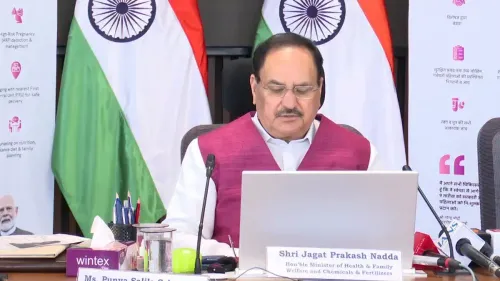
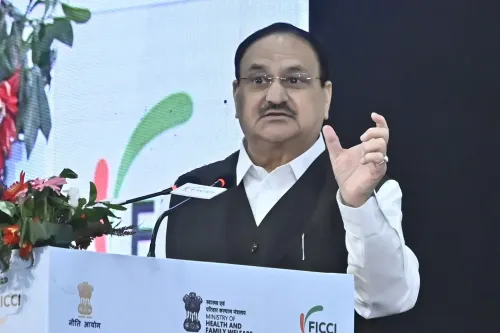
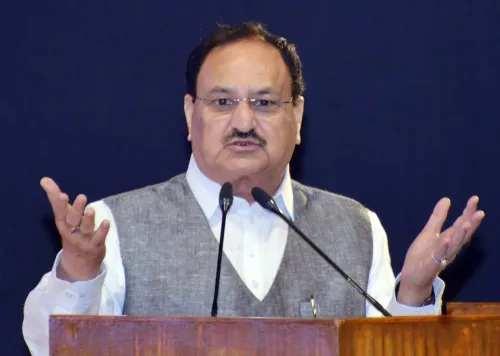
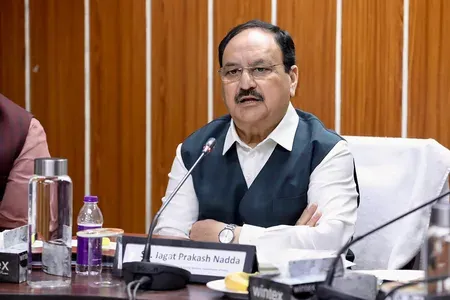
Union Health and Family Welfare Minister Jagat Prakash Nadda is set to launch the Samagra Shishu Bal Swasthya Karyakram (SSBSK) on 30 June 2025 at Vigyan Bhawan, New Delhi, marking a significant overhaul of India's community-based newborn and child healthcare framework. The programme will be unveiled at the 16th Conference of the Central Council of Health and Family Welfare (CCHFW).
What SSBSK Is and What It Replaces
The SSBSK is a unified national programme that consolidates two existing flagship community-based initiatives — Home-Based Newborn Care (HBNC) and Home-Based Care for Young Child (HBYC) — into a single, integrated framework. By merging these schemes, the government aims to ensure a seamless continuum of care from birth through the first 36 months of a child's life, covering survival, nutrition, healthy growth, and early childhood development.
The move addresses a longstanding gap in India's child health architecture, where the two programmes operated in parallel without a unified tracking or referral mechanism. This is the first time both have been brought under one national umbrella.
Risk-Stratified Care for Vulnerable Newborns
A key innovation under the SSBSK is the introduction of a risk-stratified approach for newborns and children identified as 'At-risk'. According to an official statement, 'At-risk' newborns will receive up to nine home visits during the first 42 days of life, while 'At-risk' children will receive up to eight home visits through 36 months of age — a significant intensification over current norms.
These visits will be conducted jointly by Accredited Social Health Activists (ASHAs), Auxiliary Nurse Midwives (ANMs), Community Health Officers (CHOs), and Anganwadi Workers (AWWs), strengthening coordination across India's frontline health workforce.
New Community Touchpoints and Mental Health Screening
The programme will introduce Well-Baby Sessions at every Village Health, Sanitation and Nutrition Day (VHSND) and a monthly Shishu Shivir at Ayushman Arogya Mandirs for early identification, assessment, and management of at-risk children.
Notably, SSBSK will incorporate post-partum maternal mental health screening as a structured component of community-based care — a first for a programme of this scale in India. It will also integrate nurturing care for Early Childhood Development (ECD) across all home visits, promoting responsive caregiving, early learning, age-appropriate play, child safety, and family engagement.
Digital Tools to Strengthen Monitoring
The programme will leverage digital technologies including Decision-Support Systems (DSS), child tracking applications, referral loops, and alert mechanisms to improve monitoring and continuity of care. These tools are intended to reduce drop-offs in follow-up care, which have historically undermined community health outcomes in India's rural and semi-urban settings.
What Comes Next
With the formal launch scheduled for 30 June 2025, implementation timelines and state-level rollout guidelines are expected to follow from the CCHFW conference proceedings. The SSBSK's success will depend heavily on the capacity of frontline workers — ASHAs, ANMs, and AWWs — to absorb an expanded mandate alongside existing responsibilities.
Point of View
But its impact will be determined entirely by frontline capacity: ASHAs and AWWs are already stretched, and adding intensified visit schedules without commensurate incentives or workforce expansion could mean the at-risk protocol exists in guidelines but not in practice. The inclusion of post-partum mental health screening is genuinely progressive and overdue, but it is a new competency for workers trained primarily in physical health indicators. The digital tracking layer is promising, but rural connectivity gaps remain a real barrier. The launch is a milestone; the implementation is the test.
NationPress
28 Jun 2026
Frequently Asked Questions
What is the Samagra Shishu Bal Swasthya Karyakram (SSBSK)?
The SSBSK is a new unified national child health programme being launched by the Union Health Ministry on 30 June 2025. It merges two existing community-based schemes — Home-Based Newborn Care (HBNC) and Home-Based Care for Young Child (HBYC) — into a single framework covering care from birth through 36 months of age.
What is new about the SSBSK compared to earlier programmes?
The SSBSK introduces several firsts: a risk-stratified approach with intensified home visits for 'at-risk' newborns and children, post-partum maternal mental health screening as a structured component, monthly Shishu Shivirs at Ayushman Arogya Mandirs, and digital decision-support and child tracking tools. It is also the first time HBNC and HBYC have been consolidated under one national umbrella.
How many home visits will at-risk children receive under SSBSK?
'At-risk' newborns will receive up to nine home visits during the first 42 days of life. 'At-risk' children will receive up to eight home visits through 36 months of age, conducted jointly by ASHAs, ANMs, CHOs, and Anganwadi Workers.
Who will deliver the SSBSK at the community level?
The programme will be delivered by a coordinated team of frontline health workers: Accredited Social Health Activists (ASHAs), Auxiliary Nurse Midwives (ANMs), Community Health Officers (CHOs), and Anganwadi Workers (AWWs), who will conduct joint home visits under the integrated framework.
When and where will the SSBSK be launched?
The SSBSK will be launched on 30 June 2025 by Union Health Minister Jagat Prakash Nadda at Vigyan Bhawan, New Delhi, during the 16th Conference of the Central Council of Health and Family Welfare (CCHFW).