Himachal Pradesh stamp duty reform 2026: Women get 4% rate on property up to ₹1 crore
Synopsis
Himachal Pradesh is rewriting its 1899-era stamp duty law — and the biggest beneficiary is women. Under the new Bill, a woman buying property worth up to ₹1 crore pays just 4% stamp duty, while intra-family transfers collapse to 0.1%. It is the most significant property law overhaul the state has seen in decades.
Key Takeaways
The Indian Stamp (Himachal Pradesh Second Amendment) Bill, 2026 was introduced during the Monsoon Session of the state Assembly.
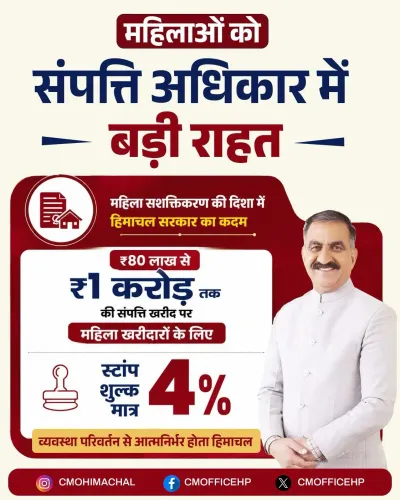
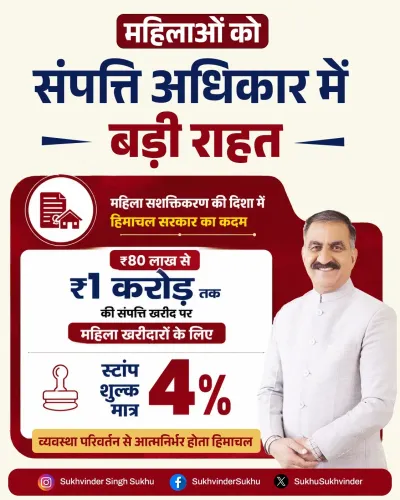
Women registering property up to ₹1 crore will pay 4% stamp duty ; above ₹1 crore, the rate is 8% .
Men and others pay 6% for properties up to ₹40 lakh and 8% above that threshold.
Intra-family property transfers — between spouses or blood relatives — will attract just 0.1% stamp duty.
Non-resident land acquisitions under Section 118 carry a flat 12% duty with no gender distinction.
The Bill replaces laws dating to 1899 with a simplified Schedule 1-A .
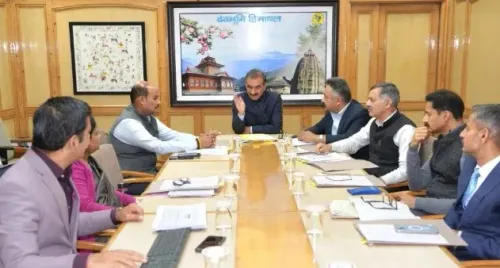
The Himachal Pradesh government, led by Chief Minister Sukhvinder Sukhu, has announced a sweeping overhaul of property registration and stamp duty rules, with a particular focus on easing the financial burden on women buyers. The changes were unveiled on Tuesday during the Monsoon Session of the state legislative Assembly in Shimla and are anchored in the newly introduced Indian Stamp (Himachal Pradesh Second Amendment) Bill, 2026.
Why the Reform Was Needed
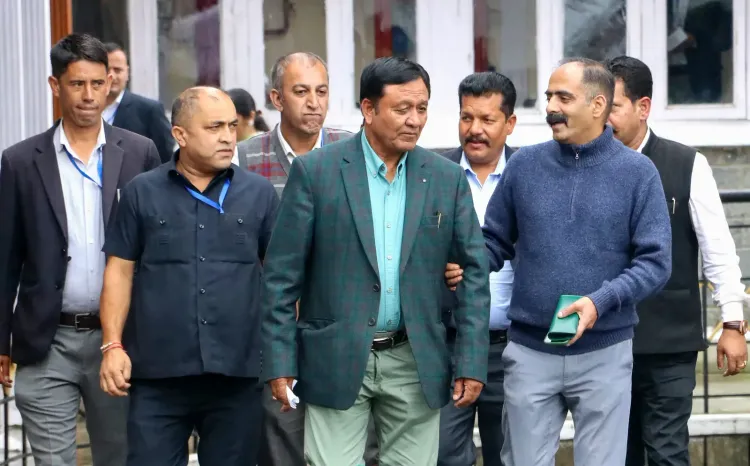
Revenue Minister Jagat Singh Negi informed the Assembly that stamp duty rates on most property-related documents — barring outright sales and gifts — had remained frozen for years. Frequent minor amendments to the old framework had created widespread confusion among the public. To address this, the government has decided to scrap the existing schedule entirely and replace it with a new, consolidated Schedule 1-A, modernising laws that date back to 1899.
New Stamp Duty Rates for Women
Under the revised structure, a woman registering property worth up to ₹1 crore in her name — or receiving it as a gift — will pay a stamp duty of just 4 per cent. For properties valued above ₹1 crore, the applicable rate rises to 8 per cent. This differential is a deliberate policy lever to encourage women's property ownership in the state.
Rates for Men and Other Buyers
For male buyers and other categories, stamp duty has been fixed at 6 per cent for properties registered up to ₹40 lakh, and 8 per cent for those valued above ₹40 lakh. The structure retains a progressive element while aligning with broader market realities.
Major Relief on Family Property Transfers
One of the most significant concessions in the Bill concerns intra-family transfers. Property transfers between spouses or among blood relatives — such as parents and children — will now attract a stamp duty of just 0.1 per cent of the total property value, making family settlements and inheritance divisions substantially cheaper. This provision is expected to reduce disputes and encourage formal registration of family property divisions.
Section 118 and Other Key Provisions
For non-residents and those seeking land acquisition under Section 118 — which requires special state government permission — no gender distinction applies. Such transactions will attract a flat stamp duty of 12 per cent. On the administrative side, standard affidavits prepared at tehsil offices will now require a ₹100 stamp, while legal documents for child adoption deeds will carry a fixed cost of ₹2,000. These changes aim to standardise routine documentation across the state. The Bill is expected to bring clarity to a framework that had grown unwieldy through decades of piecemeal amendments, and its passage will mark a significant step in Himachal Pradesh's efforts to modernise property law.
Point of View
Yet its impact depends on whether enforcement mechanisms can prevent benami registrations that exploit the gender differential. The 0.1% family transfer rate is the provision with the widest reach — it could finally bring thousands of informal family property divisions into the formal record, which benefits land revenue and reduces litigation. What the Bill does not address is the underlying complexity of Section 118, which remains a persistent barrier for the Himachali diaspora and a source of legal disputes. Modernising the stamp schedule is necessary but not sufficient for a genuine property law reset.
NationPress
1 Sept 2026
Frequently Asked Questions
What is the Indian Stamp (Himachal Pradesh Second Amendment) Bill, 2026?
It is a legislation introduced during the Monsoon Session of the Himachal Pradesh Assembly to modernise and simplify the state's stamp duty framework, replacing laws that date to 1899. The Bill introduces a new Schedule 1-A with revised rates for property registration, family transfers, and other documents.
What stamp duty will women pay on property in Himachal Pradesh under the new rules?
Women registering property worth up to ₹1 crore in their name, or receiving it as a gift, will pay a stamp duty of 4 per cent. For properties valued above ₹1 crore, the rate rises to 8 per cent.
How cheap are intra-family property transfers under the new Bill?
Property transfers between spouses or among blood relatives such as parents and children will attract a stamp duty of just 0.1 per cent of the total property value — a substantial reduction designed to encourage formal registration of family settlements.
What stamp duty applies to non-residents buying land under Section 118?
Non-residents and others acquiring land with special state permission under Section 118 must pay a flat stamp duty of 12 per cent, with no distinction made between men and women in such cases.
Why did Himachal Pradesh decide to overhaul its stamp duty rules?
Revenue Minister Jagat Singh Negi told the Assembly that stamp duty rates on most documents had remained unchanged for years and that frequent minor amendments to the old framework had caused public confusion. The government decided to replace the entire existing schedule with a simplified new list to bring clarity and modernise a law dating back to 1899.