HP CM Office Launches HIBISCUS Biodiversity Scheme
Synopsis
Himachal Pradesh launched HIBISCUS — the Himachal Biodiversity Stakeholder-Led Conservation Unified Scheme — on 23 July 2026, placing local communities at the centre of efforts to conserve the state's rich biodiversity, restore ecosystems, and ensure sustainable use of biological resources.
Key Takeaways
HIBISCUS (Himachal Biodiversity Stakeholder-Led Conservation Unified Scheme) was launched by the Chief Minister's Office of Himachal Pradesh on 23 July 2026 .
The scheme centres on active participation of local communities as the primary mechanism for biodiversity conservation and ecosystem restoration.
It promotes sustainable use of biological resources alongside conservation, linking ecological goals with rural livelihoods.
The initiative is grounded in the Biological Diversity Act, 2002 and India's obligations under the Convention on Biological Diversity ratified in 1994 .
Himachal Pradesh's diverse Himalayan ecosystems — alpine meadows, coniferous forests, and river valleys — form the ecological backdrop for the scheme.
Formation of Biodiversity Management Committees and integration with central schemes like CAMPA are the key next steps to watch.
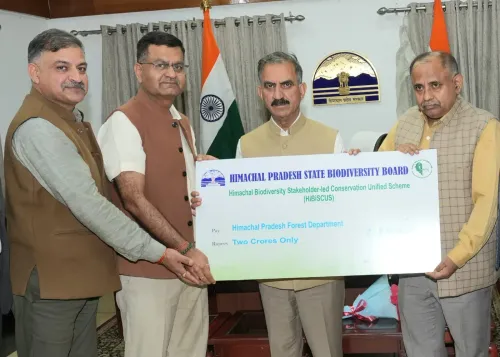
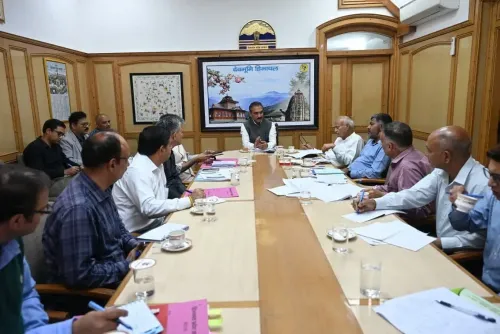
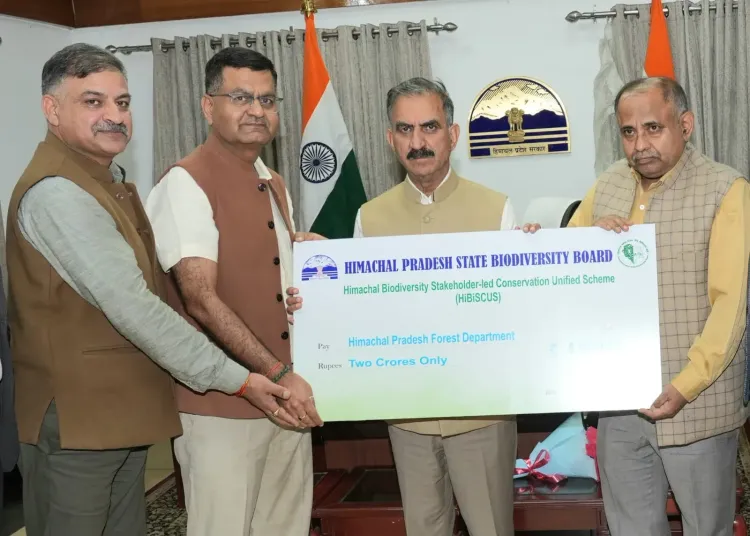
The Chief Minister's Office of Himachal Pradesh announced on Thursday, 23 July 2026 the launch of the Himachal Biodiversity Stakeholder-Led Conservation Unified Scheme (HIBISCUS), a state-level initiative designed to conserve the state's rich biological heritage through active participation of local communities.
The official post stated: 'आज हिमाचल बायोडायवर्सिटी स्टेकहोल्डर-लेड कंजर्वेशन यूनिफाइड योजना (हाइबिस्कस) का शुभारंभ किया' — 'Today, the Himachal Biodiversity Stakeholder-Led Conservation Unified Scheme (HIBISCUS) was launched.' The scheme aims to promote conservation of Himachal Pradesh's biodiversity, ecosystem restoration, and sustainable use of biological resources through the active involvement of local communities.
Context
Himachal Pradesh is a northern Himalayan state with exceptionally diverse ecosystems — spanning alpine meadows, coniferous forests, and river valleys — that support high levels of plant and animal endemism. The region is under growing pressure from habitat loss, unsustainable resource extraction, and the accelerating effects of climate change on fragile mountain ecosystems. HIBISCUS is positioned as a direct response to these converging threats.Policy Backdrop
India ratified the Convention on Biological Diversity (CBD) in 1994 and enacted the Biological Diversity Act, 2002, which created the architecture for decentralised conservation through National and State Biodiversity Boards and local Biodiversity Management Committees (BMCs). The National Biodiversity Action Plan of 2008 further emphasised community-led conservation as a cornerstone of India's obligations under the CBD. Himachal Pradesh constituted its own State Biodiversity Board in the mid-2000s to operationalise the 2002 Act at the state level. HIBISCUS builds directly on this legislative and institutional foundation. Across the Himalayan belt, states such as Uttarakhand and Sikkim have piloted comparable stakeholder-driven models that link traditional ecological knowledge with protected-area management and sustainable harvesting practices. HIBISCUS follows this broader national pattern, which also aligns with central programmes such as the Green India Mission that seek to restore degraded ecosystems while supporting rural livelihoods.Stakeholders and Impact
The scheme's defining feature is the centrality of local communities — including forest-dependent households — as active agents of conservation rather than passive beneficiaries. By embedding community participation in its design, HIBISCUS aims to ensure that those with the deepest stake in the health of local ecosystems are also the primary stewards of biodiversity management. This approach has the potential to generate co-benefits: preserving traditional knowledge systems, creating sustainable livelihood pathways, and strengthening the resilience of mountain ecosystems against climate shocks.What's Next
Attention will now turn to the formation and activation of Biodiversity Management Committees under HIBISCUS and the scheme's potential integration with central funding mechanisms such as the National Mission for Himalayan Studies and CAMPA (Compensatory Afforestation Fund Management and Planning Authority) releases. The operational guidelines and budget outlay for the scheme are expected to be detailed in subsequent official communications. The success of HIBISCUS will ultimately hinge on the depth of community mobilisation achieved on the ground and the state's ability to align the scheme with both national biodiversity targets and Himachal Pradesh's own climate adaptation priorities.Point of View
2002 — a mandate that has often remained on paper in many states. By branding the scheme and giving it a distinct identity, the state government is signalling a shift from top-down forest governance toward co-management models that have shown results in Uttarakhand and Sikkim. The timing is politically significant: with climate change visibly reshaping Himalayan landscapes, framing biodiversity conservation as a community-led enterprise allows the government to simultaneously address ecological and livelihood concerns. Whether HIBISCUS moves beyond announcement to measurable outcomes will depend on the speed and quality of BMC formation and the release of dedicated funding.
NationPress
23 Jul 2026
Frequently Asked Questions
What is the HIBISCUS scheme in Himachal Pradesh?
HIBISCUS stands for the Himachal Biodiversity Stakeholder-Led Conservation Unified Scheme, a state-level initiative launched on 23 July 2026 to conserve Himachal Pradesh's biodiversity, restore ecosystems, and promote sustainable use of biological resources through active community participation.
Who launched the HIBISCUS biodiversity scheme?
The scheme was launched by the Chief Minister's Office of Himachal Pradesh, as announced officially on 23 July 2026.
How does HIBISCUS involve local communities?
HIBISCUS places local and forest-dependent communities at the centre of conservation efforts, making them active participants in biodiversity management, ecosystem restoration, and sustainable harvesting rather than passive beneficiaries.
What is the legal basis for the HIBISCUS scheme?
The scheme is grounded in India's Biological Diversity Act, 2002, and the country's obligations under the Convention on Biological Diversity, which India ratified in 1994. Himachal Pradesh's State Biodiversity Board, constituted in the mid-2000s, provides the institutional framework.
What are the next steps after the HIBISCUS scheme launch?
Key next steps include the formation of Biodiversity Management Committees under the scheme and potential integration with central funding mechanisms such as CAMPA and the National Mission for Himalayan Studies. Detailed operational guidelines and budget allocations are awaited.