IIT Kharagpur's Nagar Udyam: Solar smart vending cart pilots at Durga Puja
Synopsis
IIT Kharagpur's Nagar Udyam isn't just a redesigned cart — it's a rethink of how informal vending fits into Indian cities. Piloted during Durga Puja 2026, the solar-powered, QR-enabled, motorcycle-towed unit lets micro-entrepreneurs follow demand, go cashless, and take their business home at night — potentially shaping a West Bengal-wide street vendor framework.
Key Takeaways
IIT Kharagpur successfully piloted its Nagar Udyam solar smart vending cart during Durga Puja 2026 on campus.
The initiative was conceptualised by Prof.
Suman Chakraborty , Director, IIT Kharagpur, via the SETU Cloud Kitchen Connect platform.
The three-wheeled cart is towed by a motorcycle, has a range of approximately 30 km , and runs on solar-cum-battery renewable energy .
Each unit features QR-enabled identification , cashless payments, food-grade surfaces, and three-way waste segregation.
Pilot findings will feed into a prospective West Bengal Smart Street Vendor Framework for statewide rollout.
The project is part of IIT Kharagpur's Platinum Jubilee commitment to technology-led social and economic impact.
IIT Kharagpur has declared the campus pilot of its Nagar Udyam initiative a success after the solar-powered smart street vending project was trialled during Durga Puja 2026. Conceived by Prof. Suman Chakraborty, Director of IIT Kharagpur, through the institute's SETU Cloud Kitchen Connect, the initiative aims to transform informal street vending into a dignified, technology-enabled micro-enterprise model.
What the Nagar Udyam Model Offers
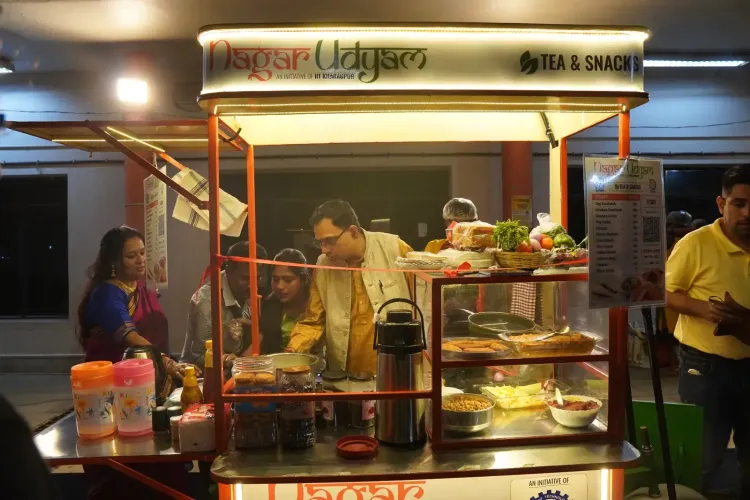
At the core of the initiative is a compact, three-wheeled cart that can be towed behind the owner's motorcycle. The design allows a vendor to position the cart where demand is highest — near commuter hubs in the morning, for instance, and at community gatherings later in the day — without being locked into a costly permanent storefront.
At the end of business hours, the cart and its home-storage unit can be taken back home, freeing up public road space entirely. The cart operates on a solar-cum-battery renewable energy system that powers essential low-power functions with compact battery storage. Its proposed operational range is approximately 30 kilometres, subject to traffic-safety validation.
Digital Backbone and Hygiene Standards
Each cart is equipped with the SETU digital backbone, which includes QR-enabled identification, cashless payment infrastructure, training modules, and pathways to financial inclusion. Built-in hygiene features include protected food display, food-grade surfaces, and three-way waste segregation.
Further elements envisaged for the framework include food-safety status access, grievance redressal mechanisms, and data-assisted governance — features intended to make the vendor legible and accountable to civic authorities without criminalising the trade.
What Prof. Chakraborty and Officials Said
Speaking at the launch, Prof. Chakraborty said: 'Our ambition is not simply to redesign a street cart; it is to redesign the opportunity around the person who runs it. A business that can move with demand, return home at night and connect to clean energy and digital finance can turn an opportunity seeker into a job creator. That is the kind of technology translation IIT Kharagpur stands for.'
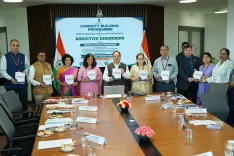
Siddharth Singh Dangi, Sub-Divisional Police Officer (SDPO), Kharagpur, who attended the inauguration alongside small entrepreneurs and other officials, added: 'The best solutions for our streets must protect livelihoods as well as public safety. A mobile, identifiable and responsibly operated vending unit offers an interesting way to reduce permanent obstruction while preserving economic opportunity. The key will be disciplined implementation, safe movement and compliance with local rules.'
Platinum Jubilee Commitment and Broader Rollout
The Nagar Udyam pilot is part of IIT Kharagpur's Platinum Jubilee commitment to translate design and technology into tangible social and economic opportunities. The campus demonstration evaluated food safety, operational efficiency, environmental performance, mobility, vendor experience, and consumer response.
Evidence from the pilot is intended to inform a prospective West Bengal Smart Street Vendor Framework, covering cart standards, food-safety practices, space management, and measurable social outcomes. The institute hopes to replicate the model across West Bengal, enabling street vendors to operate with both dignity and regulatory compliance.
Why This Matters for Urban Livelihoods
India's street vendor economy remains largely informal and frequently in conflict with urban authorities over public-space use. This initiative reframes that tension: rather than treating vendor livelihoods and pedestrian accessibility as competing priorities, the Nagar Udyam design seeks flexible, appropriately authorised vending that does not permanently occupy road space.
In the model's micro-startup vision, someone who cannot afford a permanent shop may still be able to build a viable business and, over time, employ others — a scalable pathway if civic coordination and implementation discipline hold.
Point of View
Identifiable, and cashless, IIT Kharagpur is essentially proposing a regulatory bargain: give up permanent road occupation, gain digital legitimacy and financial access. The real test is whether West Bengal's civic machinery, notorious for its inconsistency with hawker policy, will co-implement rather than merely co-opt the framework. Solar carts and QR codes are the easy part; coordinated enforcement and vendor training at scale are not.
NationPress
26 Oct 2026
Frequently Asked Questions
What is IIT Kharagpur's Nagar Udyam initiative?
Nagar Udyam is a solar-powered smart street vending initiative developed by IIT Kharagpur under Prof. Suman Chakraborty through the SETU Cloud Kitchen Connect platform. It uses a compact three-wheeled cart towed by a motorcycle, enabling micro-entrepreneurs to operate flexibly, go cashless, and clear public road space after business hours.
Where and when was the Nagar Udyam pilot launched?
The pilot was launched on the IIT Kharagpur campus during Durga Puja 2026, in the presence of SDPO Siddharth Singh Dangi, small entrepreneurs, and institute officials. It is part of IIT Kharagpur's Platinum Jubilee commitment to translate technology into social and economic opportunity.
What technology features does the Nagar Udyam cart include?
The cart runs on a solar-cum-battery renewable energy system, has a range of approximately 30 km, and is equipped with QR-enabled identification, cashless payment infrastructure, food-grade surfaces, protected food display, and three-way waste segregation. It also connects vendors to training and financial inclusion pathways through the SETU digital backbone.
What is the plan for scaling Nagar Udyam beyond the campus?
IIT Kharagpur intends to use evidence from the campus pilot to inform a proposed West Bengal Smart Street Vendor Framework covering cart standards, food-safety practices, urban space management, and social outcome metrics. The goal is a statewide rollout that allows vendors to operate with dignity and regulatory compliance.
How does Nagar Udyam benefit street vendors and urban spaces?
The model lets vendors follow demand across locations during the day and take their entire business home at night, eliminating permanent road occupation. This reduces conflict with authorities while giving vendors access to cashless payments, digital identity, and renewable energy — effectively lowering barriers to entry for micro-entrepreneurs who cannot afford fixed storefronts.