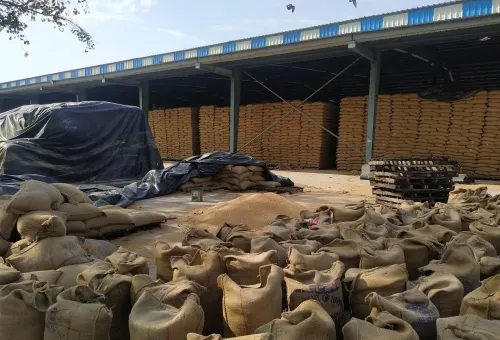
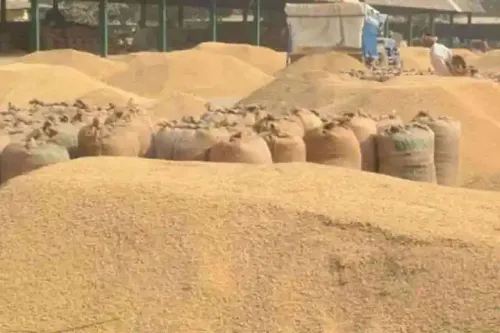
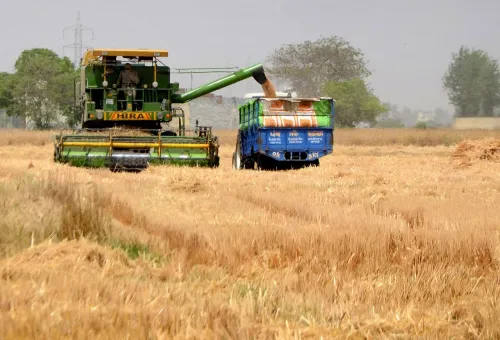
India foodgrain output hits 376.5 million tonnes, decentralised storage network expands
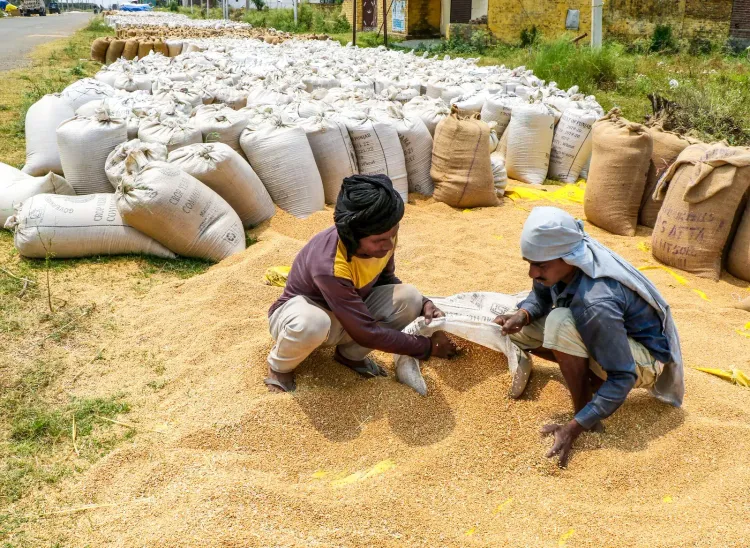
Synopsis
India's foodgrain output has hit a record-high estimate of 376.563 million tonnes for 2025-26 — up 5.3% in a single year — while a quietly expanding decentralised storage network has already built over 1.80 LMT of capacity across 313 cooperative societies. The real story is whether local storage infrastructure can finally close the gap between record harvests and actual farm-gate gains.
Key Takeaways
India's foodgrain production is estimated at 376.563 million tonnes for 2025-26 , per the Third Advance Estimates .
Output is up 18.8 million tonnes (5.3%) over the previous year's 357.732 million tonnes .
The National Food Security Act, 2013 covers approximately 80 crore people .
The Decentralised Grain Storage Plan in Cooperative Sector was launched in 2023 , starting with 9,750 MT of pilot capacity across 11 states .
As of July 2026 , godown construction is complete in 313 PACS , creating over 1.80 LMT of storage capacity.
The plan aims to reduce wastage, cut transport costs, prevent distress sales, and expand the role of Primary Agricultural Credit Societies (PACS) .
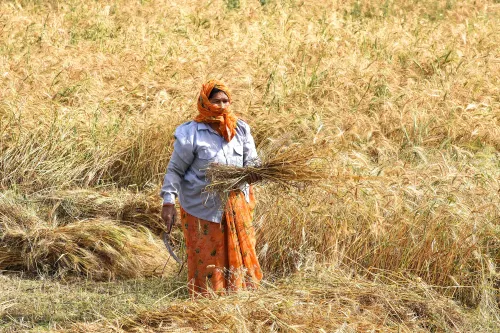
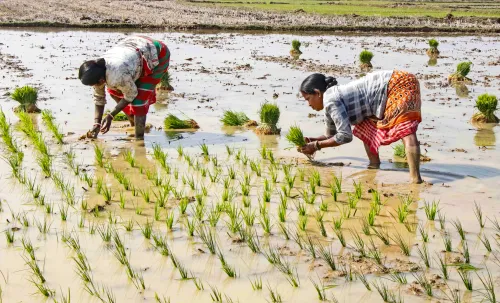
India's total foodgrain production is estimated at 376.563 million tonnes for 2025-26, according to the Third Advance Estimates released on 3 September, marking a rise of nearly 18.8 million tonnes — or 5.3% — over the previous year's output of 357.732 million tonnes. The figures, cited in an official factsheet, underscore a sustained upward trajectory in agricultural output even as the country works to overhaul its grain storage and distribution architecture.
Scale of India's Food Security Commitment
India operates one of the world's largest food security programmes under the National Food Security Act, 2013, which covers approximately 80 crore people. The scale of this programme places enormous logistical demands on the country's procurement, storage, and distribution systems — demands that the current infrastructure has long struggled to meet efficiently.
The Decentralised Grain Storage Plan: How It Works
To address these structural gaps, the government launched the Decentralised Grain Storage Plan in Cooperative Sector in 2023. The plan is designed to improve storage, processing, procurement, and distribution systems through Primary Agricultural Credit Societies (PACS), with institutional coordination and financial support mechanisms underpinning the initiative.
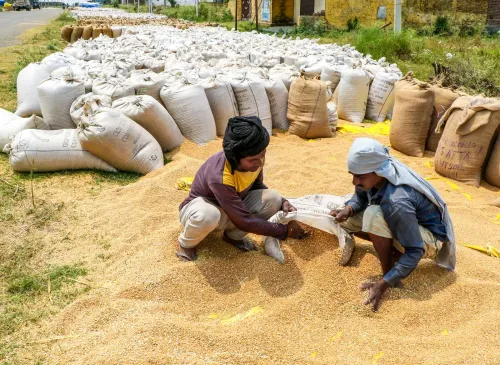
The scheme began with pilot projects across 11 states and PACS with an initial storage capacity of 9,750 metric tonnes (MT). As of July 2026, godown construction had been completed in 313 PACS across the country, creating more than 1.80 lakh metric tonnes (LMT) of storage capacity — a significant scale-up from the pilot phase.
Pilot States and Operational Learnings
The pilot projects were implemented across Maharashtra, Uttar Pradesh, Gujarat, Rajasthan, Madhya Pradesh, Uttarakhand, Tamil Nadu, Telangana, Assam, Karnataka, and Tripura. According to the official factsheet, these pilots have provided an important operational foundation and demonstrated the feasibility of local storage infrastructure at the cooperative level.
Notably, the framework emphasises quality standards, transparency, and operational viability — elements that have historically been weak links in India's grain management chain.
What the Plan Aims to Achieve
The Decentralised Grain Storage Plan targets several interconnected outcomes: reducing foodgrain wastage, strengthening food security, and giving farmers greater flexibility to avoid distress sales and secure better price realisation. It also seeks to cut transportation costs between procurement centres, warehouses, and Fair Price Shops, while expanding the role of PACS through diversification of agricultural activities and creating higher income opportunities for farmers.
By linking storage, processing, procurement, and distribution at the PACS level, the plan attempts to bring foodgrain management closer to production centres — a structural departure from the centralised warehousing model that has dominated for decades. With output now at a record high and local storage capacity expanding, the next phase will test whether this decentralised architecture can translate production gains into tangible farm-gate benefits.
Point of View
But India has seen bumper production figures before without commensurate gains for farmers. The real structural bet here is the Decentralised Grain Storage Plan — and 313 PACS with 1.80 LMT of capacity, while a start, is a fraction of what a country feeding 80 crore people under a statutory food security law actually needs. The plan's emphasis on avoiding distress sales is well-intentioned, but price realisation at the farm gate depends on market access and procurement efficiency, not storage alone. The pilot-to-scale journey will be the true test: whether cooperative-level infrastructure can outlast political cycles and deliver operationally, or whether it joins the long list of well-designed schemes that stalled at the demonstration stage.
NationPress
18 Oct 2026
Frequently Asked Questions
What is India's foodgrain production estimate for 2025-26?
India's total foodgrain production is estimated at 376.563 million tonnes for 2025-26, according to the Third Advance Estimates. This is approximately 18.8 million tonnes, or 5.3%, higher than the previous year's output of 357.732 million tonnes.
What is the Decentralised Grain Storage Plan in Cooperative Sector?
It is a government initiative launched in 2023 to build grain storage, processing, procurement, and distribution infrastructure through Primary Agricultural Credit Societies (PACS). The plan aims to reduce wastage, cut transport costs, and help farmers avoid distress sales by bringing storage closer to production centres.
How much storage capacity has been created under the plan so far?
As of July 2026, godown construction has been completed in 313 PACS across India, creating more than 1.80 lakh metric tonnes (LMT) of storage capacity. The initiative began with pilot projects covering 9,750 MT of capacity across 11 states.
Which states were part of the pilot projects?
The pilot projects were implemented in Maharashtra, Uttar Pradesh, Gujarat, Rajasthan, Madhya Pradesh, Uttarakhand, Tamil Nadu, Telangana, Assam, Karnataka, and Tripura. These pilots demonstrated the feasibility of local cooperative-level storage infrastructure.
How many people does India's food security programme cover?
India's food security programme under the National Food Security Act, 2013 covers approximately 80 crore people, making it one of the largest such programmes in the world.