Goyal: India-Oman CEPA in Force, Opens Markets for MSMEs
Synopsis
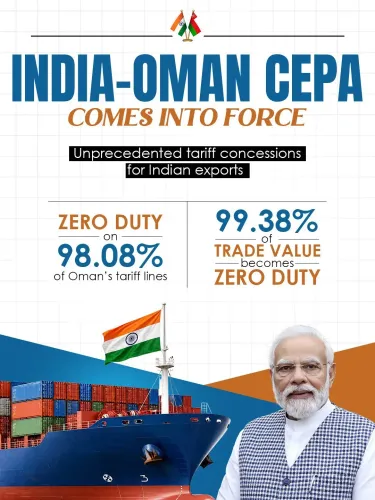
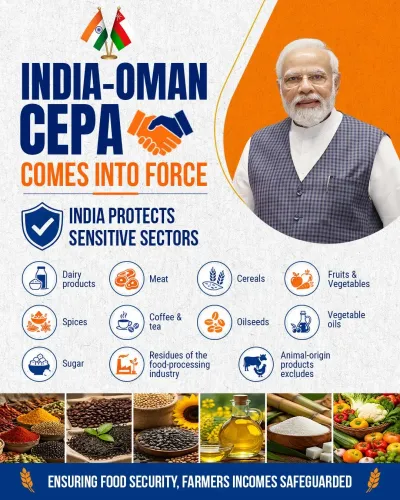
The India-Oman Comprehensive Economic Partnership Agreement entered into force on June 1, 2026. Commerce Minister Piyush Goyal says it will open new markets and boost exports for Indian MSMEs, farmers, artisans, women entrepreneurs, and fishermen, advancing PM Modi's vision of expanding India's global trade footprint.
Key Takeaways
The India-Oman CEPA officially came into force on June 1, 2026 , as announced by Commerce Minister Piyush Goyal .
The agreement is designed to open new markets, boost exports, attract investment, and accelerate job creation for Indian businesses.
Priority beneficiaries include MSMEs, farmers, fishermen, artisans, women entrepreneurs, and students .
The pact follows the India-UAE CEPA (effective May 2022) as India's second active CEPA with a Gulf Cooperation Council member.
India's bilateral CEPA strategy accelerated after it stepped back from the Regional Comprehensive Economic Partnership (RCEP) .
First-year focus will be on tariff-schedule operationalisation and rules-of-origin implementation for Indian exporters.
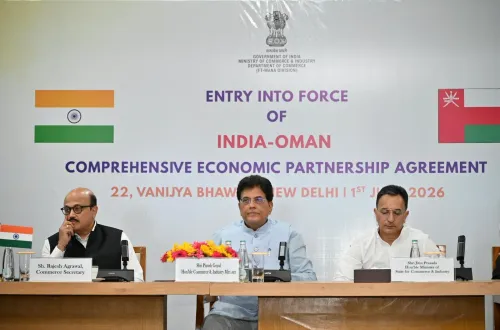
Union Commerce and Industry Minister Piyush Goyal announced on Monday, June 1, 2026, that the India-Oman Comprehensive Economic Partnership Agreement (CEPA) has come into force, marking what he described as a new chapter in bilateral economic and strategic ties between the two nations.
Context
In a post on X, Minister Goyal wrote that the agreement will 'significantly benefit India's students, artisans, women, farmers, fishermen, and MSMEs by opening new markets, boosting exports, attracting investments, and accelerating job creation.' He attributed the agreement's direction to Prime Minister Narendra Modi's vision of expanding India's global trade partnerships.
The announcement coincides with the CEPA formally entering into effect, a milestone that converts months of negotiation into enforceable trade commitments between India and Oman, a member of the Gulf Cooperation Council (GCC).
Policy Backdrop
The India-Oman CEPA is part of a deliberate pivot by New Delhi toward bilateral and regional trade agreements after India stepped back from the Regional Comprehensive Economic Partnership (RCEP). The strategy focuses on partners in the Gulf and Indo-Pacific to diversify export destinations and secure supply chains.
The India-UAE CEPA, signed in February 2022 and effective from May 2022, served as a template for this approach, offering tariff concessions on over 80 percent of tariff lines and demonstrating the model's commercial viability. The Oman agreement follows that blueprint, with an emphasis on labour-intensive sectors and investment facilitation.
Oman brings complementary strengths to the partnership: longstanding energy exports to India, a strategic maritime location in the Arabian Sea, and a large Indian expatriate community that sustains strong people-to-people ties. Existing defence and energy cooperation between the two countries provides a stable foundation for deeper commercial engagement.
Stakeholders and Impact
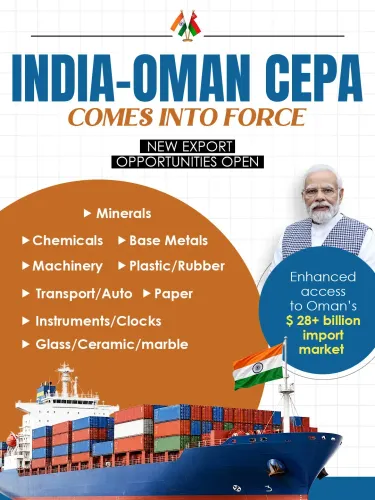
The agreement is expected to deliver the most direct gains to Indian MSMEs — micro, small and medium enterprises — which stand to benefit from duty-free or reduced-tariff access for labour-intensive products and clearer rules of origin. Artisans, women entrepreneurs, farmers, and fishermen are also highlighted as priority beneficiaries, reflecting the agreement's focus on grassroots economic participation.
For Indian students, the CEPA may ease mobility and recognition arrangements, while the broader investment facilitation provisions are aimed at attracting Omani capital into Indian manufacturing and infrastructure. Export-oriented sectors such as textiles, processed foods, marine products, and handicrafts are among those positioned to gain from improved market access in Oman.
What's Next
Attention will now shift to implementation: the first year will test how efficiently tariff schedules and rules-of-origin provisions are operationalised by Indian exporters and Omani importers. Joint committee mechanisms, standard in such agreements, are expected to review utilisation rates and address early bottlenecks.
With the Gulf now hosting two active Indian CEPAs — with the UAE and Oman — the Commerce Ministry's next moves in the region and in ongoing negotiations with other Indo-Pacific partners will define whether this bilateral momentum translates into a durable diversification of India's export geography.
Point of View
Which has prioritised bilateral agreements with stable, high-value partners over complex multilateral negotiations. Goyal's framing — centring students, artisans, women, and farmers rather than large industry — reflects a conscious political messaging choice to broaden the perceived constituency for trade liberalisation. With the UAE and Oman now both active CEPA partners, India has established a meaningful Gulf corridor that could serve as leverage in negotiations with other GCC states. The real test, however, is utilisation: past Indian FTAs have seen underwhelming uptake by exporters, and the Commerce Ministry's credibility on this agreement will be judged by how quickly that pattern is reversed.
NationPress
15 Oct 2026
Frequently Asked Questions
What is the India-Oman CEPA?
The India-Oman Comprehensive Economic Partnership Agreement (CEPA) is a bilateral trade pact between India and Oman that reduces tariffs, facilitates investment, and expands trade in goods and services. It came into force on June 1, 2026.
Who will benefit from the India-Oman CEPA?
Commerce Minister Piyush Goyal has identified Indian MSMEs, farmers, fishermen, artisans, women entrepreneurs, and students as the primary beneficiaries, with gains expected through new market access, higher exports, and increased investment flows.
How does the India-Oman CEPA compare to the India-UAE CEPA?
The India-UAE CEPA, signed in February 2022 and effective from May 2022, was the first modern Indian CEPA with a Gulf nation and served as a template. The Oman agreement follows a similar structure emphasising tariff concessions and labour-intensive sector support.
Why did India focus on bilateral CEPAs instead of RCEP?
India stepped back from the Regional Comprehensive Economic Partnership (RCEP) over concerns about import surges and asymmetric benefits. It subsequently pursued bilateral CEPAs with Gulf and Indo-Pacific partners to diversify export markets and secure supply chains on more favourable terms.
What happens now that the India-Oman CEPA is in force?
Implementation begins immediately, with tariff schedules and rules-of-origin provisions taking effect. Joint committee mechanisms will monitor utilisation by Indian exporters and address early operational issues in the agreement's first year.