Joshi Hails India-Oman CEPA as New Export Era Begins
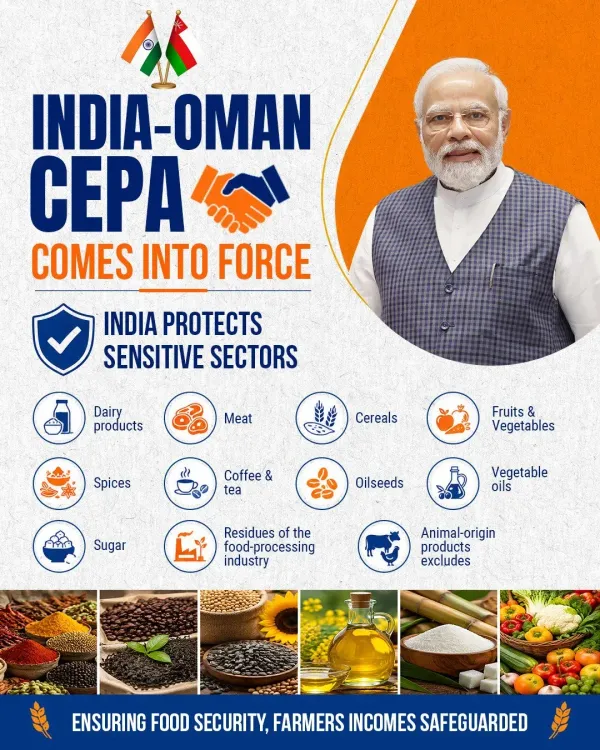
Synopsis
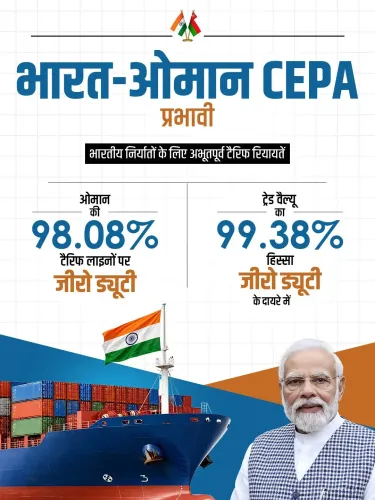
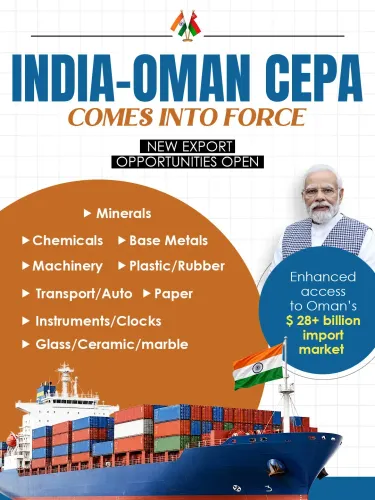
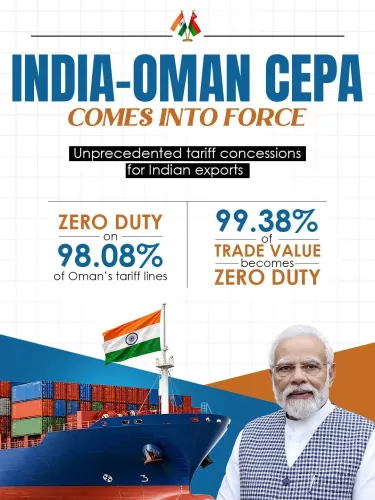
The India-Oman Comprehensive Economic Partnership Agreement has come into effect, with Union Minister Pralhad Joshi hailing it as a landmark step under PM Modi's leadership. The deal is set to boost Indian exports, expand enterprise reach, and create employment, following the model of the 2022 India-UAE CEPA.
Key Takeaways
The India-Oman CEPA has come into effect, marking a new phase in bilateral trade and investment liberalisation.
Union Minister Pralhad Joshi credited PM Narendra Modi's leadership for the agreement and said it opens opportunities for India's sensitive sectors.
The deal is expected to boost exports, help Indian enterprises expand globally, and create employment for workers across the country.
The pact follows the India-UAE CEPA (effective May 2022) as India's second major bilateral trade deal with a GCC member state.
India has been accelerating bilateral trade agreements since 2019 as part of a strategy to diversify markets and drive merchandise exports toward a $2 trillion target.
Tariff schedules, rules-of-origin notifications, and quarterly export data to Oman will be key indicators of the agreement's early impact.
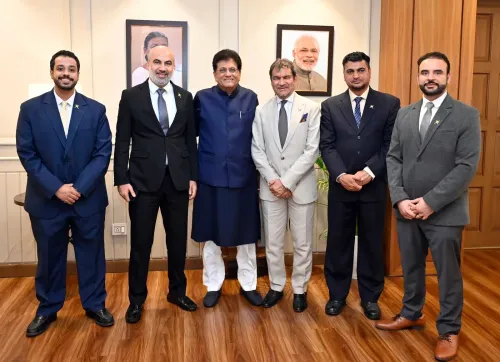
Union Consumer Affairs Minister Pralhad Joshi on Monday, June 1, 2026, welcomed the coming into effect of the India-Oman Comprehensive Economic Partnership Agreement (CEPA), calling it a landmark step that opens new opportunities for India's sensitive sectors and strengthens the country's global trade footprint.
Context
Posting on X, Minister Joshi said the agreement would 'help Indian enterprises expand their global footprint, boost exports, create employment opportunities and strengthen livelihoods across the country.' He attributed the pact's realisation to the 'visionary leadership' of Prime Minister Narendra Modi, framing it as a step toward 'building a stronger, more prosperous and globally competitive Bharat.'
The India-Oman CEPA is designed to liberalise trade and investment flows between the two countries, with particular provisions covering sectors that India classifies as sensitive — areas where domestic industries require calibrated market-opening to avoid disruption while still gaining export advantages abroad.
Policy Backdrop
The agreement follows the template set by the India-UAE CEPA, which was signed in February 2022 and came into effect in May 2022 — India's first such deal with a Gulf Cooperation Council (GCC) member in the modern era. That pact demonstrated the Modi government's willingness to conclude bilateral trade agreements at pace, bypassing slower multilateral negotiations.
Oman is a longstanding GCC partner with deep energy and maritime trade ties to India. Since 2019, New Delhi has accelerated the conclusion of bilateral and regional trade agreements to diversify export markets, reduce over-reliance on a handful of trading partners, and drive merchandise exports toward a $2 trillion long-term target. The India-Oman CEPA represents another node in that expanding network.
Stakeholders and Impact
The agreement is expected to benefit Indian exporters, MSME manufacturers, and export-oriented workers who stand to gain from improved market access and reduced tariff barriers in Oman. Sectors that previously faced higher duties or non-tariff barriers on the Omani side could see meaningful gains in competitiveness.
For Indian labour, particularly in manufacturing and services segments tied to Gulf trade corridors, the CEPA holds the potential to sustain and expand employment. The livelihood dimension highlighted by Minister Joshi reflects the government's consistent messaging that trade liberalisation must translate into tangible job creation at home.
What's Next
Attention will now turn to the Commerce Ministry's notifications on tariff schedules and rules-of-origin compliance, which will determine how quickly businesses can operationalise the agreement's benefits. Quarterly trade data tracking changes in exports to Oman will serve as the early scorecard for the pact's real-world impact.
With the India-UAE and India-Oman CEPAs now both operational, New Delhi's broader GCC trade strategy is gaining structural depth — and further agreements with other regional partners may follow as India presses toward its long-term export ambitions.
Point of View
Minister Joshi — whose portfolios sit outside the Commerce Ministry — signals the whole-of-government political ownership the administration wants to project around trade milestones. The GCC corridor is strategically significant: India's diaspora, energy imports, and remittance flows are deeply intertwined with Gulf economies, making CEPAs here both economically and politically resonant. How quickly exporters — especially MSMEs — can operationalise the tariff benefits will determine whether the deal's livelihood promise moves beyond ministerial messaging.
NationPress
16 Oct 2026
Frequently Asked Questions
What is the India-Oman CEPA?
The India-Oman Comprehensive Economic Partnership Agreement (CEPA) is a bilateral trade and investment pact between India and Oman aimed at liberalising tariffs, expanding market access, and deepening economic ties between the two countries.
When did the India-Oman CEPA come into effect?
The India-Oman CEPA came into effect on June 1, 2026, according to Union Minister Pralhad Joshi's post on X welcoming the agreement's entry into force.
How is the India-Oman CEPA different from the India-UAE CEPA?
Both are bilateral CEPAs with GCC member states following a similar template. The India-UAE CEPA, signed in February 2022 and effective May 2022, was the first such modern deal with a GCC country and served as the model for the India-Oman agreement.
Which Indian sectors benefit from the India-Oman CEPA?
The agreement is expected to benefit Indian exporters, MSME manufacturers, and export-oriented workers. Minister Joshi specifically mentioned opportunities for India's 'sensitive sectors,' which typically receive calibrated market-opening provisions in such deals.
What is India's broader trade agreement strategy?
Since 2019, India has accelerated bilateral and regional trade agreements to diversify export markets and reduce dependence on a few partners, with a long-term goal of pushing merchandise exports toward $2 trillion.