Sonowal hails India-UK CETA going live, cites 99% duty-free access
Synopsis
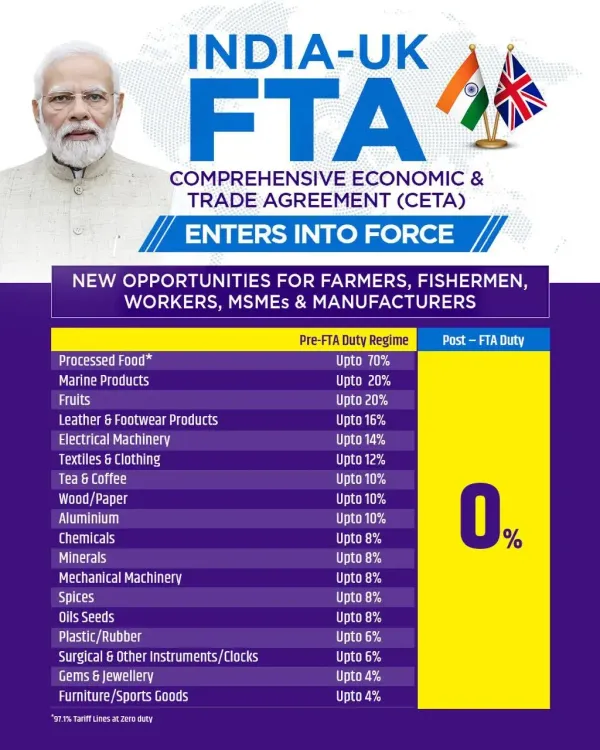
The India-UK Comprehensive Economic and Trade Agreement went live on 15 July 2026. Union Minister Sarbananda Sonowal hailed the deal, citing 99% duty-free access for Indian exports and major gains for MSMEs, textiles, pharma and tech sectors, crediting PM Modi's leadership for the breakthrough.
Key Takeaways
The India-UK CETA entered into force on 15 July 2026 , according to Union Minister Sarbananda Sonowal .
The agreement is said to provide duty-free access for 99% of Indian exports to the United Kingdom.
Key beneficiary sectors identified include MSMEs, textiles, pharmaceuticals and technology .
The deal also includes provisions aimed at protecting the interests of Indian professionals in the UK.
Formal negotiations were launched in January 2022 between PM Modi and then UK PM Boris Johnson, following Brexit.
The agreement is part of India's broader push to conclude bilateral FTAs with Australia, UAE and other partners since 2021.
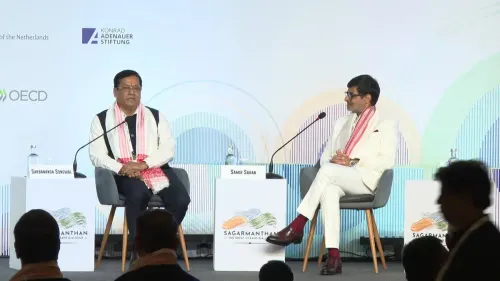
Union Minister of Ports, Shipping and Waterways Sarbananda Sonowal on Wednesday, 15 July 2026 welcomed the entry into force of the India-UK Comprehensive Economic and Trade Agreement (CETA), calling it a historic milestone in bilateral relations and crediting the leadership of Prime Minister Narendra Modi for the breakthrough.
Context
Sonowal posted on X that the agreement is 'officially live today,' describing it as unlocking 'unparalleled opportunities for growth, innovation and prosperity.' He specifically highlighted duty-free access for 99% of Indian exports and projected significant gains for the MSME, textiles, pharma and tech sectors, while also flagging protections for Indian professionals working in the United Kingdom.
The minister framed the development as a product of what he called the 'decisive leadership and global vision' of PM Modi, reflecting the BJP government's broader effort to present trade diplomacy as a signature achievement of its economic policy.
Policy Backdrop
Formal negotiations between India and the United Kingdom were launched in January 2022 during a virtual summit between Prime Minister Modi and then UK Prime Minister Boris Johnson. The talks were intended to fill the trade-arrangement gap created by Brexit, which removed the UK from the EU's existing agreements with India.
The CETA covers tariffs, services, investment and professional mobility — a broad scope that made it one of the more complex trade negotiations India has undertaken. India has simultaneously concluded or advanced trade agreements with Australia, the UAE and several other partners since 2021, as part of a wider strategy to diversify export markets and deepen integration into global supply chains. The UK has pursued a parallel track of new bilateral deals outside the EU framework since Brexit.
Stakeholders and Impact
MSME exporters are among the primary anticipated beneficiaries, as reduced tariffs on labour-intensive goods are expected to improve price competitiveness in the British market. The textiles and pharmaceuticals industries — both significant contributors to Indian export earnings — stand to gain from improved market access, while the technology sector and Indian professionals could benefit from services and mobility commitments embedded in the agreement.
For the United Kingdom, the deal represents one of the more substantial trade agreements concluded since leaving the European Union, providing access to one of the world's fastest-growing consumer and services markets.
What's Next
Attention will now turn to the publication of full tariff schedules, rules of origin and services commitments, which will determine the practical scope of the benefits outlined by officials. Any required parliamentary scrutiny or ratification processes in either country will also be closely watched by industry and trade bodies on both sides.
The agreement's entry into force marks a significant step in India's post-pandemic trade diplomacy, and its implementation will be a key test of whether the projected gains for sectors such as textiles, pharma and tech translate into measurable export growth in the months ahead.
Point of View
Completing a negotiation that began in early 2022 and outlasted multiple UK prime ministers. For the BJP government, the deal serves a dual purpose: tangible economic deliverable for export-dependent sectors and a foreign-policy credential ahead of any domestic political cycle. The emphasis on professional mobility protections signals that services-sector interests — long a sticking point in India's trade negotiations — received meaningful attention this time. Whether the headline figure of 99% duty-free access translates into actual export growth will depend heavily on the rules of origin and non-tariff barrier provisions still to be scrutinised.
NationPress
13 Oct 2026
Frequently Asked Questions
What is the India-UK CETA?
The India-UK Comprehensive Economic and Trade Agreement (CETA) is a bilateral trade deal covering tariffs, services, investment and professional mobility between India and the United Kingdom. It entered into force on 15 July 2026, according to Indian government officials.
What percentage of Indian exports get duty-free access under the India-UK trade deal?
Union Minister Sarbananda Sonowal stated that the agreement provides duty-free access for 99% of Indian exports to the United Kingdom.
Which Indian sectors benefit most from the India-UK CETA?
The sectors highlighted as major beneficiaries include MSMEs, textiles, pharmaceuticals and the technology industry, along with Indian professionals seeking to work in the United Kingdom.
When did India and the UK start FTA negotiations?
Formal negotiations for the India-UK free trade agreement were launched in January 2022 during a virtual summit between Prime Minister Narendra Modi and then UK Prime Minister Boris Johnson, following the UK's exit from the European Union.
How does the India-UK deal fit into India's broader trade strategy?
The India-UK CETA is part of India's wider push to conclude bilateral free trade agreements, having also advanced or concluded deals with Australia and the UAE since 2021, aimed at diversifying export markets and deepening global supply-chain integration.