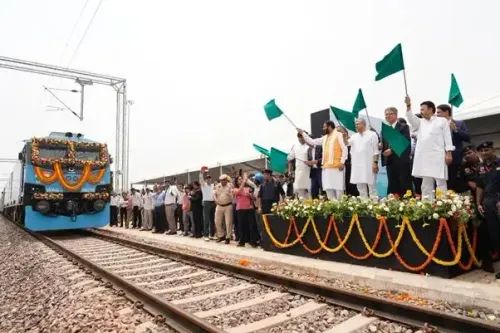
India's first salt container train flagged off from Kutch to Mithapur
Synopsis
India just moved its salt industry onto rails — literally. The country's first dedicated salt container train, using specially designed stainless-steel containers that solve decades-old weight and moisture problems, was flagged off from Kutch on 15 September 2026. Five new private-sector Gati Shakti Cargo Terminals were also opened the same day, signalling a broader logistics overhaul in one of India's most strategically important coastal districts.
Key Takeaways
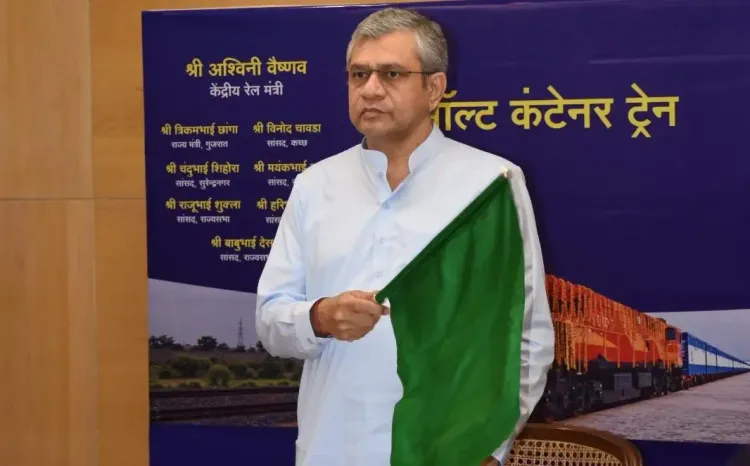
India's first salt container train was flagged off from Shivlakha, Kutch to Mithapur on 15 September 2026 by Railway Minister Ashwini Vaishnaw .
Specially designed stainless-steel containers address long-standing issues of weight balance and moisture absorption in salt transport.
Five Gati Shakti Cargo Terminals at Bhimasar, Devaliya, Chandisar, Shivlakha, and Linch were dedicated to the nation, all developed with private investment.
Combined employment potential across the five GCTs is estimated at 4,500–5,500 jobs , with a cumulative private investment exceeding ₹415 crore .
The Bhuj-Shalimar Express will now halt at Anjar station , and Gopalpur railway station was inaugurated, eliminating engine reversal at Gandhidham.
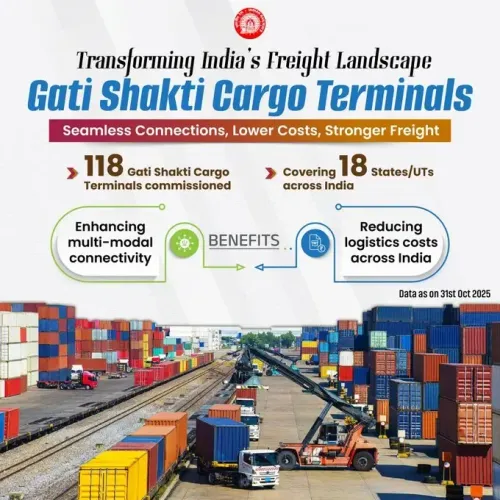
More than 150 Gati Shakti Cargo Terminals are now operational nationally since the policy was launched in 2021 .
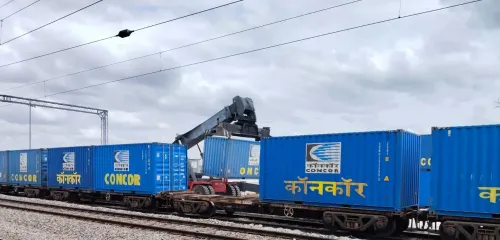
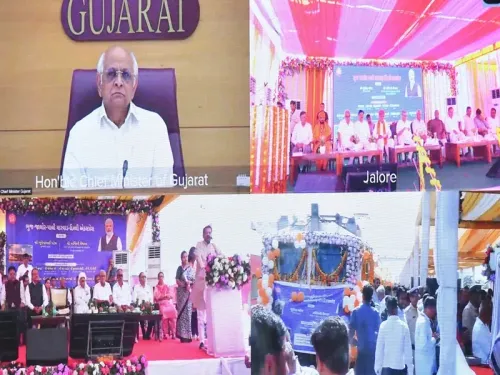
India's first dedicated salt container train was flagged off from Shivlakha in Kutch, Gujarat, to Mithapur on Tuesday, 15 September 2026, marking a significant shift in how the country's largest salt-producing region connects to national markets. Union Railway Minister Ashwini Vaishnaw flagged off the service via video conferencing as part of a programme that also saw five Gati Shakti Cargo Terminals (GCTs) in Gujarat dedicated to the nation.
Why a Dedicated Salt Container Train
Gujarat, and Kutch in particular, is India's dominant salt-producing belt. The Railways had long grappled with two structural problems in transporting salt by conventional wagon: maintaining the correct weight balance between the wagon and the commodity, and managing salt's tendency to absorb moisture during long-haul transit — degrading quality and complicating handling.
To solve both problems, the Railways developed specially designed stainless-steel salt containers that load from the top and discharge from the side by tilting. The choice of stainless steel was deliberate: it achieves the requisite weight-to-commodity balance while resisting corrosion from moisture. The containerised system is expected to enable safer, more organised, and cost-efficient movement of salt from production centres to markets across the country.
What the Railway Minister Said
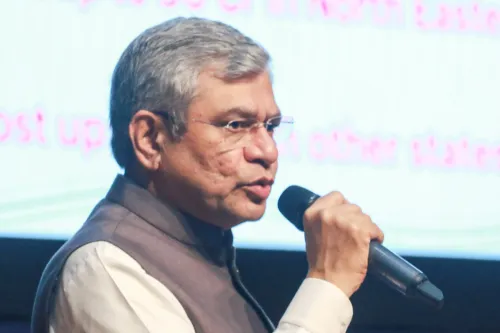
Addressing the programme, Vaishnaw described the salt container train as an example of the Railways seeking new solutions to practical freight challenges. 'The Railways had undergone a change in its approach under Prime Minister Narendra Modi, with greater emphasis on innovation, new solutions and technology-based responses to regional requirements,' he said. Vaishnaw also noted that the Gati Shakti Cargo Terminal Policy, launched in 2021, had scaled to more than 150 operational terminals across the country.
Five Gati Shakti Cargo Terminals Dedicated to the Nation
The five GCTs inaugurated on Tuesday are located at Bhimasar, Devaliya, Chandisar, Shivlakha, and Linch — all developed with private-sector participation.
The AFGB GCT at Bhimasar, developed by Arya Freight Terminal Pvt Ltd, involves a total investment of approximately ₹75 crore (railway component: ₹24.21 crore). Spread over about 52 acres on the Gandhidham-Samakhiali section, it is designed to handle containers and general cargo, with a projected throughput of around 60 outward and 60 inward rakes a month and employment for roughly 1,000 people.
The WCGD terminal at Devaliya, developed by Western Carriers (India) Ltd, involves approximately ₹65 crore in investment (railway component: ₹16.28 crore) across about 41 acres, and is also projected to generate around 1,000 jobs.
At Chandisar, the ATGC terminal built by Emirates Terminals Pvt Ltd has a total investment of roughly ₹75 crore (railway component: ₹14 crore) on about 23 acres, with an estimated capacity of 10 outward and 10 inward rakes a month and around 400–500 employment opportunities.
The KEGS terminal at Shivlakha, being developed by KMT Engg. Pvt Ltd, carries the largest proposed investment of about ₹200 crore (railway component: ₹12.97 crore) across approximately 150 acres. Beyond containers, it will include facilities for railway wagon manufacturing, with an employment potential of 2,000–2,500 people.
Expanding Rail Connectivity Across Kutch
The programme also highlighted the pace of railway expansion in the region. The four-laning of the Samakhiali-Bhachau section has been completed, and work on the third and fourth lines between Bhachau and Gandhidham is under way. The Gandhidham-Adipur section has been four-laned, while the Adipur-Bhuj section is being upgraded from single to double line.
The Bhuj-Naliya gauge conversion project was dedicated to the nation in 2024. New lines connecting Naliya to Jakhau Port and linking Naliya with Desalpur via Vayor, Narayan Sarovar, Lakhpat, Hajipur, and Luna have received approval, further extending the rail network into the district's western reaches.
Separately, the halt of Train No. 22829/22830 Bhuj-Shalimar Express at Anjar station was also inaugurated, benefiting traders, students, employees, and tourists from Anjar and surrounding areas. Gopalpur railway station was also opened; trains operating between Ahmedabad and Bhuj will no longer require engine reversal at Gandhidham, reducing operating time.
Broader Significance for Freight and Logistics
Collectively, Tuesday's developments are intended to increase rail's share in India's freight mix, optimise logistics costs, and give Gujarat's salt, container, and general cargo industries better national market access. This comes amid a sustained Centre push to shift bulk commodities from road to rail under the Gati Shakti framework — a logistics integration initiative that spans railways, ports, and highways. Whether private-sector-led GCTs can scale throughput to projected levels will be watched closely by industry bodies and state planners alike.
Point of View
Yet poor rail handling meant road transport dominated — with all its attendant costs and spoilage risks. The stainless-steel container design is the kind of unglamorous, problem-specific engineering that rarely makes headlines but could genuinely shift economics for producers. The bigger question is whether the five new Gati Shakti terminals — built on private capital — will achieve projected throughput, or whether under-utilisation, a recurring pattern in Indian freight infrastructure, will dilute the returns. With Gujarat's port and logistics corridor deepening, the stakes for getting this right are higher than the ceremony suggested.
NationPress
15 Sept 2026
Frequently Asked Questions
What is India's first salt container train and why was it launched?
India's first salt container train is a dedicated rail service using specially designed stainless-steel containers to transport salt from Shivlakha in Kutch, Gujarat, to Mithapur, flagged off on 15 September 2026. It was launched to solve longstanding problems with conventional wagon-based salt transport, including weight-balance issues and moisture absorption that degraded salt quality during long-distance haulage.
How do the new stainless-steel salt containers work?
The containers load from the top and discharge from the side by tilting, allowing efficient loading and unloading without manual shovelling. Stainless steel was chosen to achieve the required weight-to-commodity balance and to resist corrosion from the moisture that salt naturally absorbs.
What are the five Gati Shakti Cargo Terminals dedicated in Gujarat?
The five GCTs are located at Bhimasar, Devaliya, Chandisar, Shivlakha, and Linch in Gujarat, all developed with private-sector investment. Together they are projected to handle container and general cargo traffic, generate an estimated 4,500–5,500 jobs, and represent a combined private outlay of over ₹415 crore.
What new rail connectivity was announced for Kutch?
Several projects are under way or approved: the Samakhiali-Bhachau section has been four-laned, third and fourth lines between Bhachau and Gandhidham are being built, the Adipur-Bhuj section is being doubled, and new lines to Jakhau Port and from Naliya to Desalpur have been approved. The Bhuj-Naliya gauge conversion was completed in 2024.
How many Gati Shakti Cargo Terminals are operational in India?
More than 150 Gati Shakti Cargo Terminals are currently operational across India, according to Railway Minister Ashwini Vaishnaw. The policy was launched in 2021 and has expanded to include privately developed terminals across multiple states.