BJP Claims India Maintains Stable Petrol Prices Amid Global Crisis
Synopsis
Amid a turbulent global energy market, the BJP asserts that India is the only G20 nation with unchanged petrol prices, attributing this stability to PM Narendra Modi's leadership. The party emphasizes India's resilience in the face of significant external pressures and critiques the opposition's response to the economic landscape.
Key Takeaways
BJP claims India is the only G20 nation with stable petrol prices.
Current petrol price in India stands at Rs 94.77 per litre .
Global petrol prices have surged in several major economies.
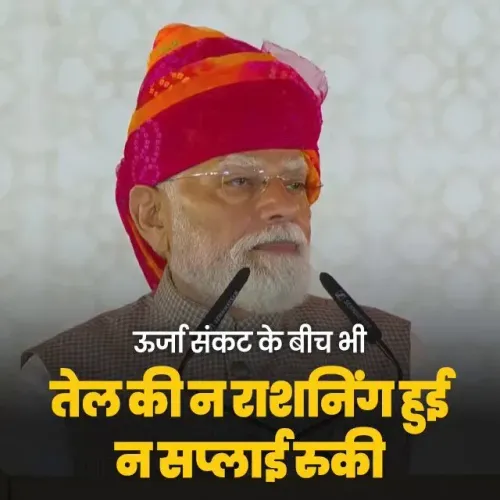
India’s stability attributed to PM Narendra Modi 's leadership.
Ongoing US-Iran tensions impacting global oil supply.
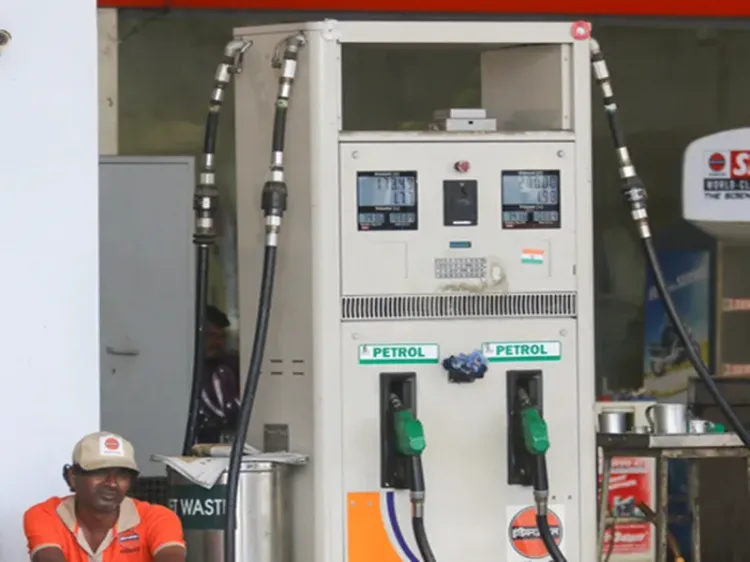
New Delhi, March 14 (NationPress) The BJP emphasized on Saturday that petrol prices in India have remained stable at Rs 94.77 per litre, in stark contrast to the significant hikes seen in numerous major economies.
The party credited this consistency to Prime Minister Narendra Modi's effective management of the global energy crisis, which has escalated due to rising tensions between the US and Iran since late February.
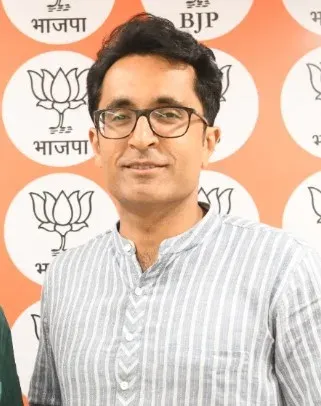
In a post on X, BJP national spokesperson Pradeep Bhandari stated that India successfully maintained fuel price stability even as global markets experienced considerable volatility.
"India stands out as the only G20 nation where, despite the ongoing global energy crisis, petrol prices have not fluctuated since February!" Bhandari remarked.
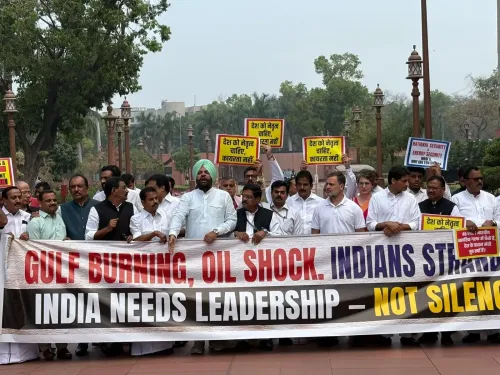
He also took a jab at the Opposition, claiming that the Congress party and its leaders are struggling to accept the government's adept handling of the economic turmoil amid this crisis.
"This is what drives Rahul Gandhi up the wall; both Congress and Rahul are finding it hard to accept that under PM Narendra Modi, India is successfully navigating the global energy crisis with minimal impact on the average citizen!" he said.
Bhandari also shared a comparative analysis illustrating petrol price hikes in various G20 countries, referencing figures from media outlets.
The data indicated that petrol prices surged by 22 percent in the United States, 11 percent in China, 15 percent in Germany, and approximately 8 percent in Japan during the same timeframe.
The global energy market is under severe strain following escalating hostilities between the US and Iran, which intensified into open conflict by late February.
This crisis worsened after coordinated US and Israeli strikes on Iranian installations reportedly commenced on February 28, resulting in the death of Supreme Leader Ayatollah Ali Khamenei.
The conflict has critically disrupted global oil markets, leading to one of the most serious supply shocks witnessed in recent decades. A pivotal factor has been the Strait of Hormuz, a vital maritime route through which about 20 percent of the world's daily oil supply and a similar share of Liquefied Natural Gas typically transit.
In response to the strikes, Iran has effectively blockaded or heavily restricted shipping through the strait, leading to a more than 90 percent decline in tanker movements in the region during certain intervals.
Furthermore, Tehran has executed attacks on oil tankers and energy infrastructure across the Gulf, exacerbating supply concerns.
Simultaneously, production and exports from several regional oil producers—including Saudi Arabia, the United Arab Emirates, Iraq, and Kuwait—have been impacted by precautionary shutdowns or reduced output.
Amid these disruptions, Iran has now permitted safe passage for Indian-flagged vessels through the Strait of Hormuz, despite the broader shipping restrictions in place, with an LPG tanker bound for India successfully navigating the strait on Friday.
This development follows a series of high-level diplomatic discussions between India and Iran, including phone calls between External Affairs Minister S. Jaishankar and Iranian Foreign Minister Abbas Araghchi.
Prime Minister Narendra Modi also engaged with Iranian President Masoud Pezeshkian on Thursday to assess the rapidly evolving situation in the West Asia region.
In a post on X, the Prime Minister expressed concern regarding the escalating tensions and underscored the humanitarian repercussions of the conflict.
He highlighted the loss of civilian lives and the destruction of vital infrastructure wrought by the hostilities.
Additionally, he stressed that ensuring the safety and security of Indian nationals in the region remains the government's utmost priority.
Moreover, he underscored the necessity of maintaining the uninterrupted flow of goods and energy supplies through global trade routes, pointing out that prolonged disruptions could have widespread implications for India's economy and overall regional stability.
Point of View
The backdrop of international conflicts raises questions about the sustainability of this stability and its implications for the Indian economy.
NationPress
7 Oct 2026
Frequently Asked Questions
Why have petrol prices in India remained unchanged?
The BJP attributes the unchanged petrol prices in India to Prime Minister Narendra Modi's effective handling of the global energy crisis, particularly influenced by tensions between the US and Iran.
What are the recent petrol price changes in G20 countries?
Recent data indicates that petrol prices have increased significantly in several G20 nations, with the US seeing a 22% rise, China 11%, Germany 15%, and Japan approximately 8%.
What impact is the US-Iran conflict having on global oil markets?
The ongoing US-Iran conflict has led to severe disruptions in global oil markets, creating one of the most significant supply shocks in recent decades.
What measures is India taking to ensure energy security?
India is engaging in high-level diplomatic discussions with Iran and has secured safe passage for Indian-flagged vessels through the Strait of Hormuz, despite broader shipping restrictions.
How does the government view the opposition's response to the energy crisis?
The BJP claims that the opposition, particularly the Congress party, is struggling to accept the government's effective management of the economic situation during this ongoing crisis.