BJP's Bhandari hits Congress over fuel price politicisation amid global crisis
Synopsis
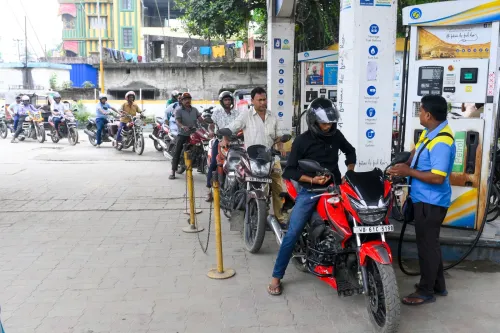
As Brent crude topped $100 per barrel and fuel prices surged globally after the Strait of Hormuz crisis, India raised petrol and diesel by just 3.5% after 76 days of stable rates — and the BJP is using that data as a political shield against Congress criticism, with OMCs absorbing an estimated ₹1,000 crore per day in under-recoveries before the ₹3 per litre revision.
Key Takeaways
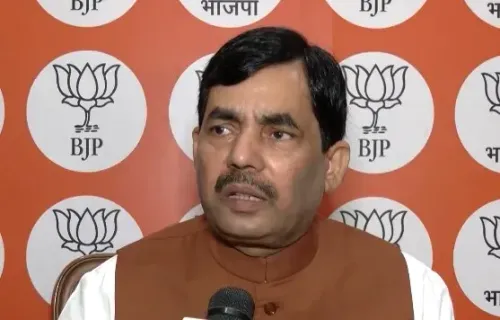
BJP spokesperson Pradeep Bhandari accused Congress of politicising India's fuel price response to the global energy crisis on 15 May .
India's petrol and diesel prices rose by just 3.5 per cent after 76 days of stable rates, against Pakistan's +55% , Malaysia's +56% , and US's +45% .
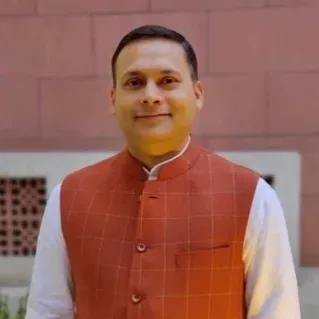
BJP IT Cell in-charge Amit Malviya said public sector OMCs absorbed under-recoveries of nearly ₹1,000 crore per day during the period.
The ₹3 per litre revision on 15 May was the first fuel price change in nearly four years , on a base of approximately ₹95 per litre .
Brent crude has stayed above $100 per barrel amid disruptions around the Strait of Hormuz linked to the West Asia conflict .
Bharatiya Janata Party (BJP) National Spokesperson Pradeep Bhandari on Friday, 15 May launched a pointed attack on the Indian National Congress, accusing the opposition of exploiting global fuel price volatility for political gain while ignoring India's comparatively restrained price adjustments during an ongoing West Asia-driven energy crisis.
Bhandari's Charge Against Congress
Posting on X, Bhandari accused Congress of seeking political opportunity in every global crisis. 'The Congress Party should be ashamed of itself to politicise everything! Congress is a party which always looks at political opportunity in any global crisis; only to have egg on their face!' he wrote.
Bhandari cited data to back his claim, arguing that despite Brent crude staying above $100 per barrel following disruptions around the Strait of Hormuz, India had recorded only a 3.5 per cent rise in petrol and diesel prices after 76 days of stable rates. 'This is a time for economic patriotism. 140 crore Indians are with PM Narendra Modi and the Congress yet again is getting exposed because of its desperate politics!' he claimed.
Global Fuel Price Comparisons
Bhandari drew a direct comparison with other countries, stating that fuel prices had surged sharply across the world during the same period: Pakistan: +55 per cent, Malaysia: +56 per cent, US: +45 per cent, UAE: +52 per cent, China: +23 per cent, and France: +31 per cent. India's 3.5 per cent adjustment, he argued, stood in stark contrast.
Amit Malviya's Detailed Analysis
BJP IT Cell in-charge Amit Malviya separately shared a detailed breakdown on X, describing India as a 'striking exception' amid the global oil shock. Malviya noted that between 23 February and 15 May, countries including Myanmar, Malaysia, Pakistan, the UAE, the United States, Sri Lanka, the United Kingdom, Germany, and Japan saw fuel price increases ranging from single digits to over 100 per cent in some cases for diesel.
According to Malviya's post, India recorded a petrol price increase of 3.2 per cent and a diesel price increase of 3.4 per cent over the same period. He noted that only Saudi Arabia saw no change, attributable to subsidy structures, while India among major market economies registered the lowest rise.
Oil Marketing Companies and Under-Recoveries
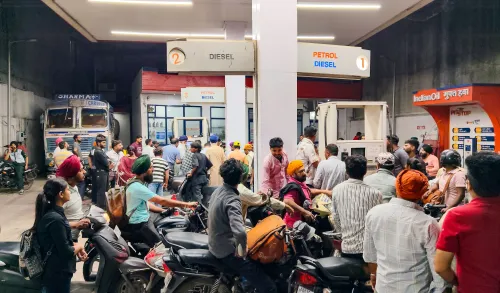
Malviya further stated that Indian public sector Oil Marketing Companies (OMCs), which account for nearly 90 per cent of retail fuel sales, kept prices largely unchanged for approximately 76 days despite rising crude costs, absorbing under-recoveries estimated at nearly ₹1,000 crore per day.
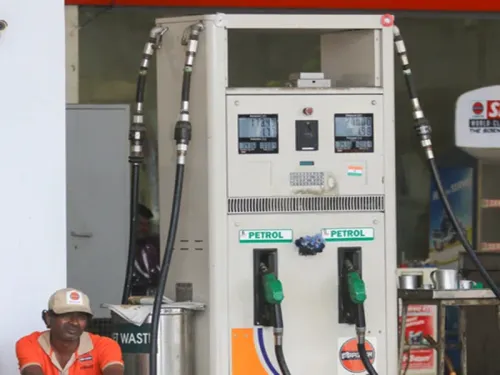
The ₹3 per litre revision announced on 15 May marked the first price change in nearly four years, representing a modest 3.5 per cent adjustment on an approximately ₹95 per litre base. 'The story here is not merely about a ₹3 increase. The story is that while much of the world adjusted through increases of 10 per cent, 20 per cent, 50 per cent, and in some cases nearly 90 per cent, India limited the impact on its citizens to just over 3 per cent,' Malviya said.
The Broader Political Context
The BJP's counter-offensive comes amid a wider political debate over fuel pricing and the government's response to crude oil volatility triggered by the West Asia conflict and Strait of Hormuz disruptions. Malviya also underscored the downstream impact of fuel price containment, noting that petrol and diesel costs affect transport, food inflation, manufacturing, logistics, and household budgets. 'Containing fuel volatility is also about containing inflation,' he said. How the Congress responds to the BJP's data-driven rebuttal is expected to shape the next phase of this political exchange.
Point of View
But the numbers deserve scrutiny. Comparative fuel price rises are shaped by subsidy regimes, currency movements, and base prices — not just government competence — and the OMC under-recovery of ₹1,000 crore per day is a liability that ultimately sits on the public balance sheet. The ₹3 revision being framed as a four-year record of restraint also glosses over the fact that fuel prices were already elevated from earlier hike cycles. Congress's political attack may be opportunistic, but the BJP's rebuttal, while numerically compelling on the surface, sidesteps the structural question of who eventually bears the cost of deferred pricing.
NationPress
24 Sept 2026
Frequently Asked Questions
Why did India raise petrol and diesel prices on 15 May 2025?
India raised petrol and diesel prices by ₹3 per litre on 15 May 2025 — the first revision in nearly four years — after public sector Oil Marketing Companies absorbed under-recoveries of nearly ₹1,000 crore per day for approximately 76 days amid rising global crude costs. Brent crude had crossed $100 per barrel following disruptions around the Strait of Hormuz.
How does India's fuel price increase compare to other countries?
According to BJP IT Cell in-charge Amit Malviya's post on X, India recorded a petrol rise of 3.2% and diesel rise of 3.4% between 23 February and 15 May, compared to Pakistan's +55%, Malaysia's +56%, the US's +45%, UAE's +52%, China's +23%, and France's +31% over the same period.
What did BJP spokesperson Pradeep Bhandari say about Congress?
Bhandari accused Congress of politicising India's fuel pricing response to the global energy crisis, posting on X that the party 'always looks at political opportunity in any global crisis.' He argued that India's 3.5% increase, against much steeper global rises, demonstrated effective economic management.
What role did Oil Marketing Companies play in keeping fuel prices stable?
According to Amit Malviya, Indian public sector Oil Marketing Companies — which control nearly 90% of retail fuel sales — kept prices unchanged for about 76 days despite rising crude oil costs, absorbing under-recoveries estimated at nearly ₹1,000 crore per day before the ₹3 per litre revision was announced.
What triggered the global fuel price surge in 2025?
The global fuel price surge was triggered by the West Asia conflict and disruptions around the Strait of Hormuz, which pushed Brent crude above $100 per barrel. Most major economies, including the US, Pakistan, Malaysia, and several European nations, passed on sharp price increases to consumers.