India fuel prices rose just 3.2% amid global surge, says BJP's Amit Malviya

Synopsis
While Myanmar's fuel prices nearly doubled and Pakistan's surged over 50%, India held petrol price increases to just 3.2% over nearly three months — absorbing an estimated ₹1,000 crore in daily under-recoveries before a ₹3 per litre correction on 15 May. BJP's Amit Malviya framed it as deliberate policy insulation; the real question is whether the buffer holds if crude stays above $100.
Key Takeaways
BJP IT cell chief Amit Malviya said India's petrol prices rose just 3.2 per cent and diesel 3.4 per cent between 23 February and 15 May .
Brent crude remained above $100 per barrel for much of the period, driven by the West Asia conflict and Strait of Hormuz supply disruptions.
State-run oil marketing companies — covering nearly 90 per cent of retail fuel sales — held prices for 76 days , absorbing estimated daily under-recoveries of nearly ₹1,000 crore .
The government announced a ₹3 per litre hike on 15 May , described by Malviya as a 3.5 per cent calibrated revision on a base of roughly ₹95 per litre .
By contrast, Myanmar saw petrol prices rise nearly 90 per cent , Malaysia by 56.3 per cent , and Pakistan by 54.9 per cent over the same period.
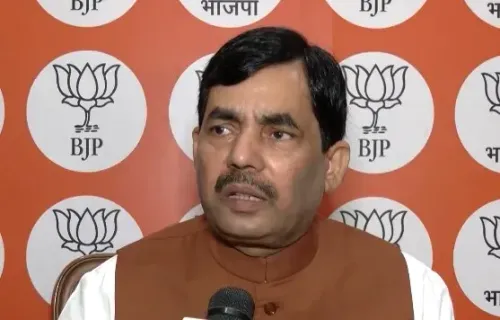
Bharatiya Janata Party (BJP) IT cell chief Amit Malviya on Friday, 15 May said India had emerged as a 'striking exception' in global fuel markets, with petrol and diesel prices rising by only 3.2 per cent and 3.4 per cent respectively between 23 February and 15 May — even as Brent crude remained above $100 per barrel for much of that period. The remarks came amid a sharp escalation in global fuel costs driven by the ongoing West Asia conflict and disruptions to crude oil supplies through the Strait of Hormuz.
Global Fuel Price Comparison
Sharing a detailed cross-country comparison on X, Malviya contrasted India's modest price movement against steep hikes elsewhere. Myanmar recorded an almost 90 per cent jump in petrol prices and more than doubled diesel prices over the same period. Malaysia saw petrol and diesel rise by 56.3 per cent and 71.2 per cent respectively, while Pakistan witnessed a 54.9 per cent increase in petrol and a 44.9 per cent rise in diesel. Fuel prices in the UAE and the United States also climbed sharply, he noted.
How India Absorbed the Shock
According to Malviya, India's public sector oil marketing companies — which account for nearly 90 per cent of fuel retail sales — kept prices largely unchanged for 76 days despite rising global crude costs. 'Instead of immediately passing on the burden to citizens, they absorbed substantial under-recoveries at the refinery gate,' he wrote on X. Estimates cited by Malviya suggested that daily under-recoveries had approached nearly ₹1,000 crore before the government announced a ₹3 per litre increase in petrol and diesel prices on 15 May.
The Government's Case for a Calibrated Hike
Malviya described the 15 May price revision as a 'calibrated increase', arguing it amounted to roughly 3.5 per cent on a base price of nearly ₹95 per litre. He further contended that fuel price stability carries broader economic consequences beyond the pump — influencing inflation, transport costs, logistics expenses, and manufacturing input costs. 'The story is that while much of the world adjusted through increases of 10 per cent, 20 per cent, 50 per cent and in some cases nearly 90 per cent, India limited the impact on its citizens to just over 3 per cent,' Malviya said.
Context and What to Watch
The West Asia conflict has kept global energy markets on edge since early 2025, with the Strait of Hormuz — through which roughly 20 per cent of the world's oil transits — remaining a flashpoint. India's state-run oil retailers have historically faced political pressure to delay price transmission, a dynamic that builds up under-recoveries before periodic corrections. Whether the ₹3 per litre hike fully bridges the accumulated gap, or whether a follow-on revision is warranted, will depend on how long crude stays elevated. Analysts and opposition parties are expected to scrutinise the under-recovery figures independently.
Point of View
But they come from a partisan source and deserve independent verification — particularly the ₹1,000 crore daily under-recovery figure, which the government has not officially published. India's practice of delaying price transmission through state-owned retailers is a well-documented political tool, and the 76-day freeze ahead of an election-adjacent period fits a familiar pattern. The ₹3 per litre hike may be 'calibrated', but if crude stays above $100, a second correction could follow quickly, reframing the narrative. The real test of the government's insulation claim is whether inflation data in June reflects the fuel cost pass-through — or whether logistics and transport costs have already been quietly adjusting.
NationPress
26 Sept 2026
Frequently Asked Questions
Why did India's fuel prices rise less than other countries?
According to BJP leader Amit Malviya, India's state-run oil marketing companies absorbed under-recoveries at the refinery level for 76 days rather than immediately passing costs to consumers. The government then announced a modest ₹3 per litre increase on 15 May, keeping the overall rise to around 3.2–3.4 per cent since 23 February.
What triggered the global fuel price surge in 2025?
The primary drivers, as cited by Malviya, were the ongoing West Asia conflict and disruptions to crude oil supplies through the Strait of Hormuz, which pushed Brent crude above $100 per barrel for much of the February–May period.
Which countries saw the steepest fuel price hikes?
Myanmar recorded the sharpest rise — nearly 90 per cent in petrol and more than double in diesel. Malaysia saw increases of 56.3 per cent (petrol) and 71.2 per cent (diesel), while Pakistan recorded hikes of 54.9 per cent and 44.9 per cent respectively. The UAE and the United States also saw sharp increases.
What were India's oil marketing companies' under-recoveries?
According to estimates cited by Malviya, daily under-recoveries at the refinery gate had approached nearly ₹1,000 crore before the ₹3 per litre price revision was announced on 15 May. These figures have not been independently confirmed by the government.
Is another fuel price hike likely in India?
That will depend on how long Brent crude remains elevated above $100 per barrel. The ₹3 per litre revision on 15 May was described as calibrated, but analysts note that if crude prices stay high, a follow-on correction cannot be ruled out.