Unveiling the ISI's Espionage Network: Women and Youth at the Forefront
Synopsis
The revelation of a spy network in Ghaziabad has triggered a nationwide CCTV audit, as the ISI increasingly relies on surveillance for intelligence gathering. The network notably employs women and minors, raising crucial security concerns.
Key Takeaways
The ISI is leveraging CCTV for real-time intelligence gathering.
The spy network predominantly recruits women and minors for operational tasks.
Government initiatives are underway to enhance the security of CCTV systems nationwide.
New Delhi, March 26 (NationPress) The recent uncovering of a spy network in Ghaziabad has led intelligence agencies to initiate a comprehensive review of closed-circuit television (CCTV) footage across the nation. According to officials, the ISI has increasingly depended on CCTV systems to obtain real-time visuals of critical areas.
This review will include major regions like Delhi and Mumbai, where the ISI has been actively seeking extensive intelligence.
Utilizing CCTV for intelligence gathering has emerged as a prevalent tactic for ISI-affiliated spy operations within India.
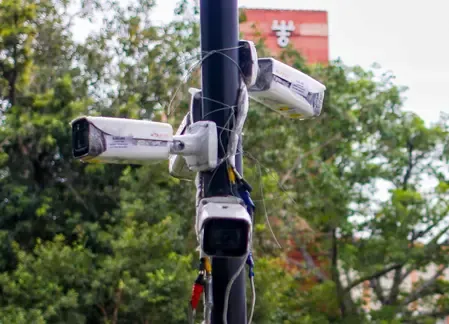
Members of this network were directed to prioritize the installation of CCTV cameras in sensitive areas, including public offices, railway stations, and bus terminals across the country. The goal was to capture live feeds for planning potential attacks.
An official from the Intelligence Bureau remarked that this method eliminates the necessity for physical surveillance of potential targets. In the case of the 26/11 Mumbai attacks, it was revealed that David Headley had conducted comprehensive reconnaissance over multiple visits.
The ISI aims to mitigate this risk, making CCTV installations invaluable.
Investigations have uncovered plans for camera installations at nearly 60 sites nationwide.
The targeted locations included spots in Delhi, Mumbai, and Jammu and Kashmir, particularly where security measures tend to be less stringent. Sensitive sites like military bases were excluded from consideration due to their fortified nature. Instead, the focus was on public transport hubs, busy marketplaces, and government facilities, which are typically easier to infiltrate, explained an official.
An official involved in the investigation highlighted that the network's structure is intricate, with a notable recruitment strategy favoring women and minors.
In addition to these recruits, individuals in their early 20s were also targeted. The official noted that recruiters enticed potential candidates with financial incentives before their enrollment. One of the suspects, Meera, was not only responsible for gathering intelligence and installing CCTV cameras but was also tasked with creating an all-female division for ISI’s espionage operations.
The police apprehended a 17-year-old boy who was part of a subgroup focused on recruiting minors. Such individuals are less likely to attract suspicion, making them easier to manipulate. In these situations, monetary gain is often the primary motivator, rather than ideological influences, another official remarked.
During the investigation, it was discovered that these individuals maintained numerous social media accounts. Teenagers are generally more adept at managing these platforms, providing a strategic advantage. Consequently, it was found that the younger recruits had established several social media profiles, which were not primarily used for relaying information but rather for inviting others to join their network.
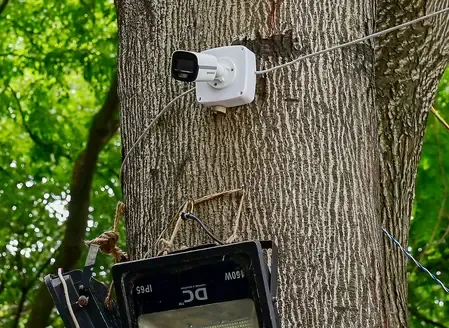
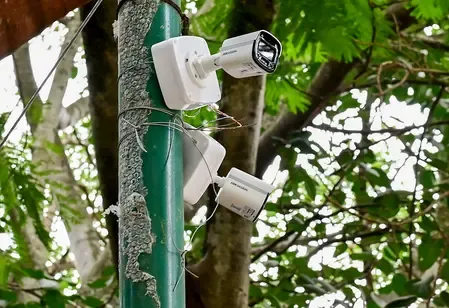
Another official indicated that given this newfound strategy, a thorough CCTV review is crucial. Challenges arise as the CCTV system lacks central oversight. Compounding the issue are solar-powered CCTV cameras that can be set up with minimal effort.
The ISI had instructed the suspects to install at least three solar-powered CCTV cameras in public areas, including railway stations, to gain a comprehensive view of those locations. This facilitates detailed reconnaissance for ISI-affiliated operatives.
Moreover, during an attack, the ISI could provide real-time guidance to terrorists by monitoring CCTV feeds through their mobile devices.
One official elaborated that the sheer number of CCTV cameras already in place—spanning police, railway, municipal sectors, and private entities—creates a challenge in identifying a single installation by an ISI-linked operative, which typically goes unnoticed by law enforcement. This presents a vulnerability that is being exploited for espionage activities via CCTV systems.
The audit will also propose enhancements to fortify the security of these cameras. As it stands, the system is susceptible due to the prevalent use of default passwords. Additionally, these devices are inexpensive and can be acquired without background checks, making CCTV cameras a potent tool for espionage.
The Union Government is tightening regulations surrounding CCTV systems. Starting April 1, only STQC-certified (Standardization Testing and Quality Certification) cameras are expected to be permitted for sale, as they are less vulnerable to hacking.
Furthermore, a comprehensive surveillance framework will be established, encompassing unique device registration, strict cybersecurity protocols, and enhanced device management.
Point of View
It's crucial to recognize the alarming implications of this espionage network. The reliance on young and vulnerable recruits poses significant security risks, necessitating immediate action to bolster surveillance protocols and strengthen national defenses.
NationPress
24 Sept 2026
Frequently Asked Questions
What was the main focus of the ISI's spy network?
The ISI's spy network primarily focused on installing CCTV cameras in sensitive public locations to gather live feeds for planning attacks.
Why is the recruitment of women and minors significant?
Recruiting women and minors allows the ISI to evade scrutiny, making it easier to gather intelligence without attracting attention.
What measures is the Union Government taking to enhance CCTV security?
The Union Government is introducing regulations to only permit STQC-certified cameras to reduce vulnerabilities associated with hacking.