Jaishankar at EAS Manila: India's 10-Point Regional Stand
Synopsis
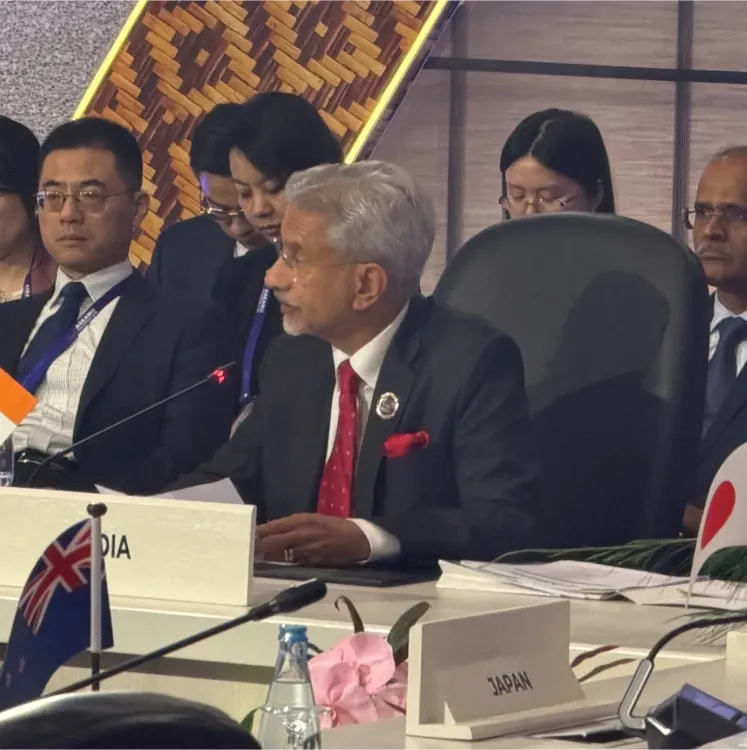
At the 21st East Asia Summit in Manila on 23 July 2026, EAM Dr. S. Jaishankar outlined India's stance on maritime security, the South China Sea CoC, West Asia, Myanmar, cyber scams, and UNRWA aid, while announcing two EAS events to be hosted in Kochi and Lothal later this year.
Key Takeaways
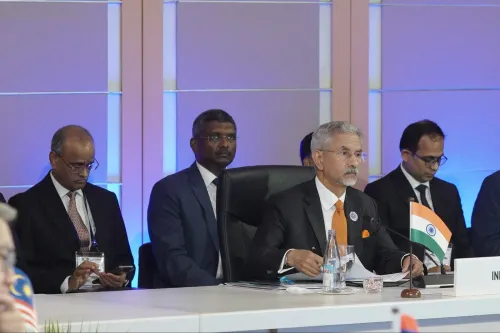
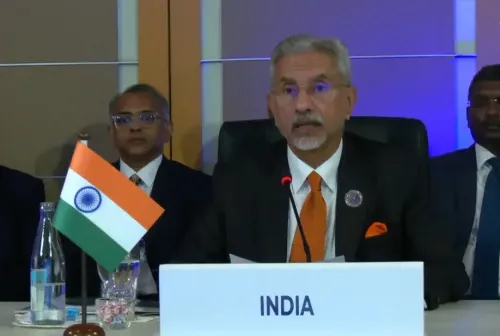
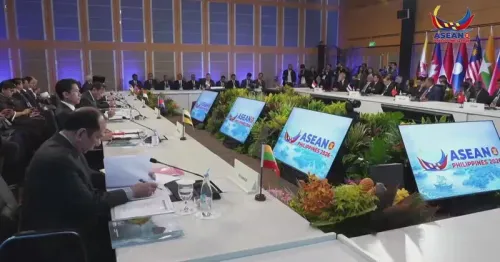
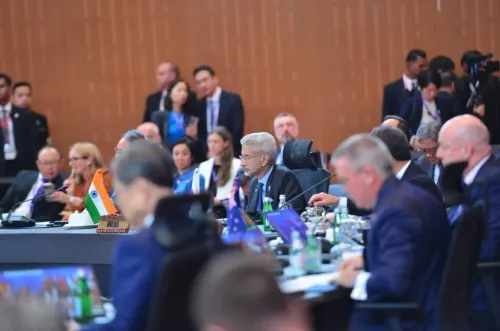
Jaishankar represented India at the 21st East Asia Summit in Manila on 23 July 2026 .
India will host the 7th EAS Conference on Maritime Security Cooperation in Kochi and an EAS Maritime Heritage Festival at Lothal later in 2026.
India called for a legally binding South China Sea Code of Conduct fully compliant with UNCLOS 1982 .
India demanded collective action against cyber scam centres that have victimised Indian nationals, and called for safe international waterways amid the West Asia conflict.
India reaffirmed support for a two-state solution to the Israel-Palestine conflict and described itself as a top emerging donor of UNRWA .
India underlined commitment to ASEAN centrality , a political solution in Myanmar , and a free, open and prosperous Indo-Pacific .
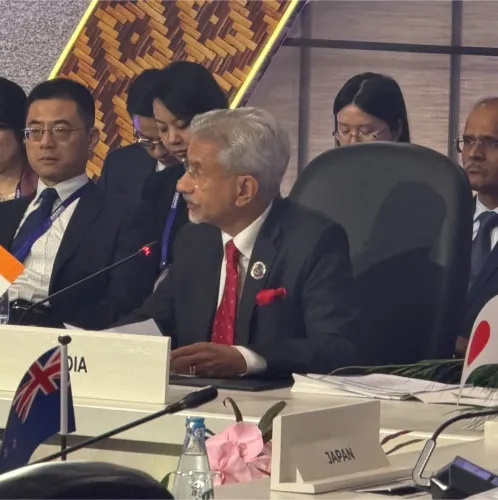
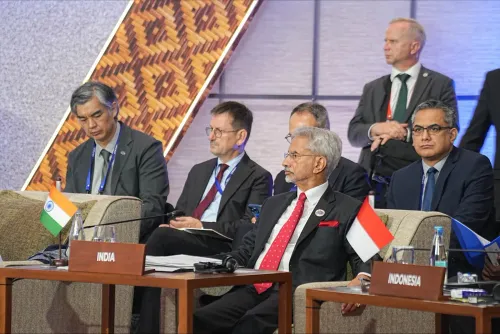
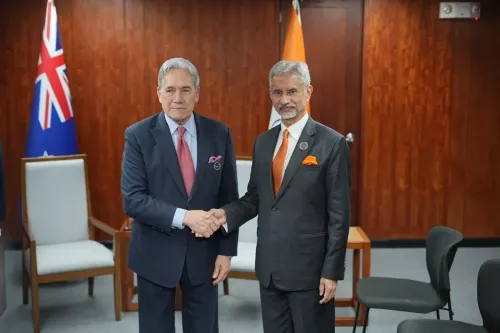
Union External Affairs Minister Dr. S. Jaishankar participated in the 21st East Asia Summit (EAS) in Manila on Thursday, 23 July 2026, delivering a wide-ranging statement covering maritime security, the South China Sea, the West Asia conflict, Myanmar, cyber threats, and India's commitment to ASEAN centrality and a free Indo-Pacific.
Context
Speaking at the summit, Dr. Jaishankar opened by characterising the current global order as 'uncertain and volatile,' where interdependence and common interests coexist with competitiveness and rivalries. He noted that 'structural changes being created by new capabilities, exposure and relationships' are reshaping the international landscape, with politics and security increasingly overriding economics and efficiency.
India announced it will host two EAS activities later this year: the 7th EAS Conference on Maritime Security Cooperation in Kochi, and an EAS Maritime Heritage Festival at Lothal, the ancient Harappan port city in Gujarat. The choice of Lothal underscores India's assertion of deep historical maritime roots in the Indo-Pacific.
Policy Backdrop
India has been a member of the East Asia Summit since its founding in 2005, and the forum has served as a key platform for New Delhi's Act East Policy — upgraded in 2014 — which prioritises maritime security, connectivity, and engagement with ASEAN-led architecture. Dr. Jaishankar's remarks in Manila are consistent with a long-standing pattern of India advocating rules-based order and ASEAN centrality at successive EAS meetings.
On the South China Sea, India reiterated its support for 'a substantive, effective and legally binding Code of Conduct (CoC) fully compliant with UNCLOS 1982 that does not prejudice the legitimate rights of all users.' The 1982 United Nations Convention on the Law of the Sea forms the bedrock of India's Indo-Pacific legal framework. On West Asia, India called for dialogue and diplomacy to end the Gulf conflict, stressing that 'international waterways must remain safe and unimpeded' and that 'under no circumstances can attacks on seafarers, civilian shipping or infrastructure be countenanced.'
Affirming a longstanding position, Dr. Jaishankar stated that India 'believes that a two-state solution can lead to a lasting and durable peace,' and noted that India has made 'notable relief and rehabilitation contributions' and is 'a top emerging donor of UNRWA.'
Stakeholders and Impact
Dr. Jaishankar highlighted the vulnerability of the Global South, warning that 'the world economy is today reeling under the impact of multiple conflicts' and that 'energy, food and health security cannot be taken for granted.' This framing positions India as a spokesperson for developing nations within the EAS framework.
On Myanmar, India reiterated its stand for 'finding a political solution' while continuing to support ASEAN efforts — a careful balance that reflects India's border and connectivity interests alongside its multilateral commitments. On cyber threats, Dr. Jaishankar demanded 'serious collective action against cyber scam centres, which have victimised Indian nationals in significant numbers,' signalling a domestic security dimension to India's regional diplomacy.
What's Next
Attention will now turn to the 7th EAS Conference on Maritime Security Cooperation in Kochi and the EAS Maritime Heritage Festival at Lothal, both scheduled for later in 2026, which will test India's capacity to shape the EAS agenda as a host. Progress on South China Sea CoC negotiations — and whether member states heed the collective call on cyber scam networks — will be the key diplomatic metrics emerging from Manila.
India's ten-point intervention at the 21st EAS consolidates its positioning as an active, rule-setting stakeholder in the Indo-Pacific, at a moment when the regional order faces compounding pressures from geopolitical rivalry, economic disruption, and non-traditional security threats.
Point of View
An Indo-Pacific rule-setter, and a bilateral balancer on Myanmar and West Asia. The announcement of EAS hosting rights for Kochi and Lothal is not merely logistical; it is a soft-power assertion of India's maritime civilisational identity at a moment when the Indo-Pacific narrative is being actively contested. The cyber scam demand adds a domestic accountability dimension rarely foregrounded at leaders' forums, signalling that New Delhi is willing to internationalise citizen-protection issues. Taken together, the intervention advances India's long-running bid to be seen not just as a participant in the regional order but as one of its architects.
NationPress
23 Jul 2026
Frequently Asked Questions
What did Jaishankar say at the East Asia Summit 2026?
At the 21st East Asia Summit in Manila on 23 July 2026, EAM Dr. S. Jaishankar outlined India's positions on maritime security, the South China Sea Code of Conduct, the West Asia conflict, Myanmar, cyber scams, UNRWA aid, and India's commitment to ASEAN centrality and a free Indo-Pacific.
Where will India host EAS events in 2026?
India will host the 7th EAS Conference on Maritime Security Cooperation in Kochi and an EAS Maritime Heritage Festival at Lothal, the ancient Harappan port city in Gujarat, later in 2026.
What is India's position on the South China Sea?
India supports the conclusion of a substantive, effective and legally binding Code of Conduct for the South China Sea that is fully compliant with UNCLOS 1982 and does not prejudice the legitimate rights of all users.
What did Jaishankar say about the West Asia conflict at EAS?
Dr. Jaishankar called for dialogue and diplomacy to end the West Asia and Gulf conflict, stressed that international waterways must remain safe and unimpeded under international law, and said attacks on seafarers, civilian shipping or infrastructure cannot be countenanced.
What is India's stand on the Myanmar crisis?
India stands for finding a political solution to the Myanmar issue while continuing to support ASEAN-led efforts, reflecting its balance between border and connectivity interests and multilateral commitments.