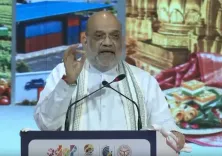
Jal Shakti Minister Paatil briefs media on Kalpsar Project push
Synopsis
Union Jal Shakti Minister C. R. Paatil has shared details of a media interaction on the Kalpsar Project, highlighting India-Netherlands technical cooperation to accelerate Gujarat's proposed Gulf of Khambhat dam under PM Modi's leadership.
Key Takeaways
Paatil , Union Jal Shakti Minister, held a media interaction on 25 September 2026 focused on Gujarat's Kalpsar Project .
The Kalpsar Project proposes a dam across the Gulf of Khambhat to create a freshwater reservoir for irrigation, drinking water, and power generation.
Paatil highlighted India-Netherlands technical cooperation as a key driver of the project's current momentum.
The project concept dates to the 1980s , with a detailed project report prepared in the early 2000s .
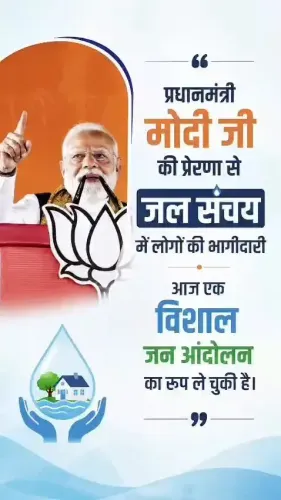
PM Narendra Modi 's guidance and leadership was explicitly cited as the backbone of the push to accelerate the project.
Stakeholders include Gujarat farmers and coastal communities who depend on improved water storage infrastructure.
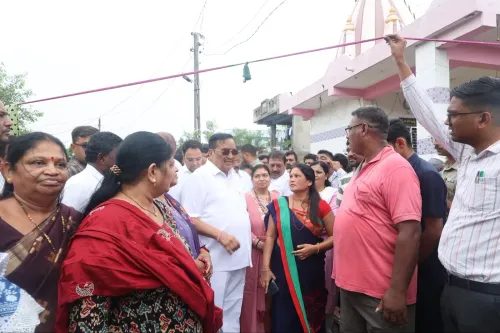
A decades-old dream of taming the Gulf of Khambhat with a colossal dam is moving back into the spotlight. Union Jal Shakti Minister C. R. Paatil on Friday, 25 September 2026 shared highlights of a media interaction on Gujarat's ambitious Kalpsar Project, signalling fresh momentum behind one of India's most complex water-infrastructure proposals.
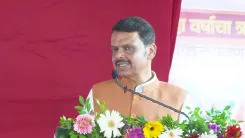
In his post, Paatil wrote: 'गुजरात की महत्वाकांक्षी 'कल्पसर परियोजना' को लेकर मीडिया साथियों से संवाद की एक झलक' — 'A glimpse of the conversation with media colleagues on Gujarat's ambitious Kalpsar Project.' He noted that efforts are being made to accelerate the project through India-Netherlands cooperation under the guidance and leadership of Prime Minister Narendra Modi.
What the Kalpsar Project would actually do
The concept is staggering in scale: a dam stretching across the Gulf of Khambhat off Gujarat's western coast, designed to create a massive freshwater reservoir that feeds irrigation, drinking water supply, and power generation for millions in one of India's most water-stressed regions. The idea first surfaced in the 1980s, and a detailed project report was prepared in the early 2000s — but the project has spent years waiting for the right confluence of political will, financing, and technical expertise.
Gujarat's farmers and coastal communities have long been promised relief from chronic water scarcity. The Kalpsar reservoir, if built, would fundamentally alter the hydrology of western India's most agriculturally and industrially active coastline.
Where the Netherlands fits in
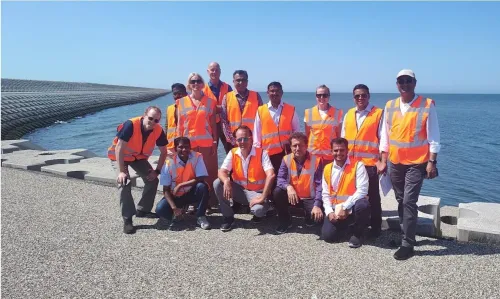
Few countries on earth know more about building barriers against the sea than the Netherlands. Dutch engineers have spent centuries perfecting dikes, tidal barriers, and freshwater-management systems — and India's Jal Shakti Ministry has been reaching for that expertise. The India-Netherlands technical cooperation cited by Paatil fits a recognisable pattern: Delhi increasingly pairing ambitious coastal and river infrastructure projects with Dutch engineering partnerships to sharpen feasibility work and unlock project finance.
For a project as technically demanding as Kalpsar — a tidal estuary dam of this scale has no direct Indian precedent — external hydraulic engineering expertise is not optional. It is foundational.
Modi's Gujarat legacy and the political weight behind the revival
Prime Minister Modi, as Gujarat's Chief Minister for over a decade, was closely associated with the state's water-infrastructure ambitions, including canal networks under the Sardar Sarovar system. His continued backing, explicitly invoked by Paatil, lends the Kalpsar revival considerable political heft at the Centre. Paatil himself, as a former BJP Gujarat state president, brings both local political authority and direct ministerial command over water policy to the table — a rare alignment.
The key questions now: Has a revised feasibility study been commissioned? Has a joint India-Netherlands working group produced actionable outcomes? And will the project find a line in the next Union Budget or Gujarat state budget? Paatil's media outreach is, at the very least, a signal that those conversations are no longer happening behind closed doors.
The Gulf of Khambhat has waited forty years. The minister just told the cameras it will not wait much longer.
Point of View
Framing India as a serious player in complex hydraulic infrastructure. If a revised feasibility study or joint working group report emerges, Kalpsar could shift from aspiration to active project in the next fiscal calendar.
NationPress
25 Sept 2026
Frequently Asked Questions
What is the Kalpsar Project in Gujarat?
The Kalpsar Project is a proposed dam across the Gulf of Khambhat in Gujarat that would create a large freshwater reservoir for irrigation, drinking water supply, and power generation. The concept dates to the 1980s and a detailed project report was prepared in the early 2000s.
Why is the Netherlands involved in the Kalpsar Project?
The Netherlands has world-leading expertise in hydraulic engineering, dikes, and tidal barriers. India's Jal Shakti Ministry has partnered with Dutch agencies to bring technical expertise to the Kalpsar Project, which involves building a tidal estuary dam of unprecedented scale in India.
What did C. R. Paatil say about the Kalpsar Project?
On 25 September 2026, Union Jal Shakti Minister C. R. Paatil shared highlights of a media interaction on the Kalpsar Project, stating that efforts are being made to accelerate it through India-Netherlands cooperation under the guidance of Prime Minister Narendra Modi.
Who benefits from the Kalpsar Project?
The primary beneficiaries are Gujarat's farmers and coastal communities who face chronic water scarcity. The reservoir would improve irrigation coverage, secure drinking water supply, and generate power for western India's heavily populated and industrially active coastline.
How long has the Kalpsar Project been in planning?
The Kalpsar Project concept first emerged in the 1980s. A detailed project report was prepared in the early 2000s, but the project has remained in a prolonged planning and approval phase for decades.