Jal Shakti Minister Paatil flags new CHC in Varanasi's Gajokhar
Synopsis
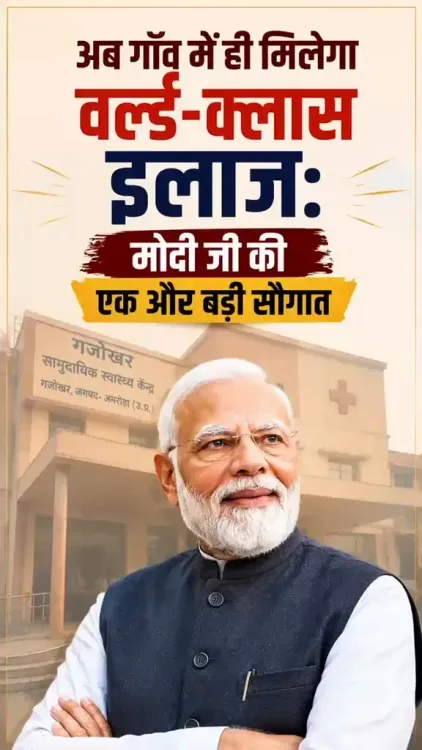
Union Jal Shakti Minister C. R. Paatil announced the completion of a new community health centre in Gajokhar, Varanasi, saying it will spare rural residents from travelling to cities for treatment, citing PM Modi's vision for expanding healthcare access.
Key Takeaways
Union Jal Shakti Minister C.
Paatil announced on 21 July 2026 that a new community health centre in Gajokhar, Varanasi is ready.
The facility is intended to provide high-tech medical services to residents of Gajokhar and surrounding villages , reducing the need to travel to distant cities.
Varanasi is Prime Minister Narendra Modi 's parliamentary constituency and has received sustained central government investment in health and infrastructure since 2014 .
The development aligns with the Ayushman Bharat programme and National Health Mission goals of strengthening rural health infrastructure across Uttar Pradesh .
Adequate staffing and equipment commissioning will be critical to the centre becoming fully operational and serving its target population.
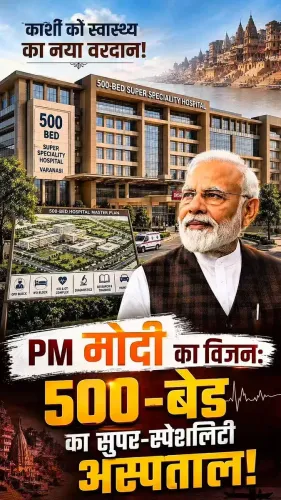
Union Jal Shakti Minister C. R. Paatil on Tuesday, 21 July 2026, highlighted the completion of a modern community health centre in Gajokhar, Varanasi, crediting the development to Prime Minister Narendra Modi's vision for expanding world-class healthcare to both urban and rural parts of the ancient city.
Context
In his post, Minister Paatil wrote: 'आदरणीय प्रधानमंत्री जी के विजन से, आज काशी के शहरी इलाकों के साथ-साथ ग्रामीण क्षेत्रों में भी विश्वस्तरीय स्वास्थ्य सुविधाओं का विस्तार हो रहा है' — 'Under the vision of the honourable Prime Minister, world-class health facilities are today being expanded not just in urban Kashi but also in its rural areas.' He specifically pointed to the newly built facility in Gajokhar as an example of this push.
The post noted that residents of Gajokhar and surrounding villages would no longer need to travel to distant cities for treatment, as high-tech medical facilities have been made available within their own region. Paatil concluded with the devotional phrase 'Har Har Mahadev', a common invocation associated with Varanasi, the seat of Lord Shiva.
Policy Backdrop
Varanasi is the parliamentary constituency of Prime Minister Narendra Modi and has been the focus of sustained central government investment in health, roads, and sanitation since 2014. The broader policy push aligns with the Ayushman Bharat programme, launched in 2018, which sought to expand access to primary and secondary healthcare by establishing Health and Wellness Centres across rural India.
The National Health Mission has also funded upgradation of community health centres across Uttar Pradesh since 2013, aiming to strengthen rural health infrastructure and reduce the patient burden on district and tertiary hospitals. Community health centres serve as the second tier of India's public health delivery system, typically catering to populations of around one lakh in rural areas.
Stakeholders and Impact
The immediate beneficiaries are residents of Gajokhar and the cluster of villages in its vicinity within Varanasi district. For rural families, the absence of a nearby facility often means delayed diagnosis, higher out-of-pocket expenditure on transport, and loss of wages — problems a functional community health centre is designed to address.
The development also carries political salience: Varanasi has been showcased by the BJP as a model of constituency-level transformation under central government stewardship, and healthcare infrastructure announcements in the district consistently feature in the party's outreach to rural voters in Uttar Pradesh.
What's Next
The operational rollout of the Gajokhar centre — including staffing, equipment commissioning, and patient utilisation — will determine whether the facility delivers on its stated promise of reducing dependence on city hospitals. Analysts and local health advocates will watch whether the centre is adequately staffed with doctors and paramedics, a persistent challenge for rural health posts across Uttar Pradesh.
Further infrastructure announcements for Varanasi's rural belt are likely as the central government continues to position the constituency as a flagship of its development agenda ahead of future electoral cycles.
Point of View
Not health — to amplify a healthcare facility announcement underscores the party's broad mobilisation of central leadership voices around Varanasi development. The post arrives at a time when rural healthcare delivery in Uttar Pradesh remains a politically sensitive issue, making such announcements both a policy signal and an electoral asset. Whether the facility translates from ribbon-cutting to sustained service delivery will be the real measure of the initiative.
NationPress
21 Jul 2026
Frequently Asked Questions
What is the new community health centre in Gajokhar, Varanasi?
A newly constructed community health centre in Gajokhar , a village in Varanasi district , has been completed to provide modern medical facilities to rural residents, as announced by Union Minister C. R. Paatil on 21 July 2026.
Who announced the Gajokhar health centre?
Union Jal Shakti Minister C. R. Paatil , a senior BJP leader, announced the completion of the facility on his official X account, crediting the development to PM Narendra Modi 's vision.
How does this health centre benefit Varanasi villages?
Residents of Gajokhar and nearby villages will now have access to high-tech medical services locally, removing the need to travel to larger cities for treatment and reducing costs and delays.
What government schemes fund rural health centres in Uttar Pradesh?
The National Health Mission and the Ayushman Bharat programme are the primary central government frameworks funding the construction and upgradation of community health centres across Uttar Pradesh .
Why does Varanasi receive so many central government development projects?
Varanasi is the parliamentary constituency of Prime Minister Narendra Modi and has been a flagship site for central government infrastructure investment — spanning health, roads, and sanitation — since 2014 .