Jharkhand Municipal Elections: Leaders Call for Voter Engagement
Synopsis
As Jharkhand's municipal polls unfold, influential leaders including the Governor and local MPs have cast their votes, passionately urging citizens to engage in this vital democratic process. Their calls for participation highlight the significance of local governance and community welfare.
Key Takeaways
Voting is a fundamental right and civic duty .
Participation in local elections impacts community development .
Political leaders are emphasizing the importance of informed voting .
Security measures are in place for a smooth voting process .
Political party support is evident despite non-party election status .
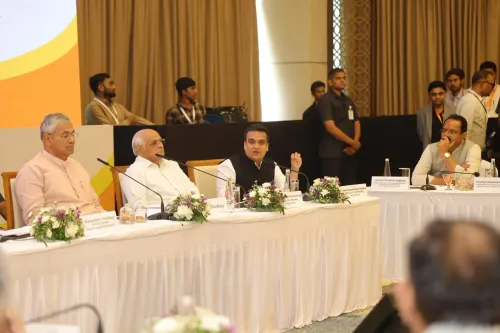
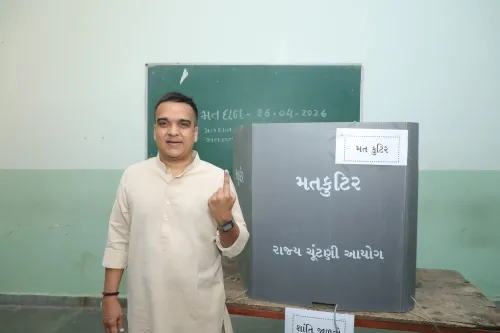
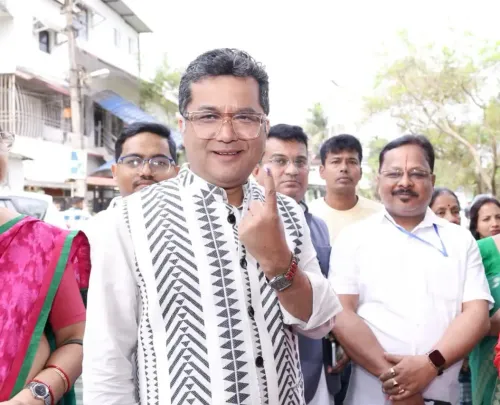
Ranchi, Feb 23 (NationPress) As the electoral process unfolded across 48 municipal entities in Jharkhand on Monday, key figures—including the Governor, Members of Parliament, and state ministers—cast their votes and urged the public to engage wholeheartedly in the democratic exercise.
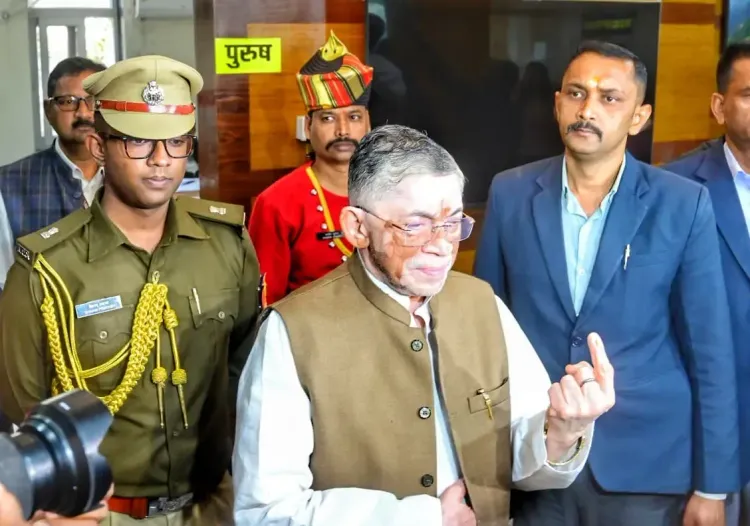
Governor Santosh Kumar Gangwar voted at a polling station located on the Administrative Training Institute grounds in Ranchi. In an address to the media, he emphasized that local elections are pivotal to grassroots development and encouraged voters to choose representatives who prioritize the welfare of their communities and the state. He reminded citizens that while selecting a candidate is a personal choice, the act of voting is a communal duty.
Godda MP Nishikant Dubey voted alongside his family in the Deoghar Municipal Corporation area. He shared a snapshot on social media to motivate citizens to exercise their democratic rights. However, he expressed concerns regarding the reliance on ballot papers, asserting that this outdated method could hinder the state's developmental pace. Nevertheless, he voiced confidence in the candidates backed by the BJP.
Hazaribagh MP Manish Jaiswal also participated in the voting process, calling the election a crucial chance for advancing development, cleanliness, and transparency in the area. He encouraged voters with the slogan—First vote, then refreshment.
Minister Sudivya Kumar cast his vote in Giridih, while State Agriculture, Animal Husbandry, and Cooperation Minister Shilpi Neha Tirkey voted at Sant Ajay Middle School in Dahisot Banhora. They highlighted the importance of voting as both a right and a responsibility, particularly urging young voters to take part. Through their social media platforms, they advocated for the election of informed, experienced, and visionary leaders in urban local governance.
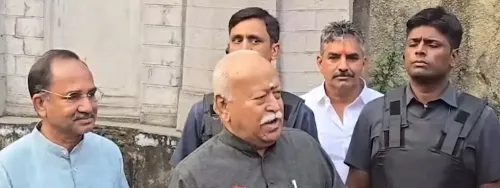
On another note, Union Minister of State for Defence and Ranchi MP Sanjay Seth accused the electoral process of significant mismanagement. After casting his vote, he claimed that the use of a single ballot box for both mayor and ward councillor positions seemed to be part of a “conspiracy.” Seth arrived at the polling station on a motorcycle and queued like an ordinary citizen before voting.
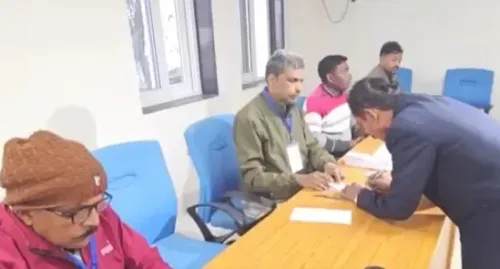
The voting for municipal government formation in 48 urban local bodies commenced at 7 a.m. under stringent security measures. Enthusiastic voters began lining up at 4,304 polling stations statewide from early morning, with polling set to continue until 5 p.m.
Over 562 candidates are contesting for mayor and chairman roles, while 5,562 candidates aim for ward councillor positions.
Unopposed elections for ward councillor posts have been noted in 38 wards across 16 municipal entities. The total count of wards in all municipal bodies is 1,087.
The fate of these candidates will be determined in 8,678 ballot boxes, with vote counting scheduled to start at 8 a.m. on February 27.
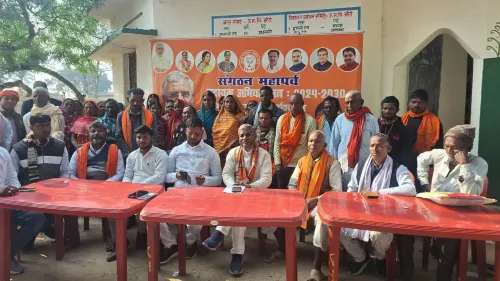
A total of 43,33,574 voters are eligible to participate, comprising 22,07,203 male, 21,26,227 female, and 144 third-gender voters. Although the elections are officially conducted on a non-party basis, political parties have provided support to various candidates across municipal regions and have actively campaigned.
The voting is occurring in nine municipal corporations—Ranchi, Dhanbad, Deoghar, Adityapur, Chas, Medininagar, Hazaribagh, Giridih, and Mango—along with 20 municipal councils and 19 nagar panchayats.
Point of View
Underscoring the importance of grassroots governance and voter engagement. The electoral process aims to foster transparency and development at a local level, showcasing the democratic commitment of both leaders and citizens.
NationPress
17 Sept 2026
Frequently Asked Questions
What are the key dates for the Jharkhand municipal elections?
Voting commenced on February 23, with counting of votes scheduled to begin at 8 a.m. on February 27.
How many voters are eligible in this election?
A total of 43,33,574 voters are eligible to cast their votes, including various demographics.
How many candidates are contesting in these elections?
Over 562 candidates are vying for mayor and chairman posts, while 5,562 candidates are competing for ward councillor positions.
Which municipalities are participating in these elections?
Voting is taking place in nine municipal corporations, along with numerous municipal councils and nagar panchayats.
What is the significance of these local elections?
These elections are crucial for grassroots development and promoting civic engagement in local governance.