Jitendra Singh Highlights Lavender Boom for Rural Women in Doda
Synopsis
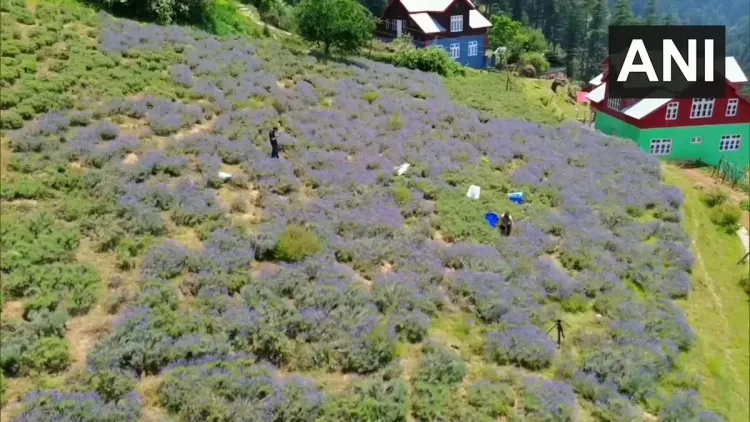
Union Minister Dr. Jitendra Singh on 26 June 2026 celebrated the Purple Revolution's lavender boom in Doda, Jammu and Kashmir, highlighting how rural women are driving aromatic crop cultivation under the CSIR Aroma Mission to build new livelihoods in the Himalayan district.
Key Takeaways
Jitendra Singh posted on 26 June 2026 celebrating the Purple Revolution and a lavender boom in Doda, Jammu and Kashmir .
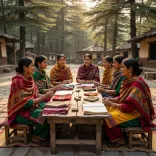
Rural women in Doda are central participants in lavender cultivation, harvesting, and essential oil production under the initiative.
The CSIR Aroma Mission , launched in 2016 , provides the institutional framework linking scientific bodies with farmers and self-help groups.
Lavender was identified as a priority diversification crop in Jammu and Kashmir after 2019 , replacing lower-value traditional produce.
Expansion of distillation units and market linkage programmes under the Aroma Mission is expected in 2026-27 .
The Doda model is being watched as a potential template for other districts in Jammu and Kashmir with similar agro-climatic profiles.
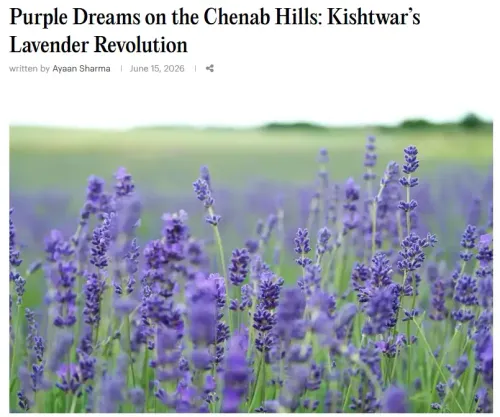
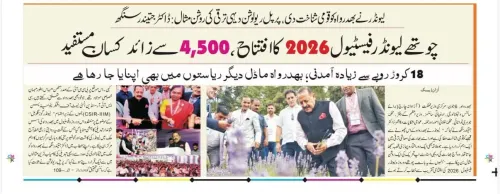
Union Science and Technology Minister Dr. Jitendra Singh on Friday, 26 June 2026, spotlighted the growing success of the Purple Revolution in Doda, Jammu and Kashmir, drawing attention to how lavender cultivation is transforming livelihoods for rural women in the Himalayan district.
Context
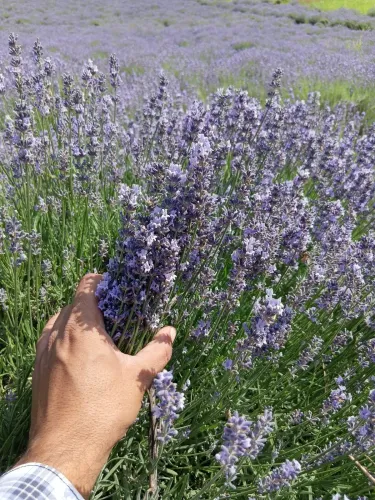
The minister's post, shared on X, celebrated rural women as active participants in what he called a 'lavender boom' in Doda. The Purple Revolution is a government-backed initiative to expand lavender farming for essential oil production, positioning aromatic crops as a high-value alternative to traditional low-yield agriculture in the region. The post was accompanied by a video, underscoring the on-ground momentum of the campaign.
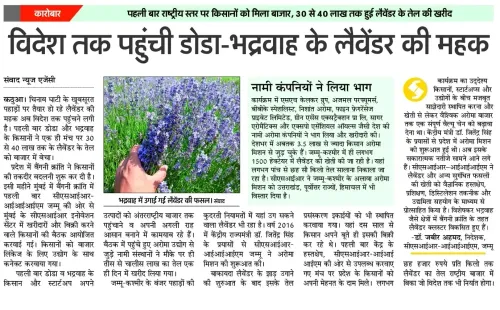
Doda was among the first districts in Jammu and Kashmir where lavender cultivation was scaled up as part of a broader agricultural diversification push. Its terrain and climate make it particularly suited to aromatic crops, and the district has since become a symbol of the Purple Revolution's reach into remote hill communities.
Policy Backdrop
The Purple Revolution draws its institutional backbone from the CSIR Aroma Mission, launched in 2016 by the Council of Scientific and Industrial Research to expand the area under aromatic and medicinal crops and build essential oil value chains across India. The mission focuses on technology transfer, farmer training, and market linkage — tools that have proved especially relevant in Jammu and Kashmir.
After 2019, the Jammu and Kashmir administration identified lavender as a priority crop for agricultural diversification, with a specific focus on women-led enterprises in Doda and neighbouring districts. Self-help groups were brought into the fold, connecting scientific institutions with grassroots producers to create processing and marketing infrastructure. Dr. Jitendra Singh has been a consistent advocate for this model, frequently highlighting it as a blueprint for post-reorganisation economic development in the Union Territory.
Stakeholders and Impact
Rural women in Doda stand at the centre of this story. By participating in lavender cultivation, harvesting, and distillation, women's self-help groups have gained access to a cash crop with demand in the essential oils, cosmetics, and wellness industries. The model reduces dependence on subsistence farming and integrates smallholders into formal supply chains.
Farmers across the Himalayan belt of Jammu and Kashmir have also benefited from the crop-shift effort, which replaces low-value traditional produce with aromatic plants better suited to the terrain. The broader pattern mirrors similar central-mission-driven crop transitions in other hill states aimed at enhancing farmer incomes through scientific agriculture.
What's Next
Attention in 2026-27 will turn to the rollout of additional distillation units and expanded market linkage programmes under the CSIR Aroma Mission. Policymakers and stakeholders are also watching whether the Doda model can be replicated in other districts of Jammu and Kashmir with comparable agro-climatic conditions. The Purple Revolution's next phase may well determine how many more rural households — particularly women-headed ones — can be brought into the lavender economy.
Point of View
Where the Centre has sought visible development wins. By foregrounding rural women as beneficiaries, the government frames the aromatic crop push as both an economic and a social empowerment story. The CSIR Aroma Mission, often cited by the minister, represents a rare convergence of science-ministry priorities with ground-level agricultural policy — making Doda a showcase district. Whether the model scales beyond its current footprint will be the real test of the initiative's depth.
NationPress
26 Jun 2026
Frequently Asked Questions
What is the Purple Revolution in India?
The Purple Revolution is a government-backed initiative to promote lavender cultivation for essential oil production in the Himalayan belt, particularly in Jammu and Kashmir, as a high-value alternative to traditional crops.
What is the CSIR Aroma Mission?
The CSIR Aroma Mission, launched in 2016 by the Council of Scientific and Industrial Research, is a national programme to expand aromatic and medicinal crop farming, transfer technology to farmers, and develop essential oil value chains across India.
Why is Doda famous for lavender farming in India?
Doda district in Jammu and Kashmir was among the first areas where lavender cultivation was scaled up under the Purple Revolution, owing to its suitable terrain and climate, and has become a symbol of the initiative's success.
How does lavender farming help rural women in Jammu and Kashmir?
Rural women in Doda participate in lavender cultivation, harvesting, and distillation through self-help groups, gaining access to a cash crop with demand in the essential oils, cosmetics, and wellness industries and reducing dependence on subsistence farming.
What is Dr. Jitendra Singh's role in the Purple Revolution?
As Union Minister of State (Independent Charge) for Science and Technology, Dr. Jitendra Singh has been a prominent advocate for scientific floriculture and aromatic crop schemes in Jammu and Kashmir, regularly highlighting the Purple Revolution as a development model.