CM Shivakumar Links Karnataka Guarantees to Voter Registration
Synopsis
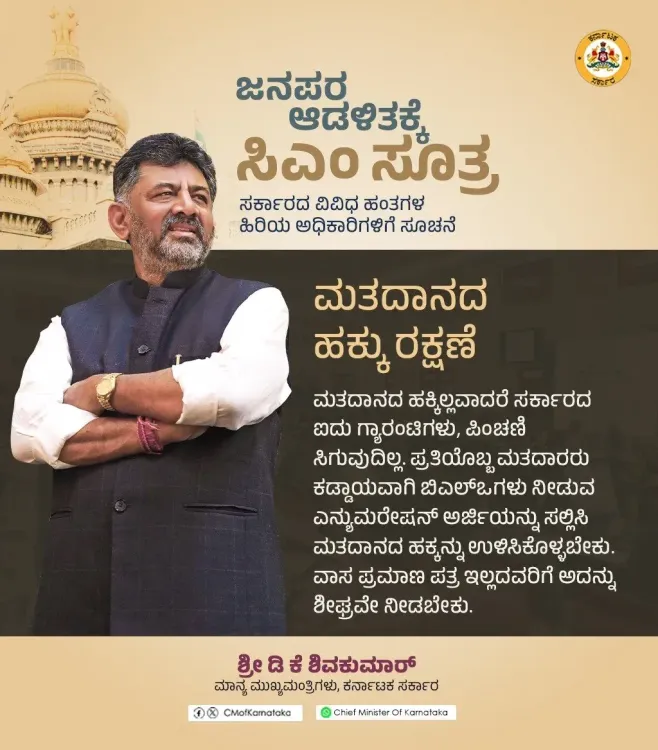
The Chief Minister's Office of Karnataka has announced that residents without valid voter registration will be ineligible for the state's five guarantee schemes and pensions. Senior officials have been directed to ensure all voters submit BLO enumeration forms and that residence certificates are issued swiftly to those lacking them.
Key Takeaways
The Chief Minister's Office of Karnataka issued nine governance directives attributed to D K Shivakumar on 15 June 2026 .
Residents without voting rights will be ineligible for the five guarantee schemes and state pension benefits.
Every voter must mandatorily submit the enumeration form provided by Booth Level Officers (BLOs) to retain electoral rights and welfare access.
Officials have been directed to issue residence certificates quickly to residents who do not possess them.
The five guarantees were the Congress party's flagship election promises from the May 2023 Karnataka assembly elections .
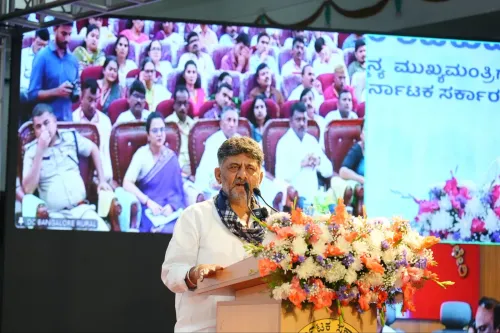
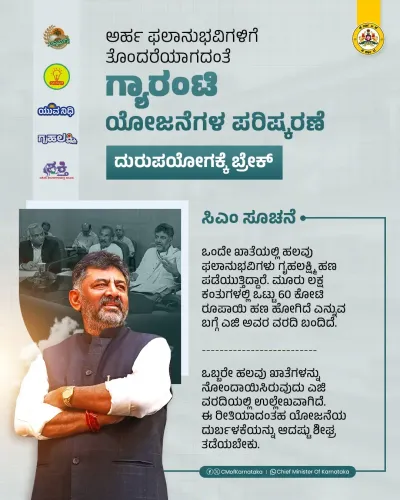
The Chief Minister's Office of Karnataka on Monday, 15 June 2026 shared nine governance directives attributed to Deputy Chief Minister D K Shivakumar, with the most significant being a direct linkage between voter registration and access to the state government's flagship welfare schemes and pensions.
Context
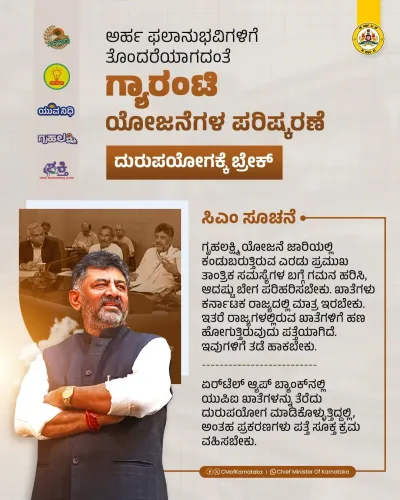
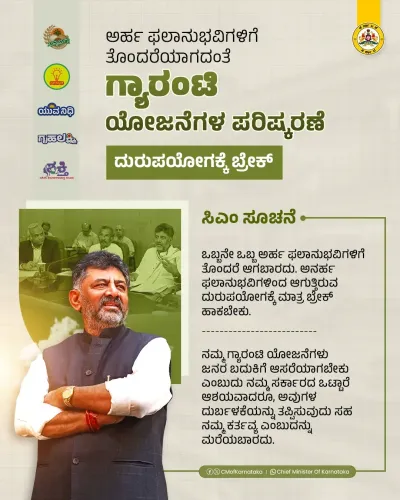
The post, shared under the hashtag #GuaranteeSarkara, outlines instructions issued to senior officials across various levels of the Karnataka government. The central directive states that residents who do not hold voting rights will be ineligible for the government's five guarantee schemes as well as pension benefits. Voters are required to mandatorily submit the enumeration form provided by Booth Level Officers (BLOs) to retain their electoral rights.
The directive also instructs officials to expeditiously issue residence certificates to those who do not possess them — a document necessary to establish domicile for both voter registration and welfare access.
Policy Backdrop
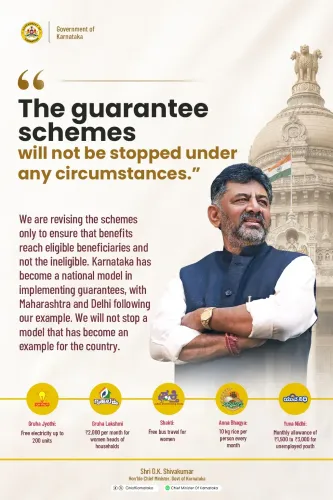
The five guarantee schemes were the centrepiece of the Karnataka Congress manifesto ahead of the May 2023 assembly elections. They include free electricity units for households, cash transfers to women heads of families, and other subsidies that have since been rolled out through successive budget allocations. Collectively, these programmes reach millions of beneficiaries across the state.
Booth Level Officers are Election Commission of India-appointed field functionaries responsible for maintaining and updating electoral rolls at the grassroots level. Periodic enumeration drives — in which BLOs visit households and collect forms — are a standard mechanism to add new voters, remove duplicates, and update addresses ahead of elections.
Stakeholders and Impact
The directive directly affects residents who may have shifted addresses, migrants, and those without formal residence documentation — groups that are often the most vulnerable and simultaneously the most reliant on welfare support. By tying benefit eligibility to voter-roll status, the administration is creating a strong incentive for such residents to complete the enumeration process.
Pension recipients — including those under old-age, widow, and disability pension schemes — are also explicitly mentioned as being subject to this condition. Officials have been directed to fast-track the issuance of residence certificates to remove a key documentary barrier for eligible residents.
What's Next
Attention will now turn to the Chief Electoral Officer of Karnataka and district administrations for operational guidance on how the BLO enumeration drive will be coordinated with welfare delivery databases. The completion timeline of the current enumeration exercise and any formal government order codifying the benefit-linkage condition will be closely watched by both civil society groups and political observers. How the administration handles edge cases — particularly for residents who are eligible voters but lack residence certificates — will be a key test of the policy's implementation.
Point of View
It simultaneously strengthens the electoral roll ahead of future polls and deepens citizen engagement with the 'Guarantee Sarkara' brand. The risk, however, lies in due-process concerns: if implementation is uneven, the most marginalised residents — those without residence certificates — could find themselves temporarily cut off from the very safety nets they depend on. How swiftly and equitably officials resolve the documentation gap will determine whether this directive is remembered as smart governance or coercive compliance.
NationPress
14 Sept 2026
Frequently Asked Questions
Will I lose my Karnataka guarantee scheme benefits if I am not on the voter list?
According to the directive issued by the Chief Minister's Office of Karnataka, residents who do not hold voting rights will not be eligible for the state's five guarantee schemes or pension benefits. You must submit the enumeration form provided by your local Booth Level Officer to retain voter status and continue receiving these benefits.
What is the BLO enumeration form and why is it important in Karnataka?
A Booth Level Officer (BLO) is an Election Commission of India-appointed official who maintains voter rolls at the local level. The enumeration form they provide is used to verify and update your voter registration details. The Karnataka government has now made submitting this form mandatory to remain eligible for state welfare schemes.
What are Karnataka's five guarantee schemes?
The five guarantee schemes are welfare programmes promised by the Karnataka Congress before the May 2023 assembly elections. They include free electricity units for households, cash transfers to women heads of families, and other subsidies that were rolled out after the government took office in May 2023.
What if I do not have a residence certificate in Karnataka?
The directive instructs government officials to issue residence certificates quickly to residents who do not have them. A residence certificate is needed to establish domicile for voter registration and welfare benefit eligibility, so officials have been asked to prioritise its issuance.
Who issued the nine governance directives mentioned in the Karnataka CMO post?
The directives are attributed to D K Shivakumar and were shared by the official Chief Minister's Office of Karnataka account on 15 June 2026 . They are addressed to senior officials across various levels of the state government.