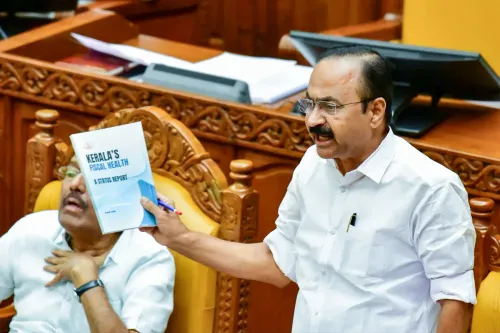
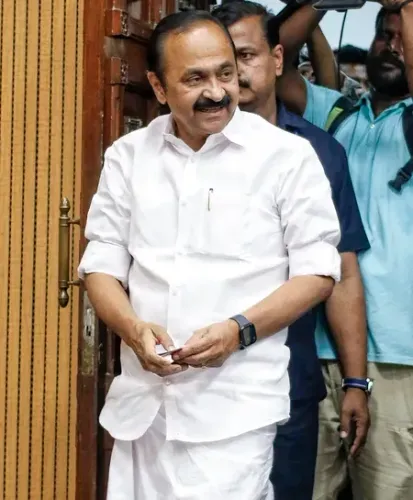
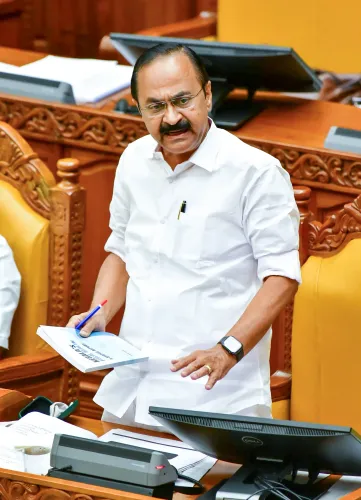
Kerala CM Satheesan briefed on data-driven plan to recover hidden tax revenues
Synopsis
With Kerala sitting on over ₹5 lakh crore in public debt and a Budget due on 19 June, former Principal Accountant General Dr Biju Jacob told CM Satheesan that the state doesn't need new taxes — it needs to capture the ones already owed. A 2014 CAG audit found ₹12,282 crore in uncaptured tax from a sample alone, nearly 55% of actual collections. The proposal: a technology-driven IS audit that could unlock crores in recoverable revenue within months.
Key Takeaways
Satheesan met former Principal Accountant General Dr Biju Jacob on 15 June to hear a technology-driven tax recovery proposal.
Kerala's public debt stands at over ₹5 lakh crore ; the state Budget is scheduled for 19 June .
A 2014 CAG IS audit sample found ₹12,282 crore in uncaptured tax — nearly 55% of actual collections of ₹22,414 crore under KVAT, KGST, and CST.
The proposal covers fake registration detection, shell company networks, e-way bill mismatches, GST-IT data inconsistencies, and ERP audit trails.
Documented Kerala GST fraud cases include a ₹1,170 crore fake ITC fraud and a ₹580 crore tax evasion case.
Jacob said a coordinated audit by tax officials, CAG experts, and chartered accountants could be completed within months .
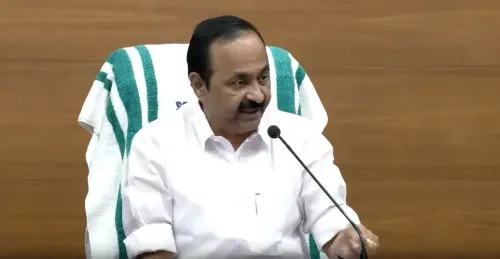
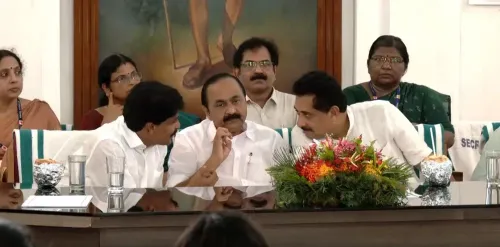
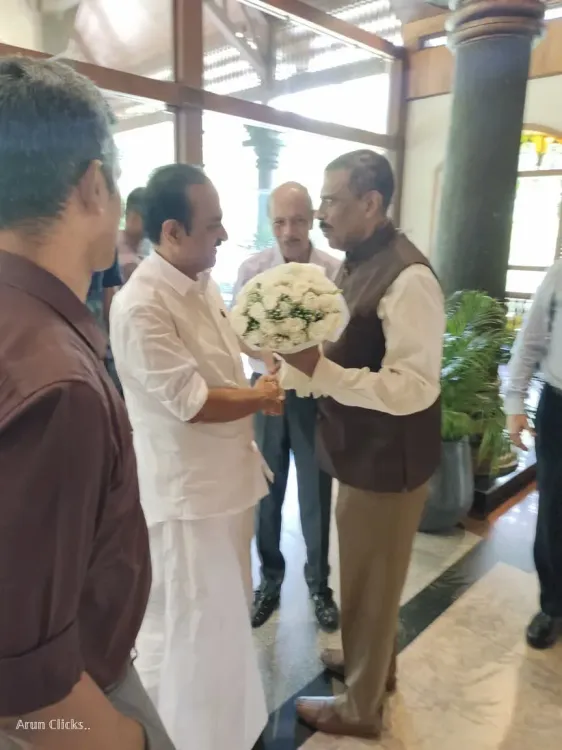
Kerala Chief Minister V.D. Satheesan on Monday, 15 June received a detailed fiscal roadmap from Dr Biju Jacob, the state's former Principal Accountant General, who argued that Kerala can significantly bolster its revenues through advanced data analytics and Information Systems (IS) audits — without levying any new taxes. The meeting in Thiruvananthapuram was attended by senior officials from the Finance and Tax departments.
Why the Timing Matters
The briefing comes at a fiscally critical moment: Kerala is carrying a public debt burden of over ₹5 lakh crore, and Chief Minister Satheesan — who also holds the Finance portfolio — is preparing to present his first Budget on 19 June. The proposal offers a politically palatable route to resource mobilisation, one that targets compliance gaps rather than hiking taxes on citizens.
The Core Argument: Revenue Is Already There
Dr Jacob's central contention is that Kerala's fiscal problem is not a shortage of taxable activity, but a failure to fully capture taxes already legally owed to the state. He told the Chief Minister that the immediate challenge lies in identifying the tax base that currently falls outside the assessment framework — and that technology-led scrutiny can close that gap.
To substantiate the scale of the problem, Jacob cited findings from a CAG-related IS audit study conducted in 2014. Against actual tax collections of ₹22,414 crore under KVAT, KGST, and CST, sample analysis alone identified an additional ₹12,282 crore — nearly 55 per cent of actual collections — as potential 'invisible tax' that had gone uncaptured. Jacob noted that a full-data analysis would likely have revealed an even larger gap.
What the Proposed Audit Would Cover
'I have proposed a solution which is a comprehensive, technology-driven IS audit covering areas such as fake registration detection, shell company networks, suppression of turnover, e-way bill mismatches, GST and Income Tax data inconsistencies, refund anomalies and ERP audit trails,' Jacob said.
He also pointed to specific fraud cases already documented in Kerala, including a ₹1,170 crore fake registration and input tax credit fraud case and a separate instance of ₹580 crore in tax evasion, as evidence that recoverable revenue runs into thousands of crores. Jacob proposed a coordinated audit involving tax officials, CAG experts, and chartered accountants — a process he said could be completed within months.
The Chief Minister's Response
According to Jacob, Satheesan gave him a patient hearing and was well-versed in the issues raised. The Chief Minister did not make any public statement on the proposal following the meeting.
What Comes Next
Whether the government incorporates IS audit mechanisms into its Budget framework on 19 June will be closely watched. If adopted, the approach could mark a structural shift in how Kerala pursues tax compliance — moving from periodic enforcement drives to a continuous, data-driven audit model. For a state under sustained fiscal pressure, the stakes of that decision are considerable.
Point of View
And the GST architecture has changed substantially since then; whether the same compliance gaps persist at comparable scale is an open question. More critically, Kerala has faced recurring enforcement drives that have not structurally resolved evasion — the real test is whether an IS audit framework gets institutionalised or remains a one-time exercise. A state that cannot sustain audit continuity will find that recoverable revenue estimates stay theoretical.
NationPress
24 Sept 2026
Frequently Asked Questions
What did former Principal Accountant General Dr Biju Jacob propose to Kerala CM Satheesan?
Dr Biju Jacob proposed a comprehensive, technology-driven Information Systems (IS) audit to identify and recover taxes already legally owed to Kerala but currently outside the assessment framework. The plan covers fake registration detection, shell company networks, e-way bill mismatches, GST and income tax data inconsistencies, and ERP audit trails — without imposing any new taxes.
How large is Kerala's uncaptured tax revenue, according to the CAG study cited?
A 2014 CAG-related IS audit sample found ₹12,282 crore in potential uncaptured tax against actual collections of ₹22,414 crore under KVAT, KGST, and CST — nearly 55% of actual collections. Dr Jacob noted that a full-data analysis would likely have revealed an even higher gap.
Why is this proposal significant ahead of Kerala's Budget on 19 June?
Kerala carries a public debt burden of over ₹5 lakh crore, and CM Satheesan is due to present his first Budget on 19 June. The IS audit proposal offers a route to resource mobilisation through improved tax compliance rather than new levies, making it politically and fiscally attractive at a sensitive juncture.
What major GST fraud cases in Kerala does the proposal reference?
Dr Jacob cited a ₹1,170 crore fake registration and input tax credit fraud case and a separate ₹580 crore tax evasion case in Kerala as evidence of the scale of recoverable revenue the state is currently missing.
How long would the proposed IS audit take to complete?
Dr Jacob said a coordinated audit involving tax officials, CAG experts, and chartered accountants could be completed within months, after which the government could begin identifying and recovering the revenue identified.