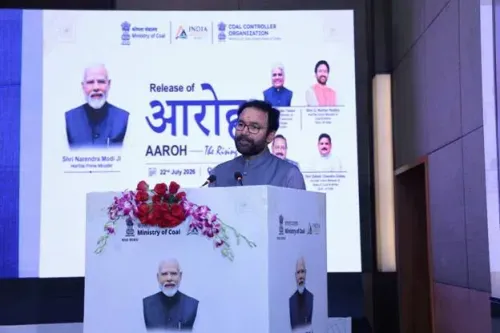
Kishan Reddy Launches AAROH Report, Pledges ₹40,000 Cr for Mine Closure
Synopsis
Union Coal and Mines Minister G. Kishan Reddy on 23 July 2026 launched the AAROH mine closure report and Coal NEER plants, announcing over ₹40,000 crore for mine closure with 25% earmarked for community development, backed by a partnership with Germany's GIZ.
Key Takeaways
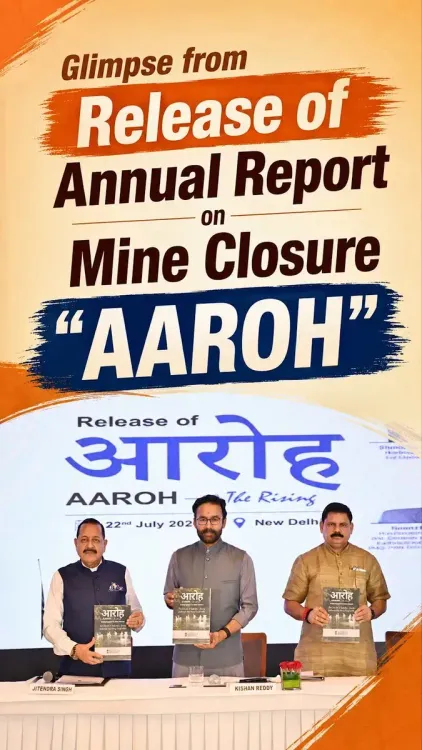
AAROH — India's first Annual Report on Mine Closure — was released on 23 July 2026 by Union Minister G.
Over ₹40,000 crore has been committed towards mine closure activities across India's coal sector.
25 per cent of the mine closure corpus is specifically earmarked for community development , including sustainable livelihoods and green ecosystems.
Coal NEER plants were launched to address water management and ecological restoration at post-mining sites.
A formal partnership with Germany's GIZ has been formalised to bring international expertise in scientific mine closure and land repurposing.
The initiative aligns with India's COP26 net-zero by 2070 pledge and the 2009 Mine Closure Guidelines framework.
Union Coal and Mines Minister G. Kishan Reddy on Thursday, 23 July 2026 unveiled the AAROH — Annual Report on Mine Closure, alongside the launch of Coal NEER plants and the formalisation of key partnerships with Germany's GIZ and industry stakeholders, signalling a strategic shift in how India approaches exhausted coal mines — from liability to opportunity.
Context
Posting on X, Minister Kishan Reddy declared that 'India is redefining mine closure as a pathway to sustainability, community empowerment and economic transformation.' He noted that more than ₹40,000 crore has been committed towards mine closure activities, with 25 per cent of that corpus earmarked specifically for community development — covering livelihoods, green ecosystems and local economic rebuilding in affected regions.
The event, which saw participation from the Ministry of Coal and the Ministry of Mines, was described by the minister as 'a new chapter in scientific mine closure and mine repurposing.' The AAROH report is positioned as an annual accountability document tracking progress on closure commitments across India's coal belt.
Policy Backdrop
India's formal mine closure framework dates to the 2009 Mine Closure Guidelines, which first mandated progressive restoration and the creation of escrow funds for environmental rehabilitation of exhausted mines. The framework gained renewed urgency after India's COP26 pledge in 2021 to reach net-zero emissions by 2070, placing coal mine closure and just transition at the centre of the country's long-term climate strategy.
The partnership with GIZ — Germany's federal development agency — brings international technical expertise in scientific closure methodologies, alternative land-use planning, and livelihood transition models. Germany itself has undertaken one of the world's most closely watched coal phase-out programmes, making it a credible knowledge partner for India's own transition efforts.
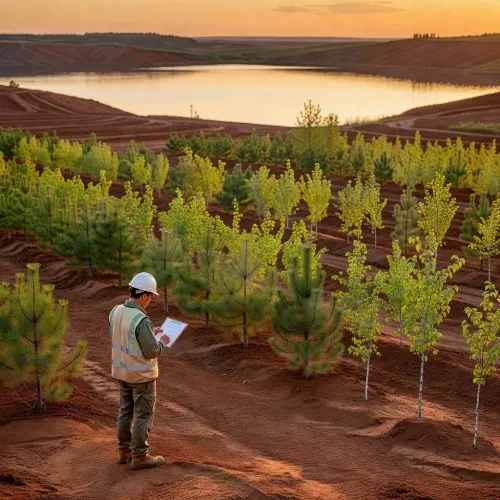
The introduction of Coal NEER plants — focused on water management and ecological restoration at mine sites — reflects a growing emphasis on treating post-mining land as a resource for green infrastructure rather than a remediation burden.
Stakeholders and Impact
Mining communities and coal workers in states such as Jharkhand, Chhattisgarh, Odisha and West Bengal stand to be the primary beneficiaries of the community development allocation. The 25 per cent earmark — drawn from the overall ₹40,000-crore-plus commitment — is intended to fund sustainable livelihoods, skill development, and green ecosystem creation in regions historically dependent on coal extraction.
Industry stakeholders who participated in the event are expected to play a role in implementing the new scientific closure norms, potentially through Coal India Limited subsidiaries and private mine operators who must comply with revised closure plans under the regulatory framework.
What's Next
The immediate focus will be on the disbursement timeline for the community development allocation and whether follow-up legislation or specific project tenders from Coal India will operationalise the new closure framework in the near term. The AAROH report's annual cadence suggests the government intends to create a public accountability mechanism, with each edition tracking measurable outcomes on restoration, community welfare and ecological recovery. As India continues to balance energy security with its climate commitments, the mine closure policy will serve as a critical test of whether a just transition for coal-dependent communities can be delivered at scale.
Point of View
000-crore commitment, with a ring-fenced community development tranche, is a direct response to concerns from coal-belt constituencies about post-mining economic collapse. By anchoring the framework to Germany's own coal transition experience, the government is also signalling to international climate forums that India's just-transition narrative has institutional depth. The annual AAROH report cadence will, however, be the real test: accountability mechanisms in India's extractive sector have historically been weak, and the credibility of this initiative will hinge on transparent, timely disbursement data.
NationPress
23 Jul 2026
Frequently Asked Questions
What is the AAROH report on mine closure?
AAROH — Annual Report on Mine Closure — is a new government document released by the Ministry of Coal to track and report progress on scientific mine closure, ecological restoration, and community development across India's coal mines. It was launched on 23 July 2026 by Union Minister G. Kishan Reddy.
How much money has India committed for mine closure?
India has committed over ₹40,000 crore towards mine closure activities, with 25 per cent of that amount — roughly ₹10,000 crore or more — specifically earmarked for community development in affected mining regions.
What is GIZ and why is it partnering with India on coal mines?
GIZ is Germany's federal development agency specialising in international cooperation. It is partnering with India's Ministry of Coal to provide technical expertise in scientific mine closure, land repurposing, and alternative livelihood models, drawing on Germany's own experience phasing out coal.
What are Coal NEER plants?
Coal NEER plants are a new initiative launched alongside the AAROH report focused on water management and ecological restoration at exhausted or closing coal mine sites, aimed at converting post-mining land into green infrastructure assets.
How does India's mine closure policy connect to its climate goals?
India's mine closure framework is directly linked to its COP26 commitment to achieve net-zero emissions by 2070. Scientific closure and mine repurposing are seen as key tools for a just transition — ensuring coal-dependent communities and ecosystems are not left behind as India diversifies its energy mix.