Ladakh statehood talks: Progress, deadlock and Sonam Wangchuk's role
Synopsis
Five years after the abrogation of Article 370, Ladakh's quest for constitutional protections and political representation has reached its most substantive phase — with an elected body, Article 371 safeguards, and direct elections all agreed in principle. The October round now holds the key, but a simmering internal power struggle risks derailing what could be a landmark settlement.
Key Takeaways
Centre-Ladakh talks on 9 September 2026 agreed in principle to a UT-level elected body with legislative, executive, and financial powers chosen by direct elections.
Constitutional protection for Ladakh's environment, culture, and land rights to be guaranteed under a special Article 371 provision, alterable only by a two-thirds parliamentary majority .
The Centre released ₹1.52 crore in compensation for September 2025 protest casualties; families of those killed received ₹15 lakh each.
The unresolved issue — dividing overlapping powers between Hill Councils and the new territorial body — has been referred to a consultative process, with answers due at the next round in October .
Ladakh groups signalled willingness to drop the statehood demand if the proposed legislative body meets requirements; the Centre retains control over law and order.
Senior Ladakhi leaders, including former MP Thupstan Chhewang , have urged negotiators to build on progress rather than risk disruption ahead of the October round.
Negotiations between the Centre and Ladakh's regional representatives have reached a critical juncture, with significant ground covered in the September 9, 2026 round of talks even as disagreements over the division of powers between Hill Councils and a proposed new territorial body threaten to stall progress. The talks, which began after years of agitation following the 2019 abrogation of Article 370, have produced substantive results — but also exposed fault lines over political ambition and the pace of resolution.
Background: Why Ladakh Began Demanding More
When Article 370 was abrogated on 5 August 2019, bifurcating Jammu and Kashmir into two Union Territories, a large section of Ladakh's population initially welcomed the move. For decades, Ladakhi leaders had argued that their region was sidelined in favour of Kashmir within the unified state structure. Climate activist Sonam Wangchuk at the time wrote on social media platform X: 'Ladakh thanks @narendramodi @PMOIndia for fulfilling Ladakh's longstanding dream. It was exactly 30 years ago in August 1989 that Ladakhi leaders launched a movement for UT status.'
Doubts, however, emerged quickly. Grievances centred on the region not being consulted before the abrogation, the creation of a Union Territory without a Legislature, the loss of four Legislative Assembly seats Ladakh previously held in the Jammu and Kashmir Assembly, and a growing perception that the region was being administered primarily to serve the Centre's interest in managing Kashmir rather than Ladakh's own development needs.
The Four Key Demands and Early Negotiations
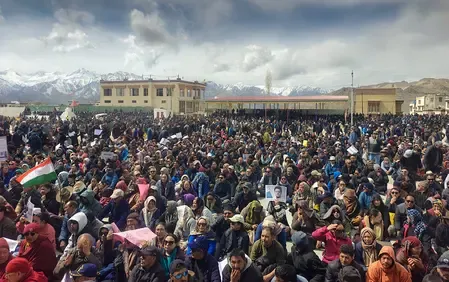
Protests crystallised around four core demands: elevation of Ladakh to full statehood; legal protection under the Sixth Schedule of the Constitution to safeguard land rights, culture and language; job reservations for local residents; and an additional Lok Sabha seat to ensure independent representation for both the Leh and Kargil regions.
The Ministry of Home Affairs responded by constituting a committee under the Minister of State for Home to examine the concerns and engage regional stakeholders. Ladakh was represented at the negotiating table by the Leh Apex Body (LAB) and the Kargil Democratic Alliance (KDA).
Earlier rounds of talks had already delivered tangible outcomes: reservations in government posts, a domicile framework, notification of five languages, and reservation of one-third of Hill Council seats for women.
What the September 9 Round Agreed
The September 9 round of talks produced a framework of significant scope. According to participants, the two sides agreed in principle to establish a UT-level elected body with legislative, executive, and financial powers, with members chosen through direct elections. Delimitation would be conducted separately for Ladakh, and constitutional protection for the region's environment, culture, heritage, land, and natural resources would be guaranteed through a special provision under Article 371 designed specifically for Ladakh — one that could not be altered without a two-thirds majority in Parliament.
In exchange, Ladakh's negotiating bodies indicated willingness to set aside the demand for full statehood, provided the proposed legislative body met their requirements. The Centre also released ₹1.52 crore as compensation for those killed or injured during protests in September 2025, with families of those killed receiving ₹15 lakh each.
Notably, the Union government retained hesitation over surrendering control of law and order, citing the region's sensitive strategic location adjacent to Jammu and Kashmir.
The Unresolved Question: Dividing Powers
The critical sticking point that prevented a final agreement was the division of powers between the existing Hill Councils and the new territorial body. Both institutions claimed jurisdiction over overlapping subjects — forests, land, and local administration — and no consensus formula emerged from the September round.
To break the deadlock, participants were given a set of eight to ten questions on the subject for consultation with local residents, with answers to be submitted ahead of the next round of talks scheduled for October. Ladakh Chief Secretary Ashish Kundra stated that the Centre had no intention of imposing a governance model unacceptable to the local population.
The LAB and KDA issued a joint statement after the talks acknowledging that the meeting 'furthered the in-principle understanding' reached in the May and July rounds. Former Ladakh MP Thupstan Chhewang described the September meeting as 'positive', adding that 'several positive developments and points of consensus discussed during the meeting were not brought before the people.'
Sonam Wangchuk's Role and the Risk of Disruption
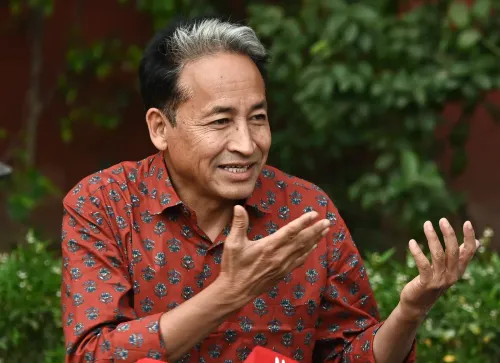
Activist Sonam Wangchuk, who rose to prominence through persistent hunger strikes and leveraged his public profile to join the negotiating team, has become a contested figure in the movement. He was arrested following clashes with police during a hunger strike in September 2025 that resulted in four deaths and several injuries, and spent six months in jail before being released in March 2026.
Following the September 9 talks, Wangchuk posted on X: 'Only tea was good in the meeting, otherwise no new decision' — a characterisation that senior Ladakhi leaders and the joint LAB-KDA statement directly contradicted. Critics argue this framing misrepresents the progress achieved and risks derailing the negotiation process ahead of the October round.
Senior figures from the region have urged Ladakhi leaders to consolidate the gains made rather than return to street agitation, warning that renewed unrest would not only undo negotiating progress but also delay panchayat and Hill Council elections — disrupting local development, especially for five newly created districts — and stall recruitment processes that directly affect Ladakh's youth.
The October round of talks will be pivotal: if the Hill Council power-sharing question is resolved, Ladakh could move swiftly toward a historic constitutional arrangement. Whether that window remains open will depend on the choices made by both negotiators and activists in the weeks ahead.
Point of View
Yet coverage has been dominated by one activist's social media post rather than the substantive agreement on an elected body and Article 371 protections. That framing distortion matters: it creates a public perception of failure where negotiators on both sides of the table saw progress. The harder question — how to split forest, land, and local administration powers between Hill Councils and a new territorial body — is genuinely unresolved and demands legal creativity, not street pressure. Five years of negotiations have produced real concessions from the Centre; the risk now is that internal political competition squanders them at the last mile.
NationPress
24 Sept 2026
Frequently Asked Questions
What was agreed in the September 9 Ladakh talks?
The Centre and Ladakh's representatives agreed in principle to establish a UT-level elected body with legislative, executive, and financial powers, with members chosen by direct elections. Constitutional protections for land, environment, culture, and heritage were also agreed under a special Article 371 provision that would require a two-thirds majority in Parliament to alter.
Why has Ladakh been agitating since 2019?
Ladakh was made a Union Territory without a Legislature after the abrogation of Article 370 on 5 August 2019, resulting in the loss of its four Assembly seats in Jammu and Kashmir. Residents also felt excluded from consultations on the decision and feared a loss of land rights, cultural protections, and adequate political representation.
What is the key unresolved issue before the October talks?
The main sticking point is how to divide powers — specifically over forests, land, and local administration — between the existing Hill Councils and the proposed new territorial body, which both institutions claim. Participants have been given a set of questions to consult local residents on, with answers due ahead of the October round.
What is Sonam Wangchuk's role in the Ladakh movement?
Sonam Wangchuk is a climate activist who leveraged his public profile to join the Ladakh negotiating team. He was arrested following clashes during a September 2025 hunger strike that left four people dead and spent six months in jail before his release in March 2026. His public characterisation of the September 9 talks as unproductive has been disputed by senior Ladakhi leaders and the joint statement of the Leh Apex Body and Kargil Democratic Alliance.
What happens if the October talks also stall?
A breakdown in October would delay panchayat and Hill Council elections currently on hold pending a final settlement, stall development funding for five newly created districts, and freeze recruitment processes affecting Ladakh's youth. Senior leaders from the region have warned that returning to street protests would erase the substantial progress already achieved.