Lalan Singh hails ISRO's NVS-03 navigation satellite launch
Synopsis
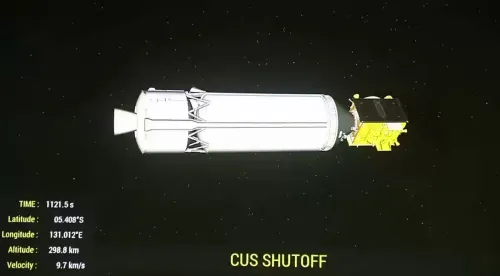
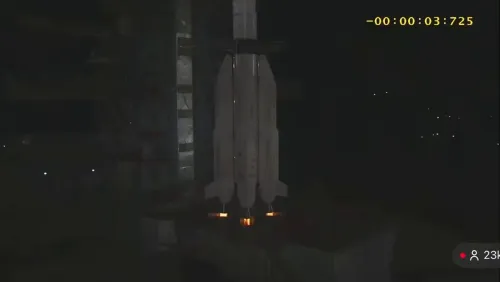
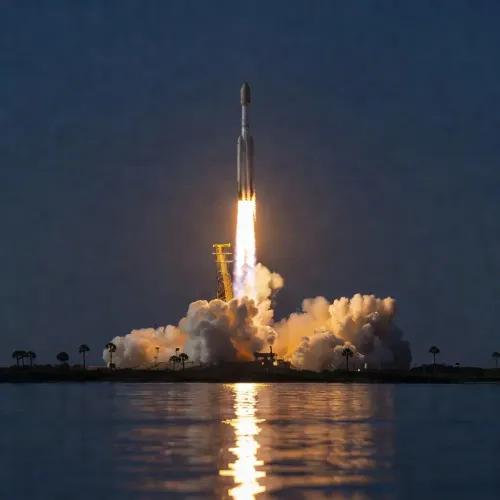
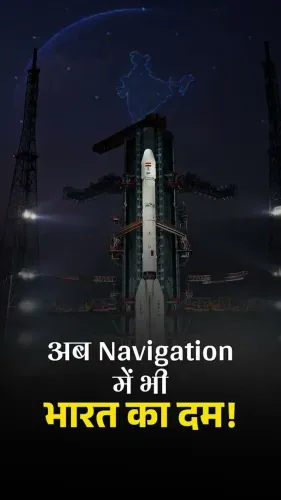
Union Minister Rajiv Ranjan Singh, known as Lalan Singh, congratulated ISRO scientists on 31 October 2026 for successfully launching the indigenous navigation satellite NVS-03, calling it a landmark for Atmanirbhar Bharat's scientific self-reliance.
Key Takeaways
Union Minister Lalan Singh publicly celebrated ISRO's launch of navigation satellite NVS-03 on 31 October 2026 .
NVS-03 is part of India's NavIC (Navigation with Indian Constellation), the country's indigenous alternative to GPS.
The NavIC programme began with the launch of IRNSS-1A in 2013 , marking over a decade of indigenous navigation development.
NavIC serves both civilian (transport, disaster management) and strategic/defence positioning needs.
The launch is framed under the Atmanirbhar Bharat campaign, which has positioned space technology as a key pillar of India's self-reliance since 2020 .
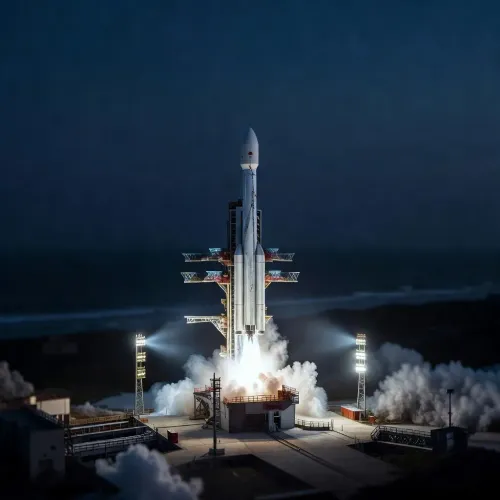
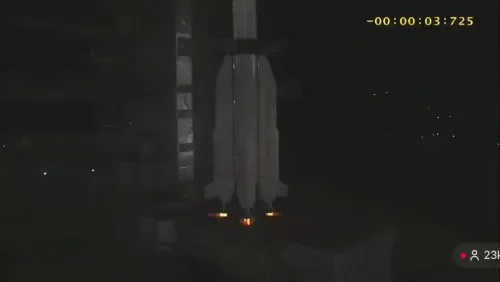
India's space ambitions just cleared another milestone. Union Minister Rajiv Ranjan Singh — popularly known as Lalan Singh — took to X on Saturday, 31 October 2026, to celebrate ISRO's successful launch of the indigenous navigation satellite NVS-03, calling it proof of India's scientific and technological self-reliance.
In his post, the minister wrote: 'भारत की एक और गौरवपूर्ण उपलब्धि!' ('Yet another glorious achievement for India!'), adding that the launch of the domestically built navigation satellite stands as testimony to the Atmanirbhar Bharat vision. He extended 'heartfelt congratulations and best wishes' to all of ISRO's scientists and the entire mission team.
NVS-03 and the NavIC constellation India is building
NVS-03 belongs to the NavIC (Navigation with Indian Constellation) series — India's own regional satellite navigation system designed to deliver accurate positioning data without dependence on foreign networks like GPS. The programme traces its roots to 2013, when IRNSS-1A, the first satellite in the constellation, lifted off, setting India on a decade-long path toward navigational sovereignty.
NavIC is built for both civilian and strategic use. Defence forces rely on it for precision positioning in sensitive theatres; civilian applications range from vehicle tracking to disaster management. Each successive launch in the NVS (NavIC Vibration Satellite) generation brings upgraded hardware, longer design life, and more accurate signals — steadily closing the gap with established global systems.
Why Atmanirbhar Bharat makes every satellite launch political
Since its launch in 2020, the Atmanirbhar Bharat campaign has reframed space as a strategic sector — not just a science project. Reducing dependence on foreign navigation infrastructure is one of its clearest, most measurable deliverables. An indigenous constellation that works over the Indian subcontinent and the surrounding 1,500-km region means India's positioning data cannot be switched off by an adversary or a foreign government in a moment of crisis.
That strategic logic is why ministers across portfolios — including Lalan Singh, whose own brief covers Panchayati Raj and Fisheries — respond to ISRO launches with the language of national pride. A navigation satellite is infrastructure, and infrastructure is politics.
The road from IRNSS-1A in 2013 to NVS-03 in 2026 is, in the most literal sense, India building its own map of the sky. ISRO's scientists have just added another point to it.
Point of View
Not merely an R&D achievement. Each NavIC satellite strengthens India's argument that it can sustain sovereign positioning infrastructure, a capability that carries weight both in regional geopolitics and in diplomatic negotiations over technology transfer. Cross-party resonance around ISRO missions also signals rare consensus territory — pride in indigenous science — that the ruling coalition consistently amplifies.
NationPress
31 Oct 2026
Frequently Asked Questions
What is the NVS-03 satellite and why is it important?
NVS-03 is an indigenous Indian navigation satellite launched by ISRO as part of the NavIC constellation. It provides accurate positioning services over India and the surrounding region, reducing dependence on foreign systems like GPS.
What is NavIC and how does it work?
NavIC (Navigation with Indian Constellation) is India's own regional satellite navigation system, operated by ISRO. It delivers positioning, navigation, and timing services for both civilian and defence applications across the Indian subcontinent and an area extending roughly 1,500 km beyond its borders.
When did India start building NavIC?
India began building its indigenous navigation constellation in 2013 with the launch of IRNSS-1A, the first satellite in what eventually became the NavIC system.
What is the connection between NVS-03 and Atmanirbhar Bharat?
Atmanirbhar Bharat, launched in 2020, promotes Indian self-reliance in strategic sectors including space. NavIC satellites like NVS-03 are a concrete example of the policy in action — building domestic navigation infrastructure so India is not reliant on foreign systems.
Who is Lalan Singh and why is he commenting on an ISRO launch?
Lalan Singh is the popular name for Rajiv Ranjan Singh, Union Minister for Panchayati Raj, Fisheries, Animal Husbandry and Dairying and a senior JD(U) leader. As a Union Cabinet minister, he joined the broader government chorus celebrating ISRO's achievement as a national milestone.