Jitendra Singh: Lavender reaches Bani in Kathua hills
Synopsis
Union Minister Dr. Jitendra Singh on June 9, 2026 announced that Bani tehsil in Kathua district has adopted lavender cultivation, extending Jammu and Kashmir's CSIR-led aromatic crop diversification programme deeper into the Himalayan hill belt.
Key Takeaways
Bani tehsil in upper Kathua district has adopted lavender cultivation, according to Minister Dr.
Jitendra Singh on June 9, 2026 .
The lavender programme was first piloted by CSIR-IIIM Jammu in Doda district in 2018-19 before spreading to other districts.
The initiative aims to replace subsistence farming with high-value aromatic crops that generate essential oil-based income for hill farmers.
Establishment of distillation units and market linkages in Kathua are the key next steps for sustaining the programme.
Singh represents the Udhampur Lok Sabha constituency , which includes Kathua, giving him direct political stake in the region's agricultural development.
Union Science and Technology Minister Dr. Jitendra Singh on Tuesday, June 9, 2026, highlighted the spread of lavender cultivation to Bani, a remote tehsil in the upper reaches of Kathua district in Jammu and Kashmir, marking a fresh milestone in the Union Territory's aromatic crop diversification drive.
Context
The minister's post — 'Bani too adopts Lavender…in the upper reaches of district Kathua' — signals that the aromatic farming initiative has now reached one of the more inaccessible highland pockets of the Jammu division. Bani is a high-altitude tehsil whose terrain and climate make it suitable for lavender, a crop that thrives in cool, well-drained hillside conditions. Dr. Jitendra Singh represents the Udhampur Lok Sabha constituency, which encompasses Kathua district, lending direct political and administrative salience to the development.
Policy Backdrop
The lavender push in Jammu and Kashmir is anchored in a programme led by CSIR-Indian Institute of Integrative Medicine (CSIR-IIIM), Jammu, which first piloted lavender cultivation in Doda district during 2018-19. The initiative, often described as the 'Purple Revolution,' pairs central scientific institutions with district administrations to introduce high-value, low-volume aromatic crops as alternatives to subsistence farming. Since the reorganisation of Jammu and Kashmir as a Union Territory in 2019, similar crop-introduction efforts have been extended across multiple districts in the Himalayan belt. Bani's adoption of lavender represents a continuation of that documented geographic spread beyond the original pilot sites.
Stakeholders and Impact
Hill farmers in Bani and surrounding areas of Kathua stand to benefit most directly, gaining access to a cash crop whose essential oil commands premium prices in domestic and export markets. The model reduces dependence on rain-fed subsistence agriculture and offers a more predictable income stream once distillation and market-linkage infrastructure is in place. Aromatic crop growers who adopted lavender in earlier districts such as Doda and Ramban have seen income diversification, providing a template that Bani's farming communities can follow. Central scientific institutions involved in the programme supply planting material, technical guidance, and training to farmers entering the value chain for the first time.
What's Next
The immediate priority for Kathua will be the establishment of distillation units capable of processing harvested lavender into essential oil close to the farm gate, minimising post-harvest losses. Market linkages — connecting growers to buyers in the fragrance, pharmaceutical, and wellness sectors — are the next critical step for sustaining farmer interest beyond the first crop cycle. Inclusion of Bani's lavender zone in the annual horticulture and crop-diversification action plans of Jammu and Kashmir would formalise the support structure. Dr. Singh's public acknowledgement of the development is likely to accelerate administrative attention and resource allocation to the newly expanded cultivation belt.
Point of View
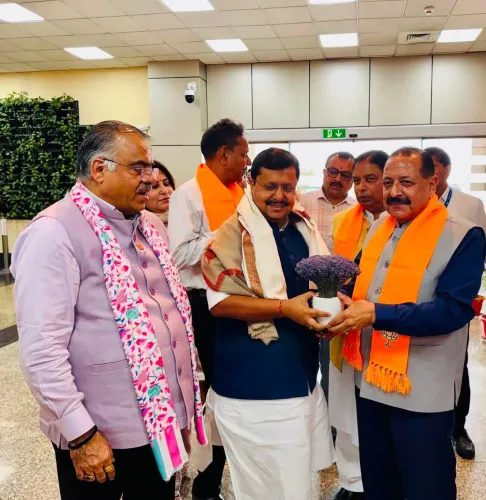
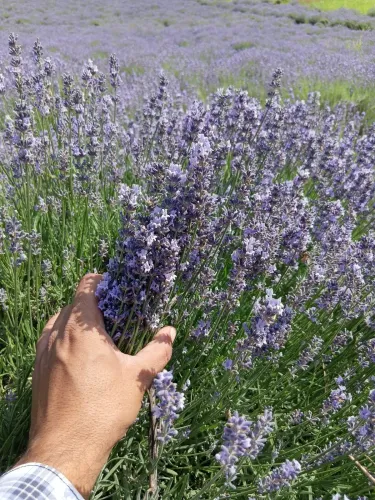
Using a single image and a short caption to document geographic progress in a flagship programme closely associated with his ministry and constituency. The 'Purple Revolution' has become a recurring marker in the government's narrative around science-led rural transformation in Jammu and Kashmir, and each new village or tehsil added to the lavender map reinforces that story. Bani's inclusion is notable because it sits in the upper reaches of Kathua — terrain that was not part of the original pilot design — suggesting the programme has achieved enough momentum to attract farmer uptake organically or through district-level push. The post also quietly underscores the ministry's argument that crop science, not just infrastructure spending, can be a driver of economic change in reorganised Union Territory districts.
NationPress
15 Sept 2026
Frequently Asked Questions
What is the Purple Revolution in Jammu and Kashmir?
The Purple Revolution is a CSIR-led initiative to promote lavender cultivation among hill farmers in Jammu and Kashmir, generating income through essential oil production. It was launched as a pilot in Doda district in 2018-19 and has since expanded to multiple districts.
Where is Bani tehsil located?
Bani is a remote, high-altitude tehsil in Kathua district in the Jammu division of Jammu and Kashmir, situated in the upper reaches of the Himalayan belt.
Why is lavender suitable for Bani and Kathua's upper reaches?
Lavender thrives in cool temperatures and well-drained hillside soils, conditions that are characteristic of the high-altitude terrain in Bani and similar areas of Kathua district.
What does Dr. Jitendra Singh have to do with lavender farming in Kathua?
Dr. Jitendra Singh is the Union Minister of State (Independent Charge) for Science and Technology, which oversees CSIR and its institutes including CSIR-IIIM Jammu, the nodal body for the lavender programme. He also represents the Udhampur constituency that includes Kathua.
What are the next steps for lavender cultivation in Kathua?
Key next steps include setting up distillation units near farms to process lavender into essential oil, establishing market linkages with buyers in the fragrance and wellness sectors, and formally including Bani in Jammu and Kashmir's horticulture action plans.