Madras HC strikes down TN mineral transport ban, calls rule unconstitutional
Synopsis
The Madras High Court has struck down Tamil Nadu's Rule 3A — the provision that powered a rolling ban on moving rough stones and construction aggregates out of the state. With the court calling it unconstitutional and beyond the scope of central mining law, the ruling redraws the limits of state power over commodity flows and hands quarry and crusher operators a landmark legal victory.
Key Takeaways
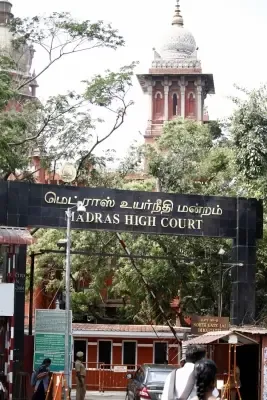
The Madras High Court on 17 November 2026 declared Rule 3A of Tamil Nadu's mineral rules unconstitutional.
The bench, led by Chief Justice Sushrut Arvind Dharmadhikari and Justice G.
Arul Murugan , quashed orders banning interstate movement of rough stones and aggregates .
The Director of Geology and Mining had imposed a three-month ban from 27 July , later extended from 27 October , with exemptions for Puducherry and Karaikal .
The court held the rule exceeded state powers under Section 23C(1) of the Mines and Minerals (Development and Regulation) Act, 1957 .
Petitioners — quarry owners, crusher units, and industry associations — argued the ban violated Article 301 of the Constitution guaranteeing freedom of trade across India.
The Madras High Court on Tuesday, 17 November 2026, declared unconstitutional a Tamil Nadu government rule that allowed temporary restrictions on the interstate transportation of minerals, and quashed orders banning the movement of rough stones and their aggregates across state borders. The ruling delivers significant relief to quarry operators and crusher units supplying construction materials to other states.
What the Court Ruled
The First Division Bench, comprising Chief Justice Sushrut Arvind Dharmadhikari and Justice G. Arul Murugan, held that Rule 3A of the Tamil Nadu Prevention of Illegal Mining, Transportation and Storage of Minerals and Mineral Dealers Rules, 2011, was unconstitutional and beyond the scope of the central legislation governing mining. The bench found the provision exceeded the powers available to state governments under Section 23C(1) of the Mines and Minerals (Development and Regulation) Act, 1957.
The Rule That Was Challenged
Rule 3A had been inserted through an amendment notified on 9 July, authorising the Director of Geology and Mining to regulate or temporarily prohibit the movement of boulders, crushed stones, manufactured sand (M-sand), metal jelly, ballast, and other construction-grade materials beyond Tamil Nadu's borders. Acting on this provision, the Director issued an order on 27 July imposing a three-month ban on the interstate transportation of rough stones and aggregates, with exemptions for Puducherry and the Karaikal region. The ban was subsequently extended for another three months with effect from 27 October.
Petitioners' Constitutional Arguments
The batch of writ petitions was filed before the principal seat of the High Court in Chennai and its Madurai Bench by quarry and crusher owners, industry associations, and individual operators. Petitioners argued that the restrictions violated Article 301 of the Constitution, which guarantees freedom of trade, commerce, and intercourse throughout India. They also challenged the provision under Article 304(b), which permits state legislatures to impose reasonable restrictions on trade in the public interest — but subject to strict constitutional conditions that, the petitioners contended, were not met here.
Why the State Imposed the Ban
The Tamil Nadu government had framed the restriction as a measure to ensure adequate availability of construction materials within the state. The rationale was that unrestricted outflow of rough stones and aggregates was creating supply shortages for local infrastructure and housing projects. Critics, however, argued that restricting interstate commerce to manage local supply was both legally untenable and economically counterproductive, as it distorted market pricing and penalised compliant operators.
Impact and What Comes Next
The High Court's ruling effectively dismantles the legal scaffolding underpinning both the amended rule and the ban orders, restoring the right of quarry and crusher operators to move construction minerals freely across state lines. This is a notable check on state power to unilaterally restrict commodity flows in the name of local supply security. The Tamil Nadu government may review whether to appeal the verdict before a higher bench or explore alternative legislative mechanisms that satisfy constitutional requirements. Industry bodies are expected to press for clarity on future regulatory boundaries to prevent similar disruptions.
Point of View
Food grains, or agri produce — framing curbs as supply-protection measures. The Madras High Court's reading that Rule 3A exceeded the scope of central mining legislation reinforces that interstate commerce protections under Article 301 are not mere guidelines. The deeper issue is structural: Tamil Nadu's supply concerns about construction materials are real, but the solution cannot be a unilateral export ban that bypasses constitutional requirements. If the state wishes to manage supply, it must do so through pricing, stockpiling, or demand-side policy — not by blocking trade corridors. The judgment should prompt other states with similar rules on the books to audit their own mineral transport restrictions before they too face constitutional challenge.
NationPress
17 Nov 2026
Frequently Asked Questions
What did the Madras High Court rule on Tamil Nadu's mineral transport ban?
The Madras High Court declared Rule 3A of the Tamil Nadu Prevention of Illegal Mining, Transportation and Storage of Minerals and Mineral Dealers Rules, 2011, unconstitutional, and quashed the orders banning interstate movement of rough stones and their aggregates. The bench found the provision exceeded state powers under central mining legislation.
Why did Tamil Nadu impose restrictions on interstate mineral transport?
The Tamil Nadu government introduced the ban to ensure adequate availability of construction materials — including rough stones, crushed aggregates, and M-sand — within the state. Officials were concerned that unrestricted outbound movement was creating local supply shortages for infrastructure and housing projects.
Which constitutional provisions were at the centre of the challenge?
Petitioners invoked Article 301, which guarantees freedom of trade, commerce, and intercourse throughout India, and Article 304(b), which allows states to impose reasonable restrictions on trade in the public interest but under strict constitutional conditions. The court also found the rule exceeded the powers granted to states under Section 23C(1) of the Mines and Minerals (Development and Regulation) Act, 1957.
Who filed the writ petitions against the Tamil Nadu rule?
The petitions were filed by quarry and crusher owners, industry associations, and individual operators before both the principal seat of the Madras High Court in Chennai and its Madurai Bench, challenging both the constitutional validity of Rule 3A and the ban orders issued under it.
What happens after the ruling — can Tamil Nadu appeal?
The ruling immediately removes the legal basis for the ban, restoring the right of operators to transport minerals across state borders. The Tamil Nadu government may choose to appeal before a higher bench or explore alternative mechanisms that meet constitutional requirements, though no such step has been announced yet.